ISHN logo
search
cart
facebook twitter linkedin youtube
  • Sign In
  • Create Account
  • Sign Out
  • My Account
ISHN logo
  • NEWS
    • Today's News
    • Global Safety News
    • Government Regulations
  • PRODUCTS
    • Product Innovations
    • Featured Products
  • TOPICS
    • Environmental Health and Safety
    • Facility Safety
    • Workplace Health
    • Occupational Safety
    • PPE
    • More Topics
  • CONSTRUCTION
  • TECHNOLOGY
  • COLUMNS
    • Best Practices
    • Dave Johnson: What’s going on
    • Editorial Comments
    • Leading Safety
  • MULTIMEDIA
    • ISHN Podcast
    • Videos
    • Cold Stress Education Quiz
    • Webinars
    • White Papers
  • MORE
    • Buyer's Guide
    • Newsletters
    • Convention Companion
    • Polls
    • Events
    • ISHN Store
    • Sponsor Insights
  • EMAGAZINE
    • eMagazine
    • Archived Issues
    • Contact
    • Advertise
  • JOIN TODAY!
Columns

Training is not always the answer

By E. Scott Geller
May 9, 2000
Too often "retraining" or "discipline" is selected impulsively to correct a discrepancy between what people do and what we want them to do. As I mentioned last month, workers will take risks for a variety of reasons. Perhaps they don't know what's expected, or they don't have the right tools or enough time. Sometimes people are rewarded for the wrong behavior, or ignored or punished for performing the safe way. Useful feedback may be missing.

In these cases, people know what to do, but they just aren't doing it. They are "consciously incompetent." The problem is not lack of knowledge or skill. Training is not the answer. You need to analyze and change organizational systems, workplace conditions, and interpersonal relations.

In their 1997 book, Analyzing Performance Problems, Robert Mager and Peter Pipe suggest a number of ways to get the performance you want before concluding that formal training is needed. Ask yourself these four questions:

1. Can the task be simplified?

Before developing a training program to increase on-the-job safety, make sure all possible engineering "fixes" have been implemented. Explore the many ways the environment could be changed to reduce physical effort, reach, and repetition. Entertain ways to make the job more user-friendly before deciding what behaviors are needed to prevent injury.

2. Is there a skill discrepancy?

What about those times when employees are "unconsciously incompetent" - they really don't know how to work safely? This might call for training. But Mager and Pipe claim that most behavioral discrepancies are not caused by a genuine lack of skill. Usually, people can work safely if conditions and consequences are right. So training should really be the least-used approach for corrective action.

3. What kind of training is needed?

If you determine that someone has forgotten how to perform a task, a skill maintenance program may be in order. This is the rationale behind periodic emergency training. Fortunately, emergencies don't happen very often, but since they don't, people need to go through the motions just to "stay in practice."
Skill maintenance training is also needed when a person gets plenty of practice doing the wrong thing. Here, practice only reinforces a bad (or risky) habit. For example, most people know how to drive a vehicle safely, and once showed little at-risk driving. But safe driving often deteriorates over time.
Behavior-based feedback is critical for solving both of these skill discrepancies. Especially when desired skills have deteriorated into poor habits (as in the driving example), it's often necessary to use behavior-based coaching. The coach needs to systematically complete a critical behavior checklist while watching for safe versus at-risk actions, and then give both supportive and corrective feedback.
Of course, there is also the training needed to introduce a new procedure or process.

4. Is the person right for the job?

A skill discrepancy can be handled by changing the job or changing the person. But what if a person's interests, skills, or prior experiences are incompatible for the job?
Before investing in skill training for a particular individual, it's a good idea to assess whether the person is right for the job. If a person does not have the motivation or the physical and mental capabilities for a particular job, the cost-effective solution is to find a replacement. If you don't, you'll lower productivity and increase the risk for personal injury.
Remember, if you're not getting the performance you want from employees, the reasons often will be found in the work environment or the task itself. Don't impulsively assume the answer lies in training or discipline. Analyze the situation, the behavior, and the individuals involved to prioritize possible solutions.

By E. Scott Geller, Ph.D., professor of psychology at Virginia Tech and senior partner with Safety Performance Solutions. SPS helps companies analyze occupational safety and health discrepancies related to employee behavior - from the line worker to the plant manager. Contact SPS at (540) 951-7233; www.safetyperformance.com.

Links

  • www.safetyperformance.com

Share This Story

Looking for a reprint of this article?
From high-res PDFs to custom plaques, order your copy today!

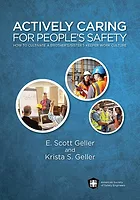
E. Scott Geller, Ph.D., is Alumni Distinguished Professor, Center for Applied Behavior Systems, Virginia Tech, and senior partner with Safety Performance Solutions, Blacksburg, VA. For more information visit www.safetyperformance.com. "Actively Caring for People's Safety: How to cultivate a brother’s/sister’s keeper work culture," co-authored by Scott’s daughter Krista, was recently published by ASSE. Scott’s 15-minute TEDX talk on You Tube can be accessed at: https://www.youtube.com/watch?v=7sxpKhIbr0E


Recommended Content

JOIN TODAY
to unlock your recommendations.

Already have an account? Sign In

  • forklift safety

    Exploring the latest technologies in forklift safety

    With more staff and more stock in warehousing now more...
    Facility Safety
    By: Josh Cramer
  • welding

    All about welder’s flash or arc eye

    A flash burn is a painful inflammation of the cornea,...
    Environmental Health and Safety
  • dangerous jobs

    The 10 most dangerous jobs in the U.S.

    On-the-job deaths have been rising — hitting the highest...
    Occupational Safety
    By: Benita Mehta
Manage My Account
  • eMagazine Subscriptions
  • ISHN Newsletter & Other Newsletter Alerts
  • Online Registration
  • Manage My Preferences
  • Subscription Customer Service

More Videos

Sponsored Content

Sponsored Content is a special paid section where industry companies provide high quality, objective, non-commercial content around topics of interest to the ISHN audience. All Sponsored Content is supplied by the advertising company and any opinions expressed in this article are those of the author and not necessarily reflect the views of ISHN or its parent company, BNP Media. Interested in participating in our Sponsored Content section? Contact your local rep!

close
  • man wearing the the Sundström SR200 Full Face Mask Respirator
    Sponsored byOHD

    5 Fit Testing Mistakes That Could Cost You

  • This image shows Magid AcuSpex polarized blue mirrored safety glasses.
    Sponsored byMagid Glove and Safety

    Construction PPE Guide: What Crews Need for Each Task

  • lone worker in confined space
    Sponsored byAlphasense Ltd.

    GET THE LEAD OUT of your Safety Oxygen Sensors!

Popular Stories

SpaceX 7 launch

OSHA Investigating Fatal Fall at SpaceX Starbase

Automated loading dock equipment

After March 2026 Rivian Death, Safety Managers Reassess Loading Dock Systems Under OSHA's Warehouse Emphasis Program

psychology in the workplace

Most Workplaces Measure Psychological Safety, Ignoring Psychosocial Risks

top 10 most dangerous jobs

Poll

Seasonal Readiness

With the federal heat stress prevention rule on the horizon, which area of your safety program needs the most attention?
View Results Poll Archive

Products

Surviving an OSHA Audit A Management Guide, 2nd Edition

Surviving an OSHA Audit A Management Guide, 2nd Edition

See More Products

ISHN Podcasts

Related Articles

  • ASSE

    Hot off the ASSE press: Actively Caring for People’s Safety

    See More
  • Actively Caring for People’s Safety

    4 STEPS to cultivating a brother’s/sister’s keeper culture

    See More
  • actively caring for people, behavior-based safety

    Actively caring for people’s safety

    See More

Related Products

See More Products
  • Top Ten Pitfalls in OSHA Recordkeeping and How to Avoid Them

See More Products
×

Become a Leader in Safety Culture

Build your knowledge with ISHN, covering key safety, health and industrial hygiene news, products, and trends.

JOIN TODAY
  • RESOURCES
    • Advertise
    • Contact Us
    • Directories
    • Manufacturing Division
    • Store
    • Want More
  • SIGN UP TODAY
    • Create Account
    • eMagazine
    • Newsletters
    • Customer Service
    • Manage Preferences
  • SERVICES
    • Marketing Services
    • Reprints
    • Market Research
    • List Rental
    • Survey/Respondent Access
  • STAY CONNECTED
    • LinkedIn
    • Facebook
    • YouTube
    • X (Twitter)
  • PRIVACY
    • PRIVACY POLICY
    • TERMS & CONDITIONS
    • DO NOT SELL MY PERSONAL INFORMATION
    • PRIVACY REQUEST
    • ACCESSIBILITY

Copyright ©2026. All Rights Reserved BNP Media, Inc. and BNP Media II, LLC.

Design, CMS, Hosting & Web Development :: ePublishing