ISHN logo
search
cart
facebook twitter linkedin youtube
  • Sign In
  • Create Account
  • Sign Out
  • My Account
ISHN logo
  • NEWS
    • Today's News
    • Global Safety News
    • Government Regulations
  • PRODUCTS
    • Product Innovations
    • Featured Products
  • TOPICS
    • Environmental Health and Safety
    • Facility Safety
    • Workplace Health
    • Occupational Safety
    • PPE
    • More Topics
  • CONSTRUCTION
  • TECHNOLOGY
  • COLUMNS
    • Best Practices
    • Dave Johnson: What’s going on
    • Editorial Comments
    • Leading Safety
  • MULTIMEDIA
    • ISHN Podcast
    • Videos
    • Cold Stress Education Quiz
    • Webinars
    • White Papers
  • MORE
    • Buyer's Guide
    • Newsletters
    • Convention Companion
    • Polls
    • Events
    • ISHN Store
    • Sponsor Insights
  • EMAGAZINE
    • eMagazine
    • Archived Issues
    • Contact
    • Advertise
  • JOIN TODAY!

Safety knives

By Dale E. Jennings
May 24, 2007
Photo: Pacific Handy Cutter


Years ago, the grocery industry, in particular, found a type of handy little knife to be very useful when opening tens of thousands of box tops every day. However, along with providing a quick and easy way to open cartons came a propensity for accidents. Eventually this handy little tool earned a nickname, “The Suicide Cutter,” as the most common accident was to slip off of a box and cut one’s opposite arm or wrist. This, combined with costly damage to merchandise like cereal boxes, cake mixes, etc., led to the need for a whole new generation of cutting tools.

In the past 20 years, safety cutters have evolved to provide a safer work environment for nearly any industry. They fall into one of four basic categories: Guarded Safety Cutters, Spring-Back Cutters, Hooded Cutters or Hook Knives.

Four types of safeguards

Guarded Safety Cutters come in both right and left-handed models. The guard acts as an angled cutting guide while also concealing the blade to protect the user from accidental contact. This is the preferred safety cutter for removing the tops of boxes and is proven to reduce both accidents and damaged merchandise. This style of cutter usually comes with blunted tip blades, blade storage, a tape splitter and an ergonomic handle to help reduce repetitive motion injuries. More large retailers use this type of safety cutter than any other.

Spring-Back — self-retracting — Safety Cutters are probably the second-most commonly used. The number-one feature of this type of cutter is that the blade cannot be left in an exposed position when not in use. If used properly, a self-retracting cutter can greatly reduce the potential for accidental injury. Most require you to start your cut and then remove your thumb from the blade operation button. The friction of the blade being pulled through the cardboard keeps the blade extended until contact with the work surface is finished and the blade retracts.

Unfortunately, this safety feature can be overridden if the user keeps his or her thumb on the operation button, and thus keeps the blade in an exposed position. Often, spring-back cutters also feature blunted tip blades, blade storage and ergonomic handle designs. They are used primarily in hardware, industrial and warehouse settings.

Hooded Safety Cutters offer another solution to the problem of accidental cuts in the workplace. Essentially this type of cutter comes one step closer to taking human error out of the equation. Available in low-cost disposable and non-disposable varieties, they usually have one or more release points that allow the hood to rotate or retract back, exposing the blade to the cutting surface. When removed from the cutting surface, the hood snaps back over the blade.

Higher-end models provide ambidextrous release buttons and a hood that springs back and locks over the blade.

Disposable safety cutters are primarily used in the restaurant and quick-serve industries where replaceable blades are frowned on, as there is the possibility of a blade falling into food preparations. Most offer blunted tip blades, tape splitters and an ergonomic handle design.

Hook Knives are the last category of safety knives. They come in a variety of shapes and sizes. They can be used for everything from opening shrink-wrap around pallets to removing plastic banding from bundled merchandise. They are available in both disposable and non-disposable models, depending on the work environment.

This type of safety cutter offers the greatest protection to the user as the razor blade is usually concealed within the hooked opening which is not wide enough to allow access to one’s finger, hand or other extremities.

Getting employees over the hurdle

As with any application, albeit beneficial or cost-effective, getting employees over the “resistance to change” factor is always a hurdle. Too many times, they opt for what they are used to using, even if it means putting themselves and others at risk. This is where training and employer involvement becomes integral.

Once they are properly trained and/or management mandates the use of a safer tool, employees quickly adapt to the idea and it becomes second nature to them. Worker productivity is increased and there is less cutter turnover, as most safety cutters are designed for work applications and do not lend themselves to average home use.

We’ve come a long way since “The Suicide Cutter” was introduced more than 50 years ago. With employee and management input, safety cutters have become the industry standard, whether they are used in grocery, hardware/industrial or foodservice areas. Employees are working safer and management is seeing less workers’ compensation claims and less damage to expensive merchandise — just by making a commitment to safety and using the right tool for the job.
KEYWORDS: Pacific Handy Cutter

Share This Story

Looking for a reprint of this article?
From high-res PDFs to custom plaques, order your copy today!

Dale E. Jennings is corporate vice president, Pacific Handy Cutter, Inc.

Recommended Content

JOIN TODAY
to unlock your recommendations.

Already have an account? Sign In

  • forklift safety

    Exploring the latest technologies in forklift safety

    With more staff and more stock in warehousing now more...
    Facility Safety
    By: Josh Cramer
  • welding

    All about welder’s flash or arc eye

    A flash burn is a painful inflammation of the cornea,...
    Environmental Health and Safety
  • dangerous jobs

    The 10 most dangerous jobs in the U.S.

    On-the-job deaths have been rising — hitting the highest...
    Occupational Safety
    By: Benita Mehta
Manage My Account
  • eMagazine Subscriptions
  • ISHN Newsletter & Other Newsletter Alerts
  • Online Registration
  • Manage My Preferences
  • Subscription Customer Service

More Videos

Sponsored Content

Sponsored Content is a special paid section where industry companies provide high quality, objective, non-commercial content around topics of interest to the ISHN audience. All Sponsored Content is supplied by the advertising company and any opinions expressed in this article are those of the author and not necessarily reflect the views of ISHN or its parent company, BNP Media. Interested in participating in our Sponsored Content section? Contact your local rep!

close
  • man wearing the the Sundström SR200 Full Face Mask Respirator
    Sponsored byOHD

    5 Fit Testing Mistakes That Could Cost You

  • This image shows Magid AcuSpex polarized blue mirrored safety glasses.
    Sponsored byMagid Glove and Safety

    Construction PPE Guide: What Crews Need for Each Task

  • lone worker in confined space
    Sponsored byAlphasense Ltd.

    GET THE LEAD OUT of your Safety Oxygen Sensors!

Popular Stories

SpaceX 7 launch

OSHA Investigating Fatal Fall at SpaceX Starbase

Worker Impairment

How to Tell When a Co-Worker is Impaired? A Safety Pro’s Challenge

Automated loading dock equipment

After March 2026 Rivian Death, Safety Managers Reassess Loading Dock Systems Under OSHA's Warehouse Emphasis Program

top 10 most dangerous jobs

Poll

Seasonal Readiness

With the federal heat stress prevention rule on the horizon, which area of your safety program needs the most attention?
View Results Poll Archive

Products

Surviving an OSHA Audit A Management Guide, 2nd Edition

Surviving an OSHA Audit A Management Guide, 2nd Edition

See More Products

ISHN Podcasts

Related Articles

  • Safety knives by Safety Knife Company LLC

    See More
  • Safety knives by The Safety Knife Company

    See More
  • Safety knives by The Safety Knife Company LLC

    See More

Related Products

See More Products
  • 9780367861148.jpg

    LEAD Safety A Practical Handbook for Frontline Supervisors and Safety Practitioners

  • download (1).jpg

    Safety Rebels Real-World Transformations in Health and Safety

  • safety law.jpg

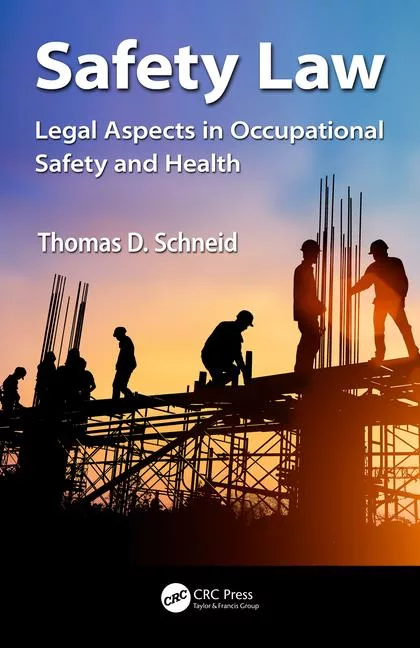
    Safety Law: Legal Aspects in Occupational Safety and Health

See More Products

Events

View AllSubmit An Event
  • March 26, 2026

    Electrical Safety Essentials: A Practical Guide for Safety Professionals

    ON DEMAND: This one-hour webinar provides general safety professionals with a practical, non-technical overview of electrical hazards, injury mechanisms, and prevention strategies aligned with OSHA 29 CFR 1910 Subpart S and related standards.
View AllSubmit An Event

Related Directories

  • The Safety Knife Co. LLC

    The Safety Knife Company has developed a quality range of safety knives for all industries. These knives have no exposed blades and only cut cardboard deep, protecting employees against lacerations as well as product.
×

Become a Leader in Safety Culture

Build your knowledge with ISHN, covering key safety, health and industrial hygiene news, products, and trends.

JOIN TODAY
  • RESOURCES
    • Advertise
    • Contact Us
    • Directories
    • Manufacturing Division
    • Store
    • Want More
  • SIGN UP TODAY
    • Create Account
    • eMagazine
    • Newsletters
    • Customer Service
    • Manage Preferences
  • SERVICES
    • Marketing Services
    • Reprints
    • Market Research
    • List Rental
    • Survey/Respondent Access
  • STAY CONNECTED
    • LinkedIn
    • Facebook
    • YouTube
    • X (Twitter)
  • PRIVACY
    • PRIVACY POLICY
    • TERMS & CONDITIONS
    • DO NOT SELL MY PERSONAL INFORMATION
    • PRIVACY REQUEST
    • ACCESSIBILITY

Copyright ©2026. All Rights Reserved BNP Media, Inc. and BNP Media II, LLC.

Design, CMS, Hosting & Web Development :: ePublishing