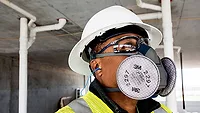
Whew, another close call...
Maybe you feel it's time to start collecting data on your near-hits. You've had a spate of close calls perhaps. But it can be a tricky challenge getting employees to report what almost, but didn't, happen. Especially if it makes them look "bad." Consider these 25 points before formulating your plan to study near-hits:
1 - "As we move toward fewer injuries, we have stepped up the reporting and investigation of close calls.
"We have very few injuries in general in our workplaces, so the logical step is to become more proactive, and near-miss reporting (and tracking) is one measure for that. One plant has a target to identify 180 close calls (or at-risk conditions) within the year, investigate those and implement the corrective actions."
2 - "During investigations of more serious injuries, I found (with the investigation team of operators) that there were at least two-three people who almost got injured by the same method.
"Only, they figured "that was close," and did not report it. Later, another employee loses a finger. The incident should have been prevented if only someone reported the near-miss."
3 - "Relate personal experiences and investigative findings.
"I have found this can increase reporting of near miss incidents. It 'plays' on the emotions of other people once they realize that they could have prevented a serious injury, but did nothing about it. I've followed this with the popular "I chose to look the other way" safety poem by Don Merrell, and that has had success."
4 - "One obstacle we have discovered: with the number of potential near-miss incidents, there is no way we can continue to investigate to the detail of more serious incidents.
"So we have created a 'short form' incident investigation process. Since the amount of detail from an injury is not necessarily needed, we created the form to capture critical information (What happened? When? Where? Why? and How to prevent?). We also analyze potential severity, and likelihood of occurrence to help gauge the degree of priority for the incident. By using this, we can determine if more extensive investigation is needed for the incident."
By Mike Kalbaugh, CSP, EHS Manager - Retail Information Services, Avery Dennison
5 - "Many workplaces have automated systems such as dedicated emails and near-miss hotlines for reporting near-misses.
"I have even worked with one chemical plant that requires at least one near-miss be reported every day so essentially, they have to go out and look for something to report."
6 - "Automated systems make it easy to manage a near-miss reporting program.
"In many instances, the emphasis is on getting the near-misses reported because this helps build awareness."
7 - "It is assumed that if someone reports a near-miss, they have also taken the time to correct the situation.
"I have seen little in the way of tracking corrective actions to the reported near-misses."
By Linda Tapp, ALCM, CSP
8 - "Injury-free events (IFEs) is the term Alcoa uses.
"Very valuable as a leading/lagging indicator. Our goal in 2007 is to have three times the IFEs reported and investigated as actual injuries. IFEs could be potential fatalities and can not be ignored. All plants know they occur — especially with new hires."
By John Wesley
9 - "Many times after an accident occurs, someone will say, 'Oh that almost happened to me too,' but they didn't report it.
"It's very frustrating when that happens. Near-miss information management can be time-consuming, but I think it's worth it if you can prevent more serious events."
10 - "It's hard to encourage near-miss reporting.
I've found that regular, high-impact training sometimes loosens up people to think about near-misses and report them.
By Sharon Baker, CSP, Corning, Inc.
11 - "I have had some good and bad experiences with 'near-hit' reporting.
"It really takes a good management environment to not lay blame when someone reports an incident. That will shut down the program immediately. I also have seen it work great because the informed leadership understands that they now have an opportunity to correct a situation without the sacrifice of an injury."
12 - "I have to say I think near-miss reporting is a good program, but not every company has the culture established to allow it to work properly."
By Eddie Greer, CSP, Eddie Greer & Associates
13 - "Many near miss reports are for rather minimal issues that are 'safe' to report.
"Example: cord on floor, fire extinguisher blocked, etc. No blame to anyone in particular, no self-incrimination."
14 - "'I really nearly got seriously injured because I failed to work safely, follow a safe procedure, etc.' is rarely reported.
"That is unless the event is so significant that it gets the attention of a number of folks, especially responsible management. As one manager put it, this is in the category of 'I did something dumb.' Only the most mature high-functioning organizations would get this reported and handle it well."
15 - "The most serious near-miss with fatality or very serious injury potential involving process or equipment failure are usually reported.
"This is because these events are so significant that the entire organization is prone to react. Problem is, the investigation and follow-up should be handled like the injury did occur. It seldom is."
16 - "To increase near-miss reporting, some organizations use incentives.
"Assuming the reward is valued, they will get the number (of reports) they desire. This is not a wise idea."
17 - "Bottom line: Encourage and support near miss reporting.
"Recognize the reporting limitations. Do not use is as a performance metric (too much human variability). Treat serious near-miss reports as though the recognized injury potential did occur."
By Thomas J. Durbin, Coordinator, Health and Safety Consulting Service, ORC Worldwide
18 - Setting goals for reporting near-hits, like any safety goal, invites playing a numbers game.
You can get quantity over quality of reports.
19 - Do you feel that near-hits just reinforce the idea, "See, it won't happen to me," or "See, it won't happen 'round here"?
The counter to this is to use story-telling at safety meetings. Have workers who almost got hit, smashed, konked, or killed talk about what happened, what saved 'em (PPE? coworker's warning? dumb luck?). Stories beat statistics any day for emotional impact. Don't force these testimonials. Find employees secure enough in themselves to handle the "I did something dumb" stigma (see above). And be sure your supervisors and organization as a whole is mature enough not to come down hard on these people.
20 - Tracking near-hits doesn't make sense in some environments, most offices, for instance.
The more dangerous the work environment, the more valuable are near-miss reports and communications about them. It's really comes down to how a safety manager wants to measure her program. The number of near-hits reported in a week or month or year is just one more metric to be used in a dashboard. And it's quality, not quantity, you are after.
21 - Tracking near-hits can be a cumbersome process if you don't have some type of automation (see above), like any reporting system.
Smaller sites might want to skip time-consuming formal reporting and go with periodic story-telling of near-hit events at safety meetings.
22 - Check out via Google or other search method what hospitals are doing with reporting near-hits as part of their patient safety programs.
Healthcare is ahead of industry in appreciating the value of reporting near-harm incidents to patients — such as wrong dose, wrong medication, wrong arm operated on, etc., due to liability concerns. Still, relatively few hospitals report and track near-harm events, but the ones that do have innovative systems and ways to capture the info. Much of the reporting is done anonymously, to avoid fear of discipline, etc.
23 - Many sites have a culture that forgets about reporting near-loss incidents because "that's just the way things happen around here and you'll never get people to report."
In this case, the safety manager must show employees, and the management team that will provide resources for the reporting system, the benefits and the value, the "what's in it for you," of near-hit reporting.
24 - Search out professionals and companies that report near-hits.
And of course magazine articles on the topic, for ideas on how to promote reporting. It can be a tough sell — spending time and resources for something that almost but did not happen.
25 - Bottom line, a site and its people can learn quite a bit about how injuries occur through the study of near-misses.
Such as flaws in the site's protective systems, where the gaps or breakdowns are, circumstances surrounding incidents. This is much less traumatic than investigating bad injuries or fatalities after the fact. Employees should appreciate that management doesn't want to wait to count injuries or bodies, but instead values the safety of people enough to get ahead of the curve and study close shaves, near-misses, near-hits, injury-free events, call 'em what you will.
By Dave Johnson
1 - "As we move toward fewer injuries, we have stepped up the reporting and investigation of close calls.
"We have very few injuries in general in our workplaces, so the logical step is to become more proactive, and near-miss reporting (and tracking) is one measure for that. One plant has a target to identify 180 close calls (or at-risk conditions) within the year, investigate those and implement the corrective actions."
2 - "During investigations of more serious injuries, I found (with the investigation team of operators) that there were at least two-three people who almost got injured by the same method.
"Only, they figured "that was close," and did not report it. Later, another employee loses a finger. The incident should have been prevented if only someone reported the near-miss."
3 - "Relate personal experiences and investigative findings.
"I have found this can increase reporting of near miss incidents. It 'plays' on the emotions of other people once they realize that they could have prevented a serious injury, but did nothing about it. I've followed this with the popular "I chose to look the other way" safety poem by Don Merrell, and that has had success."
4 - "One obstacle we have discovered: with the number of potential near-miss incidents, there is no way we can continue to investigate to the detail of more serious incidents.
"So we have created a 'short form' incident investigation process. Since the amount of detail from an injury is not necessarily needed, we created the form to capture critical information (What happened? When? Where? Why? and How to prevent?). We also analyze potential severity, and likelihood of occurrence to help gauge the degree of priority for the incident. By using this, we can determine if more extensive investigation is needed for the incident."
By Mike Kalbaugh, CSP, EHS Manager - Retail Information Services, Avery Dennison
5 - "Many workplaces have automated systems such as dedicated emails and near-miss hotlines for reporting near-misses.
"I have even worked with one chemical plant that requires at least one near-miss be reported every day so essentially, they have to go out and look for something to report."
6 - "Automated systems make it easy to manage a near-miss reporting program.
"In many instances, the emphasis is on getting the near-misses reported because this helps build awareness."
7 - "It is assumed that if someone reports a near-miss, they have also taken the time to correct the situation.
"I have seen little in the way of tracking corrective actions to the reported near-misses."
By Linda Tapp, ALCM, CSP
8 - "Injury-free events (IFEs) is the term Alcoa uses.
"Very valuable as a leading/lagging indicator. Our goal in 2007 is to have three times the IFEs reported and investigated as actual injuries. IFEs could be potential fatalities and can not be ignored. All plants know they occur — especially with new hires."
By John Wesley
9 - "Many times after an accident occurs, someone will say, 'Oh that almost happened to me too,' but they didn't report it.
"It's very frustrating when that happens. Near-miss information management can be time-consuming, but I think it's worth it if you can prevent more serious events."
10 - "It's hard to encourage near-miss reporting.
I've found that regular, high-impact training sometimes loosens up people to think about near-misses and report them.
By Sharon Baker, CSP, Corning, Inc.
11 - "I have had some good and bad experiences with 'near-hit' reporting.
"It really takes a good management environment to not lay blame when someone reports an incident. That will shut down the program immediately. I also have seen it work great because the informed leadership understands that they now have an opportunity to correct a situation without the sacrifice of an injury."
12 - "I have to say I think near-miss reporting is a good program, but not every company has the culture established to allow it to work properly."
By Eddie Greer, CSP, Eddie Greer & Associates
13 - "Many near miss reports are for rather minimal issues that are 'safe' to report.
"Example: cord on floor, fire extinguisher blocked, etc. No blame to anyone in particular, no self-incrimination."
14 - "'I really nearly got seriously injured because I failed to work safely, follow a safe procedure, etc.' is rarely reported.
"That is unless the event is so significant that it gets the attention of a number of folks, especially responsible management. As one manager put it, this is in the category of 'I did something dumb.' Only the most mature high-functioning organizations would get this reported and handle it well."
15 - "The most serious near-miss with fatality or very serious injury potential involving process or equipment failure are usually reported.
"This is because these events are so significant that the entire organization is prone to react. Problem is, the investigation and follow-up should be handled like the injury did occur. It seldom is."
16 - "To increase near-miss reporting, some organizations use incentives.
"Assuming the reward is valued, they will get the number (of reports) they desire. This is not a wise idea."
17 - "Bottom line: Encourage and support near miss reporting.
"Recognize the reporting limitations. Do not use is as a performance metric (too much human variability). Treat serious near-miss reports as though the recognized injury potential did occur."
By Thomas J. Durbin, Coordinator, Health and Safety Consulting Service, ORC Worldwide
18 - Setting goals for reporting near-hits, like any safety goal, invites playing a numbers game.
You can get quantity over quality of reports.
19 - Do you feel that near-hits just reinforce the idea, "See, it won't happen to me," or "See, it won't happen 'round here"?
The counter to this is to use story-telling at safety meetings. Have workers who almost got hit, smashed, konked, or killed talk about what happened, what saved 'em (PPE? coworker's warning? dumb luck?). Stories beat statistics any day for emotional impact. Don't force these testimonials. Find employees secure enough in themselves to handle the "I did something dumb" stigma (see above). And be sure your supervisors and organization as a whole is mature enough not to come down hard on these people.
20 - Tracking near-hits doesn't make sense in some environments, most offices, for instance.
The more dangerous the work environment, the more valuable are near-miss reports and communications about them. It's really comes down to how a safety manager wants to measure her program. The number of near-hits reported in a week or month or year is just one more metric to be used in a dashboard. And it's quality, not quantity, you are after.
21 - Tracking near-hits can be a cumbersome process if you don't have some type of automation (see above), like any reporting system.
Smaller sites might want to skip time-consuming formal reporting and go with periodic story-telling of near-hit events at safety meetings.
22 - Check out via Google or other search method what hospitals are doing with reporting near-hits as part of their patient safety programs.
Healthcare is ahead of industry in appreciating the value of reporting near-harm incidents to patients — such as wrong dose, wrong medication, wrong arm operated on, etc., due to liability concerns. Still, relatively few hospitals report and track near-harm events, but the ones that do have innovative systems and ways to capture the info. Much of the reporting is done anonymously, to avoid fear of discipline, etc.
23 - Many sites have a culture that forgets about reporting near-loss incidents because "that's just the way things happen around here and you'll never get people to report."
In this case, the safety manager must show employees, and the management team that will provide resources for the reporting system, the benefits and the value, the "what's in it for you," of near-hit reporting.
24 - Search out professionals and companies that report near-hits.
And of course magazine articles on the topic, for ideas on how to promote reporting. It can be a tough sell — spending time and resources for something that almost but did not happen.
25 - Bottom line, a site and its people can learn quite a bit about how injuries occur through the study of near-misses.
Such as flaws in the site's protective systems, where the gaps or breakdowns are, circumstances surrounding incidents. This is much less traumatic than investigating bad injuries or fatalities after the fact. Employees should appreciate that management doesn't want to wait to count injuries or bodies, but instead values the safety of people enough to get ahead of the curve and study close shaves, near-misses, near-hits, injury-free events, call 'em what you will.
By Dave Johnson
Looking for a reprint of this article?
From high-res PDFs to custom plaques, order your copy today!