What you learn from falling on your butt
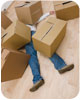
You know you’re a safety geek when you slip and land on your butt on the bathroom floor in a factory’s front office thinking, “What at-risk behavior did I do to earn this bruise?”
My host, just as embarrassed, explained how they have an oil problem in the plant. Their machines send out an oil mist that gets everywhere; “even in the bathroom tile here in the front office.”
My mental note: “Never wear dress shoes to a plant visit again!”
Back in the safety committee meeting they said it used to be worse. “You used not to even be able to see the clock on the wall through all the oil mist. We have the new plant manager to thank for that.”
“But we just can’t get our people to mop the oils off the floor to prevent these slip hazards.” The plant manager was insistent: “We are doing what we can to reduce hazards, but the injuries we’re seeing are caused by our people not following procedures.”
An argument ensued: the employee members of the safety committee disagreed. A tit for tat then occurred.
“We gave you the mops and even the oilcutting chemicals but no one mops the floor!” One redheaded woman was especially adamant about not accepting the blame for the safety issues in the plant. “We gave up mopping because the water was always oily and we were just spreading the oil around.” It went on like this over different topics beyond housekeeping into tool use and guarding. The plant manager, in a moment of unexpected frustration (I thought), even said, “You can’t fix stupid.”
Time out
I had requested some time with just employee members of the safety committee to do some confidential interviewing about their safety culture, so the plant manager had to leave the room for about 90 minutes. Before he left, the redhead issued him a challenge: “You go out there and do a job and see who’s to blame for taking risks.” To the plant manager’s credit, he did it!
When he returned, he had a sheepish look on his face. The redhead jumped right on this: “Well? What did you find out?” The plant manager started, “Well, I know I couldn’t do anyone’s job as well as they could and I didn’t want to get in anyone’s way, so I decided to help maintenance out with some of their minor tasks that had built up. So I simply decided to help them replace lighting around the plant. And guess what… I almost fell!”
“How so?” asked the redhead knowingly.
“You know, I found myself on the top step of a step ladder with one foot up on a pipe reaching over a couple feet to unscrew a light bulb. I nearly lost my balance completely.”
“Why didn’t you use a proper ladder that would have gotten you up to the level of the light bulb?”
“Well, I did look around for such a ladder, but there was only the stepladder in the closet nearby. The standup ladders are in the loading dock. It would have taken me 15 minutes to walk there through the plant and another 15 minutes back carrying a seven-foot ladder through the machinery and our oily floors. It wasn’t worth it for a small light bulb change, so I just used what was there.”
“You can’t fix stupid,” chuckled the redhead.
“Maybe” replied the manager, “but we can fix this!”
Activator-Behavior-Consequence analysis
So I led the team through an ABC analysis where we saw clearly that having the ladders in the loading dock area was an Activator (“A”) that discouraged the Behavior (“B”) of “Correct Ladder Use” because the undesirable Consequence (“C”) involved extra time and cumbersome walking through other people’s workstations (an additional safety hazard). “Moreover,” remarked the manager, “I ride those maintenance guys to be more productive with their time. I’m sure using the closer stepladder helps them achieve that goal. Heck, then I praise them for doing that!”
I was impressed with their collective insight. Instead of blaming the workers for using the incorrect tool, in this case a ladder, they looked at the work environment and were determined to change the system. In the next amazingly productive 15 minutes they decided to work with the maintenance staff to determine where to put wall hooks in the plant to hang the different ladders they may need for the tasks they would find themselves doing in those areas. A small win for safety!
"Wanna talk about creating a hazard!?!"
But, even newly enlightened, the plant manager had to get in the last word. “We did this drill a couple months back with the oily floors… remember? It took longer and we didn’t go through such a good analysis, but we decided to set up mopping stations around the worst oil-spraying machinery. We set up those little closets with mops, water buckets, and chemicals so those housekeeping tools would be right next to where our folks would need them. And you know what? They just don’t get used and we’re still having guests falling in our bathrooms!”
“Gosh-Blame-It!” the redhead had enough. “Come with me!” A subset of us walked out to the plant floor (they had now given me grip-soled goulashes to put over my “pretty shoes”) and we went to one of these mop stations. The redhead got the mop out, dipped it in the chemical water, and mopped up an oily area. “See,” she showed us, “We are just spreading the oil around. The water is just so full of oil from the last time someone tried to mop.”
“Well, duh, go change the water.” “How about you do that boss.” “OK, where’s the water?” “The nearest spigot appropriate to pour out the oil/chemical water and safely put in new water is (ready for this) at the loading dock. And you thought it was going to be difficult carrying a ladder from the loading dock to here, just try rolling a bucket full of oil-water to the loading dock across the same oily floors we hope to clean. Wanna talk about creating a hazard!?!”
The day was done and I went home full of the new experience. I contacted the plant’s safety geek a couple weeks later to follow up. In that conversation I learned that they started doing the ABC analysis at all their safety committee meetings…
And, the plant manager had requisitioned $15,000 to install the plumbing and fixtures to add industrial sinks in the mop closet areas. The redhead even gave him a hug.
Looking for a reprint of this article?
From high-res PDFs to custom plaques, order your copy today!


