ISHN logo
search
cart
facebook twitter linkedin youtube
  • Sign In
  • Create Account
  • Sign Out
  • My Account
ISHN logo
  • NEWS
    • Today's News
    • Global Safety News
    • Government Regulations
  • PRODUCTS
    • Product Innovations
    • Featured Products
  • TOPICS
    • Environmental Health and Safety
    • Facility Safety
    • Workplace Health
    • Occupational Safety
    • PPE
    • More Topics
  • CONSTRUCTION
  • TECHNOLOGY
  • COLUMNS
    • Best Practices
    • Dave Johnson: What’s going on
    • Editorial Comments
    • Leading Safety
  • MULTIMEDIA
    • ISHN Podcast
    • Videos
    • Cold Stress Education Quiz
    • Webinars
    • White Papers
  • MORE
    • Buyer's Guide
    • Newsletters
    • Convention Companion
    • Polls
    • Events
    • ISHN Store
    • Sponsor Insights
  • EMAGAZINE
    • eMagazine
    • Archived Issues
    • Contact
    • Advertise
  • JOIN TODAY!
Workplace Safety Culture

The value of professional certification

By Larry Curtis CHSM
October 5, 2012
The number of available professional certifications, and the number of certified professionals, has been increasing at a very rapid rate. Some of the growth is driven by the increase in population, and the rest by individuals wanting to get a job in a particular profession or folks making a job change and wanting something to help them stand out from the rest of the applicants.

A good starting point for this discussion is the definition: Certification is defined by the National Organization for Competency Assurance as “the process by which a non-governmental agency or association grants recognition of competence to an individual who has met predetermined qualifications specified by that agency or association.”

There are many accredited certifications and, of course, many more professional certifications that have not achieved accreditation. For the purpose of this article, we will only consider the issues associated with accredited certifications.

Accreditation comes from an evaluation by an impartial third party. In the U.S. there are three such bodies: American National Standards Institute (ANSI), The Council of Scientific and Specialty Boards (CESB), and International Credentialing Excellence (ICE).

To be accredited, the administrative body for the certification must (in part):

 Ensure all programs are free of bias

 Require periodic recertification

 Determine pass/fail cutoff using psychometrically valid criteria

 Maintain disciplinary procedures

 Assure separation of the education and certification components of a certification

 Have a public member on the board

(This requirements listing is not all inclusive)

Eligibility

The organization administering a certification, often called a sponsor, establishes education and experience criteria to qualify for the cert.

Bias

The sponsor must have requirements for and demand that all qualified candidates will be accepted.

Ethics

Accredited certifications require adherence to a prescribed set of professional ethics (Sometimes called Code of Conduct)

Examination

This is generally the last step before awarding the certification. The examinations are expensive to develop and maintain.

 A body of knowledge must be developed, generally by a panel of subject matter experts.

 Then questions must be developed that speak to the established body of knowledge.

 This is followed by psychometrically sound standard-setting that will result in the exam pass/fail score

 Next, each question in the exam must be monitored to assure that it is accurately measuring a candidate’s knowledge of the subject matter

Recertification

This mandates that a certificate holder meet certain professional practice and educational requirements during an established time frame to maintain certification. The education piece is often met by accumulation of Continuance of Education (CEU) points (sometimes called Continuance of Certification (COC) points). Some organizations allow recertification by retesting.

This has been a quick and much abbreviated look into an accredited certification. In closing it seems obvious that by having earned an accredited certification a person has increased value to themselves and their employer. They have met exacting criteria to qualify, have passed a subject matter test and are remaining professionally current through practice and ongoing education.

Share This Story

Looking for a reprint of this article?
From high-res PDFs to custom plaques, order your copy today!

Larry Curtis is Executive Director, Institute for Safety and Health Management    www.ishm.org

Larry, a retired Naval Officer, has been the Executive Director of ISHM since July of 2007. Since that time the organization has enjoyed steady growth. Prior to ISHM, Larry was founder and manager of Construction Risk and Safety Management associates a Risk Management Consulting business established in 2003. Larry started this business after several years as a senior Risk Specialist with a major insurance company which he joined after many years as a project safety manager for a large construction company in the southeast US. He is an active member of local Veteran’s organizations and is Chairman of the Yuma Chamber of Commerce, Military Affairs Committee.

Recommended Content

JOIN TODAY
to unlock your recommendations.

Already have an account? Sign In

  • forklift safety

    Exploring the latest technologies in forklift safety

    With more staff and more stock in warehousing now more...
    Facility Safety
    By: Josh Cramer
  • welding

    All about welder’s flash or arc eye

    A flash burn is a painful inflammation of the cornea,...
    Environmental Health and Safety
  • dangerous jobs

    The 10 most dangerous jobs in the U.S.

    On-the-job deaths have been rising — hitting the highest...
    Occupational Safety
    By: Benita Mehta
Manage My Account
  • eMagazine Subscriptions
  • ISHN Newsletter & Other Newsletter Alerts
  • Online Registration
  • Manage My Preferences
  • Subscription Customer Service

More Videos

Sponsored Content

Sponsored Content is a special paid section where industry companies provide high quality, objective, non-commercial content around topics of interest to the ISHN audience. All Sponsored Content is supplied by the advertising company and any opinions expressed in this article are those of the author and not necessarily reflect the views of ISHN or its parent company, BNP Media. Interested in participating in our Sponsored Content section? Contact your local rep!

close
  • man wearing the the Sundström SR200 Full Face Mask Respirator
    Sponsored byOHD

    5 Fit Testing Mistakes That Could Cost You

  • This image shows Magid AcuSpex polarized blue mirrored safety glasses.
    Sponsored byMagid Glove and Safety

    Construction PPE Guide: What Crews Need for Each Task

  • lone worker in confined space
    Sponsored byAlphasense Ltd.

    GET THE LEAD OUT of your Safety Oxygen Sensors!

Popular Stories

SpaceX 7 launch

OSHA Investigating Fatal Fall at SpaceX Starbase

Worker Impairment

How to Tell When a Co-Worker is Impaired? A Safety Pro’s Challenge

Automated loading dock equipment

After March 2026 Rivian Death, Safety Managers Reassess Loading Dock Systems Under OSHA's Warehouse Emphasis Program

top 10 most dangerous jobs

Poll

Seasonal Readiness

With the federal heat stress prevention rule on the horizon, which area of your safety program needs the most attention?
View Results Poll Archive

Products

Surviving an OSHA Audit A Management Guide, 2nd Edition

Surviving an OSHA Audit A Management Guide, 2nd Edition

See More Products

ISHN Podcasts

Related Articles

  • Alliance promotes the value of professional certification (3/14)

    See More
  • Pulling safety out of its rut: The value of a different look at safety

    See More
  • Total Worker Health

    U.S. Surgeon General highlights the value of worker well-being and the NIOSH Total Worker Health® approach

    See More

Related Products

See More Products
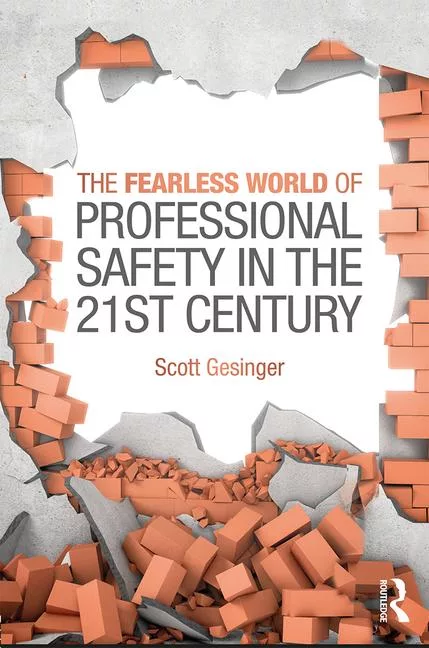
  • fearless world.jpg

    The Fearless World of Professional Safety in the 21st Century

  • 1119906652.webp

    Alive and Well at the End of the Day: The Supervisor's Guide to Managing Safety in Operations, 2E

See More Products

Related Directories

  • Board of Certified Safety Professionals (BCSP)

    Since 1969, BCSP has been setting and certifying the technical competency criteria for safety, health, and environmental practitioners; ensuring safety through certification. In 2019, BCSP developed examCORE a comprehensive educational program for safety certification.
×

Become a Leader in Safety Culture

Build your knowledge with ISHN, covering key safety, health and industrial hygiene news, products, and trends.

JOIN TODAY
  • RESOURCES
    • Advertise
    • Contact Us
    • Directories
    • Manufacturing Division
    • Store
    • Want More
  • SIGN UP TODAY
    • Create Account
    • eMagazine
    • Newsletters
    • Customer Service
    • Manage Preferences
  • SERVICES
    • Marketing Services
    • Reprints
    • Market Research
    • List Rental
    • Survey/Respondent Access
  • STAY CONNECTED
    • LinkedIn
    • Facebook
    • YouTube
    • X (Twitter)
  • PRIVACY
    • PRIVACY POLICY
    • TERMS & CONDITIONS
    • DO NOT SELL MY PERSONAL INFORMATION
    • PRIVACY REQUEST
    • ACCESSIBILITY

Copyright ©2026. All Rights Reserved BNP Media, Inc. and BNP Media II, LLC.

Design, CMS, Hosting & Web Development :: ePublishing