ISHN logo
search
cart
facebook twitter linkedin youtube
  • Sign In
  • Create Account
  • Sign Out
  • My Account
ISHN logo
  • NEWS
    • Today's News
    • Global Safety News
    • Government Regulations
  • PRODUCTS
    • Product Innovations
    • Featured Products
  • TOPICS
    • Environmental Health and Safety
    • Facility Safety
    • Workplace Health
    • Occupational Safety
    • PPE
    • More Topics
  • CONSTRUCTION
  • TECHNOLOGY
  • COLUMNS
    • Best Practices
    • Dave Johnson: What’s going on
    • Editorial Comments
    • Leading Safety
  • MULTIMEDIA
    • ISHN Podcast
    • Videos
    • Cold Stress Education Quiz
    • Webinars
    • White Papers
  • MORE
    • Buyer's Guide
    • Newsletters
    • Convention Companion
    • Polls
    • Events
    • ISHN Store
    • Sponsor Insights
  • EMAGAZINE
    • eMagazine
    • Archived Issues
    • Contact
    • Advertise
  • JOIN TODAY!
Today's Safety NewsEnvironmental Health and SafetyWorkplace Health

New rule helps evaluate miners’ digital chest radiographs

From the Director’s Desk
October 11, 2012

lungsFrom the Director’s Desk

by John Howard, M.D., director of the National Institute for Occupational Safety and Health (NIOSH)

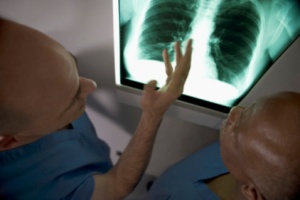
Since its creation, NIOSH has been responsible by law for administering a program that offers chest radiographs, or x-rays, to provide underground coal miners with medical monitoring for coal workers’ pneumoconiosis, or "black lung," the term by which this serious but preventable occupational lung disease is probably better known among the general public. The NIOSH Coal Workers’ Health Surveillance Program (CWHSP) evaluates miners’ chest radiographs for the presence and severity of changes in the lung associated with coal workers’ pneumoconiosis. The program uses a standardized classification system developed by the International Labour Office (ILO).

Until recently, the ILO system could only be applied to traditional film radiographs, because it required the use of film-based radiography, the only radiography technology that existed years ago when the technical standard was developed. As a result, the system (and critically for our agency, the NIOSH program based on the system) could not be applied to the modern, digital chest images, which have largely replaced film-based radiographs at medical facilities in the United States. Digital imaging has largely replaced film methods because of its many advantages: It eliminates the need to develop film. It allows the electronic images to be stored and used economically like other computer files. It allows images to be adjusted to improve visualization of abnormalities and to compensate for problems like over-exposure of the image.

Recognizing the need to modernize the CWHSP, NIOSH embarked on a sustained effort about seven years ago to enable use of digital chest imaging in the program. An important barrier was the need to develop the highly technical guidance needed to ensure that digital imaging would provide results equivalent to film radiography under the ILO classification system. This was important because the ability to adjust the appearance of digital images could potentially affect the interpretation of specialists who read the radiograph to identify and classify abnormalities associated with coal workers’ pneumoconiosis. Because a body of information in this area did not already exist, NIOSH and partners carried out the necessary research.

Based on findings from the research, NIOSH published a guidance document on best technical approaches to applying ILO classification to digital chest images (http://www.cdc.gov/niosh/docs/2011-198/). Then, using these technical specifications, NIOSH proposed federal regulations last January to enable use of digital chest imaging in the CWHSP. NIOSH then drafted final regulations that were responsive to public comments. On September 13, NIOSH achieved the major milestone of publishing the final regulations enabling use of modern, digital chest images in CWHSP (http://www.regulations.gov/#!documentDetail;D=CDC-2011-0013-0018). The new regulations will become effective on October 15.

Many have benefitted from these efforts. As NIOSH worked to update its own program, it partnered with ILO and helped to update the ILO classification system. Published in late 2011, this ILO update extends applicability of the classification system to digital chest images and makes digitized standard films available for use in film classification throughout the world. Those interested in classifying digital chest images using the ILO system may want to try out NIOSH BViewer© software. It can be downloaded for free from the NIOSH Digital Chest Radiography Web page (http://www.cdc.gov/niosh/topics/chestradiography/digital-images.html). The Web page also has information about the NIOSH image repository, a new effort to collect digital chest images that will be useful for teaching, quality assurance, and research in image classification for pneumoconiosis.

Those interested in the Coal Workers’ Health Surveillance Program, including healthcare facilities interested in becoming participants, can find detailed information on the Program’s Web site (http://www.cdc.gov/niosh/topics/surveillance/ords/CoalWorkersHealthSurvProgram.html).

The Coal Workers’ Health Surveillance Program is a key component of national efforts by diverse partners to prevent a terrible but preventable occupational lung disease. The repository of x-rays on file in our laboratory in Morgantown, W.Va., comprising more than 390,000 film images stored on more than 500 shelves, represents more than 40 years of continuing health surveillance and service. I am gratified by the hard work of NIOSH’s technical staff and their partners in updating the program to ensure it remains responsive to this continuing 21st century occupational health need.

KEYWORDS: black lung NIOSH

Share This Story

Looking for a reprint of this article?
From high-res PDFs to custom plaques, order your copy today!

Recommended Content

JOIN TODAY
to unlock your recommendations.

Already have an account? Sign In

  • forklift safety

    Exploring the latest technologies in forklift safety

    With more staff and more stock in warehousing now more...
    Facility Safety
    By: Josh Cramer
  • welding

    All about welder’s flash or arc eye

    A flash burn is a painful inflammation of the cornea,...
    Environmental Health and Safety
  • dangerous jobs

    The 10 most dangerous jobs in the U.S.

    On-the-job deaths have been rising — hitting the highest...
    Government Safety Regulations
    By: Benita Mehta
Manage My Account
  • eMagazine Subscriptions
  • ISHN Newsletter & Other Newsletter Alerts
  • Online Registration
  • Manage My Preferences
  • Subscription Customer Service

More Videos

Sponsored Content

Sponsored Content is a special paid section where industry companies provide high quality, objective, non-commercial content around topics of interest to the ISHN audience. All Sponsored Content is supplied by the advertising company and any opinions expressed in this article are those of the author and not necessarily reflect the views of ISHN or its parent company, BNP Media. Interested in participating in our Sponsored Content section? Contact your local rep!

close
  • man wearing the the Sundström SR200 Full Face Mask Respirator
    Sponsored byOHD

    5 Fit Testing Mistakes That Could Cost You

  • This image shows Magid AcuSpex polarized blue mirrored safety glasses.
    Sponsored byMagid Glove and Safety

    Construction PPE Guide: What Crews Need for Each Task

  • lone worker in confined space
    Sponsored byAlphasense Ltd.

    GET THE LEAD OUT of your Safety Oxygen Sensors!

Popular Stories

SpaceX 7 launch

OSHA Investigating Fatal Fall at SpaceX Starbase

Automated loading dock equipment

After March 2026 Rivian Death, Safety Managers Reassess Loading Dock Systems Under OSHA's Warehouse Emphasis Program

psychology in the workplace

Most Workplaces Measure Psychological Safety, Ignoring Psychosocial Risks

top 10 most dangerous jobs

Poll

Seasonal Readiness

With the federal heat stress prevention rule on the horizon, which area of your safety program needs the most attention?
View Results Poll Archive

Products

Surviving an OSHA Audit A Management Guide, 2nd Edition

Surviving an OSHA Audit A Management Guide, 2nd Edition

See More Products

ISHN Podcasts

Related Articles

  • Tool helps construction companies evaluate workplace safety

    See More
  • MSHA targets black lung with new rule (10/18)

    See More
  • ASSE objects to lack of worker protection in EPA's proposed new rule

    See More

Events

View AllSubmit An Event
  • December 16, 2016

    ASSE to host virtual symposium on new OSHA Walking-Working Standard

    The American Society of Safety Engineers is offering a virtual symposium to help occupational safety and health professionals better understand the sweeping changes OSHA recently made to its final rule on Walking-Working Surfaces and Personal Fall Protection standards in relation to slip, trip and fall hazards.
View AllSubmit An Event

Related Directories

  • New Pig

    The world leader in absorbent products, New Pig provides innovative products to help maintain cleaner, safer, more productive work environments.
×

Become a Leader in Safety Culture

Build your knowledge with ISHN, covering key safety, health and industrial hygiene news, products, and trends.

JOIN TODAY
  • RESOURCES
    • Advertise
    • Contact Us
    • Directories
    • Manufacturing Division
    • Store
    • Want More
  • SIGN UP TODAY
    • Create Account
    • eMagazine
    • Newsletters
    • Customer Service
    • Manage Preferences
  • SERVICES
    • Marketing Services
    • Reprints
    • Market Research
    • List Rental
    • Survey/Respondent Access
  • STAY CONNECTED
    • LinkedIn
    • Facebook
    • YouTube
    • X (Twitter)
  • PRIVACY
    • PRIVACY POLICY
    • TERMS & CONDITIONS
    • DO NOT SELL MY PERSONAL INFORMATION
    • PRIVACY REQUEST
    • ACCESSIBILITY

Copyright ©2026. All Rights Reserved BNP Media, Inc. and BNP Media II, LLC.

Design, CMS, Hosting & Web Development :: ePublishing
