ISHN logo
search
cart
facebook twitter linkedin youtube
  • Sign In
  • Create Account
  • Sign Out
  • My Account
ISHN logo
  • NEWS
    • Today's News
    • Global Safety News
    • Government Regulations
  • PRODUCTS
    • Product Innovations
    • Featured Products
  • TOPICS
    • Environmental Health and Safety
    • Facility Safety
    • Workplace Health
    • Occupational Safety
    • PPE
    • More Topics
  • CONSTRUCTION
  • TECHNOLOGY
  • COLUMNS
    • Best Practices
    • Dave Johnson: What’s going on
    • Editorial Comments
    • Leading Safety
  • MULTIMEDIA
    • ISHN Podcast
    • Videos
    • Cold Stress Education Quiz
    • Webinars
    • White Papers
  • MORE
    • Buyer's Guide
    • Newsletters
    • Convention Companion
    • Polls
    • Events
    • ISHN Store
    • Sponsor Insights
  • EMAGAZINE
    • eMagazine
    • Archived Issues
    • Contact
    • Advertise
  • JOIN TODAY!
Today's Safety NewsFacility Safety

House bill targets deadly dust explosions

Combustible dust protections caught up in red tape

February 22, 2013

CongressSource: Center for Public Integrity

A group of House Democrats introduced legislation this week that aims to protect workers from combustible dust – a fire and explosion threat that has killed or injured hundreds of workers in recent decades. Workers across a range of industries face dust dangers from materials as varied as sugar, coal, wood and plastic.

Last year, the Center for Public Integrity examined the toll taken by the tragedies as well as the the political, bureaucratic and economic forces that have affected attempts to strengthen regulations addressing combustible dust dangers.

OSHA began the process of issuing a rule to address the hazard in 2009, but its progress has stalled.

Interim protections within a year

The new bill would compel the agency to issue interim protections within a year and set deadlines for finalizing a permanent rule.

“While OSHA has taken some limited steps to protect workers and property from combustible dust explosions, the widely recommended protections necessary to prevent these explosions are caught up in red tape and special interest objections,” Rep. George Miller, the senior Democrat on the House Committee on Education and the Workforce, said in a statement announcing the bill’s introduction.

OSHA has repeatedly set rule deadlines, then moved them back.

Standards set by the nonprofit National Fire Protection Association (NFPA) have existed for decades, but are optional in many areas. Enforcement is often weak or nonexistent. Thursday’s bill would require OSHA to base much of its interim standard on these NFPA guidelines. It would mandate more worker training, a regimen of cleaning and inspections to prevent dust buildups, and work procedures and equipment design to minimize explosion and fire risk.

The new bill would require OSHA to issue an interim standard within a year, then a proposed rule within another 18 months. The agency would then have to finalize the rule within the next three years.

Industry wants stronger enforcement of existing regs

The rule could affect a large number of businesses, and many industry groups have pushed back, arguing for exemptions or calling the measure unnecessary.

The American Chemistry Council has taken one of the strongest positions opposing the rule, saying in a statement last year to the Center, “We believe that the accidents that have occurred might have been prevented if current OSHA regulations and relevant combustible dust consensus standards had been followed and enforced.” A representative for the trade group did not respond to a request for comment Friday.

OSHA has repeatedly set rule deadlines, then moved them back. OSHA is one of only three federal agencies that must convene a panel of potentially affected small businesses to allow them to raise objections to an unpublished rule draft. The agency’s most recent agenda said it hopes to begin this stage in the process in October.

A spokesman for OSHA did not respond to a request for comment on Thursday’s legislation.

As the rulemaking process has dragged on, fires and explosions have continued. The Center detailed a series of three accidents in 2011, all involving combustible iron dust, that killed five workers at the Hoeganaes Corp. plant in Gallatin, Tenn.

OSHA faced a similar situation after a series of high-profile dust explosions at grain elevators in the 1970s. The agency proposed regulating the handling of grain dust, and industry groups objected vociferously. OSHA issued the rule in 1987 and, in a 2003 review, found that deaths in grain dust explosions had dropped by about 70 percent. The primary industry group that opposed the rule recently credited it with reducing deaths and injuries without imposing the devastating economic burden it had originally predicted.

KEYWORDS: Combustible dust Explosions rulemaking

Share This Story

Looking for a reprint of this article?
From high-res PDFs to custom plaques, order your copy today!

Recommended Content

JOIN TODAY
to unlock your recommendations.

Already have an account? Sign In

  • forklift safety

    Exploring the latest technologies in forklift safety

    With more staff and more stock in warehousing now more...
    Facility Safety
    By: Josh Cramer
  • welding

    All about welder’s flash or arc eye

    A flash burn is a painful inflammation of the cornea,...
    Environmental Health and Safety
  • dangerous jobs

    The 10 most dangerous jobs in the U.S.

    On-the-job deaths have been rising — hitting the highest...
    Construction Industry Safety and Health
    By: Benita Mehta
Manage My Account
  • eMagazine Subscriptions
  • ISHN Newsletter & Other Newsletter Alerts
  • Online Registration
  • Manage My Preferences
  • Subscription Customer Service

More Videos

Sponsored Content

Sponsored Content is a special paid section where industry companies provide high quality, objective, non-commercial content around topics of interest to the ISHN audience. All Sponsored Content is supplied by the advertising company and any opinions expressed in this article are those of the author and not necessarily reflect the views of ISHN or its parent company, BNP Media. Interested in participating in our Sponsored Content section? Contact your local rep!

close
  • man wearing the the Sundström SR200 Full Face Mask Respirator
    Sponsored byOHD

    5 Fit Testing Mistakes That Could Cost You

  • This image shows Magid AcuSpex polarized blue mirrored safety glasses.
    Sponsored byMagid Glove and Safety

    Construction PPE Guide: What Crews Need for Each Task

  • lone worker in confined space
    Sponsored byAlphasense Ltd.

    GET THE LEAD OUT of your Safety Oxygen Sensors!

Popular Stories

SpaceX 7 launch

OSHA Investigating Fatal Fall at SpaceX Starbase

Worker Impairment

How to Tell When a Co-Worker is Impaired? A Safety Pro’s Challenge

Automated loading dock equipment

After March 2026 Rivian Death, Safety Managers Reassess Loading Dock Systems Under OSHA's Warehouse Emphasis Program

top 10 most dangerous jobs

Poll

Seasonal Readiness

With the federal heat stress prevention rule on the horizon, which area of your safety program needs the most attention?
View Results Poll Archive

Products

Surviving an OSHA Audit A Management Guide, 2nd Edition

Surviving an OSHA Audit A Management Guide, 2nd Edition

See More Products

ISHN Podcasts

Related Articles

  • House committee approves bill addressing dust explosions (4/10)

    See More
  • Lawmakers push bill to prevent dust explosions (3/4)

    See More
  • US_CSB_Yenkin_Thumb1.jpg

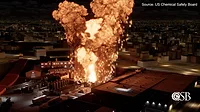
    U.S. Chemical Safety Board Releases New Safety Video on the Fatal Combustible Dust Explosions and Fires at Didion Milling in Cambria, Wisconsin

    See More

Related Products

See More Products
  • 1119010160.jpg

    Guidelines for Combustible Dust Hazard Analysis

  • 0470074876vol4.jpg

    Patty's Industrial Hygiene, Volume 4, Program Management and Specialty Areas of Practice , 6th Edition

  • 9781498773416.jpg

    The Legal Aspects of Industrial Hygiene and Safety

See More Products

Related Directories

  • Scientific Dust Collectors

    Scientific Dust Collectors (SDC) began in 1981 when our first patent for improving filter cleaning was issued. Our patented UniFlow Supersonic Nozzle -based cleaning system is where it all starts. Combined with our High Side Inlets, Wide Filter Spacing, and Inlet Baffling, we are able to guarantee performance, efficiency, and filter life. ASHRAE 199 Test Lab on site.
×

Become a Leader in Safety Culture

Build your knowledge with ISHN, covering key safety, health and industrial hygiene news, products, and trends.

JOIN TODAY
  • RESOURCES
    • Advertise
    • Contact Us
    • Directories
    • Manufacturing Division
    • Store
    • Want More
  • SIGN UP TODAY
    • Create Account
    • eMagazine
    • Newsletters
    • Customer Service
    • Manage Preferences
  • SERVICES
    • Marketing Services
    • Reprints
    • Market Research
    • List Rental
    • Survey/Respondent Access
  • STAY CONNECTED
    • LinkedIn
    • Facebook
    • YouTube
    • X (Twitter)
  • PRIVACY
    • PRIVACY POLICY
    • TERMS & CONDITIONS
    • DO NOT SELL MY PERSONAL INFORMATION
    • PRIVACY REQUEST
    • ACCESSIBILITY

Copyright ©2026. All Rights Reserved BNP Media, Inc. and BNP Media II, LLC.

Design, CMS, Hosting & Web Development :: ePublishing