ISHN logo
search
cart
facebook twitter linkedin youtube
  • Sign In
  • Create Account
  • Sign Out
  • My Account
ISHN logo
  • NEWS
    • Today's News
    • Global Safety News
    • Government Regulations
  • PRODUCTS
    • Product Innovations
    • Featured Products
  • TOPICS
    • Environmental Health and Safety
    • Facility Safety
    • Workplace Health
    • Occupational Safety
    • PPE
    • More Topics
  • CONSTRUCTION
  • TECHNOLOGY
  • COLUMNS
    • Best Practices
    • Dave Johnson: What’s going on
    • Editorial Comments
    • Leading Safety
  • MULTIMEDIA
    • ISHN Podcast
    • Videos
    • Cold Stress Education Quiz
    • Webinars
    • White Papers
  • MORE
    • Buyer's Guide
    • Newsletters
    • Convention Companion
    • Polls
    • Events
    • ISHN Store
    • Sponsor Insights
  • EMAGAZINE
    • eMagazine
    • Archived Issues
    • Contact
    • Advertise
  • JOIN TODAY!
Today's Safety NewsOccupational SafetyPPE

Combustible dust exposure: lessons learned
By Dave Johnson
August 2, 2013

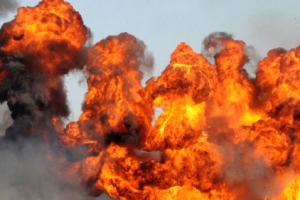
explosionFirefighting operations can inadvertently increase the chance of a combustible dust explosion if they:

●Use tactics that cause dust clouds to form or reach the explosible range.

●Use tactics that introduce air, creating an explosible atmosphere.

●Apply incorrect or incompatible extinguishing agents.

●Use equipment or tools that can become an ignition source.

The examples below illustrate these general principles in specific incidents. In some examples, combustible dust fueled the entire event; in others, combustible dust may have contributed to it. In most cases, the initial ignition sequence is unknown or unreported.

South Dakota, 2011: two firefighters killed. According to a National Institute for Occupational Safety and Health (NIOSH) report, a fire occurred in a coal bin that fed a boiler. Firefighters brought it under control at first, but it flared up again. Two firefighters then climbed onto the roof and directed a water hose stream through a hatch. An explosion killed both of them. The explosion may have involved combustible dust, flammable gases, steam, or a combination of these factors.

Wisconsin, 2010: one firefighter killed and eight injured. According to a NIOSH report, foundry workers improperly placed a barrel of hot slag in a recycling dumpster with aluminum shavings, and a fire resulted. The local fire department had not conducted a proper pre-incident survey of the facility and was unaware of the incompatibility of water and burning metals. They attacked the fire with water first, and then foam. Despite making no progress toward extinguishing the fire, as well as visual warnings such as bluish-green flames, the firefighters continued to attack the fire at close range. An explosion killed one of them and injured eight others.

Oregon, 2010: one firefighter injured. News reports indicated that a fire occurred in sawdust waste on a conveyor at a forest products plant. A spark sensor and interlock operated properly and shut down the conveyor. When an access door was opened, the inrush of air triggered an explosion that injured a firefighter.

Unknown location, 2004: two firefighters injured. A National Fire Protection Association (NFPA) report on firefighter injuries described a smoldering fire in ductwork at a furniture manufacturing company. Plant personnel told the fire department that the associated dust collector had been shut down, but it had not. Two firefighters on an aerial lift were injured when they gained access to the duct and an inrush of air caused an explosion.

Maryland, 2005: four firefighters injured. A fire department responded to light smoke coming from a sawdust hopper at a boat manufacturing plant. Two firefighters opened an access door and directed a straight stream of water onto the burning sawdust. A dust cloud discharged from the door, ignited immediately, and injured both firefighters. A second team of firefighters, unable to confer with the injured firefighters, repeated the attack using the same tactics. The same sequence of events recurred and they were also injured.

Ohio, 2003: two firefighters killed, eight injured. According to a NIOSH report, several fire departments were fighting a fire at a lumber company in an oxygen-limiting silo that was filled with wood chips. Firefighters were directing water streams through openings at the base and the top of the silo when there was an explosion. A firefighter on top of the silo and another on an aerial platform were killed). The report cited improper tactics for oxygen-limiting silos as a factor in the outcome.

Source: OSHA publication, “Firefighting Precautions at Facilities with Combustible Dust”

KEYWORDS: Combustible dust hazmat

Share This Story

Looking for a reprint of this article?
From high-res PDFs to custom plaques, order your copy today!

Djohnson new pic 7.10.22

Dave Johnson was chief editor of ISHN from 1980 until early 2020. He uses his decades of expertise to write on hot topics and current events in the world of safety. He also writes and edits at Dave Johnson’s Writing Shop LLC and is editor-at-large for ISHN. Find him at https://www.facebook.com/Dave-Johnsons-Writing-Shop-101316571547263/, and on LinkedIn at https://www.linkedin.com/in/daveljohnsoneditor/.

Recommended Content

JOIN TODAY
to unlock your recommendations.

Already have an account? Sign In

  • forklift safety

    Exploring the latest technologies in forklift safety

    With more staff and more stock in warehousing now more...
    Facility Safety
    By: Josh Cramer
  • welding

    All about welder’s flash or arc eye

    A flash burn is a painful inflammation of the cornea,...
    Environmental Health and Safety
  • dangerous jobs

    The 10 most dangerous jobs in the U.S.

    On-the-job deaths have been rising — hitting the highest...
    Construction Industry Safety and Health
    By: Benita Mehta
Manage My Account
  • eMagazine Subscriptions
  • ISHN Newsletter & Other Newsletter Alerts
  • Online Registration
  • Manage My Preferences
  • Subscription Customer Service

More Videos

Sponsored Content

Sponsored Content is a special paid section where industry companies provide high quality, objective, non-commercial content around topics of interest to the ISHN audience. All Sponsored Content is supplied by the advertising company and any opinions expressed in this article are those of the author and not necessarily reflect the views of ISHN or its parent company, BNP Media. Interested in participating in our Sponsored Content section? Contact your local rep!

close
  • man wearing the the Sundström SR200 Full Face Mask Respirator
    Sponsored byOHD

    5 Fit Testing Mistakes That Could Cost You

  • This image shows Magid AcuSpex polarized blue mirrored safety glasses.
    Sponsored byMagid Glove and Safety

    Construction PPE Guide: What Crews Need for Each Task

  • lone worker in confined space
    Sponsored byAlphasense Ltd.

    GET THE LEAD OUT of your Safety Oxygen Sensors!

Popular Stories

SpaceX 7 launch

OSHA Investigating Fatal Fall at SpaceX Starbase

Worker Impairment

How to Tell When a Co-Worker is Impaired? A Safety Pro’s Challenge

Automated loading dock equipment

After March 2026 Rivian Death, Safety Managers Reassess Loading Dock Systems Under OSHA's Warehouse Emphasis Program

top 10 most dangerous jobs

Poll

Seasonal Readiness

With the federal heat stress prevention rule on the horizon, which area of your safety program needs the most attention?
View Results Poll Archive

Products

Surviving an OSHA Audit A Management Guide, 2nd Edition

Surviving an OSHA Audit A Management Guide, 2nd Edition

See More Products

ISHN Podcasts

Related Articles

  • Management systems lessons learned

    See More
  • ocean

    Lessons learned from tragedies at sea

    See More
  • sports leadership

    Improving safety leadership: Lessons learned from the sports world

    See More

Related Products

See More Products
  • 1119010160.jpg

    Guidelines for Combustible Dust Hazard Analysis

  • ANSI/AIHA/ASSE Z9.9-2010 Portable Ventilation Systems

See More Products

Related Directories

  • Scientific Dust Collectors

    Scientific Dust Collectors (SDC) began in 1981 when our first patent for improving filter cleaning was issued. Our patented UniFlow Supersonic Nozzle -based cleaning system is where it all starts. Combined with our High Side Inlets, Wide Filter Spacing, and Inlet Baffling, we are able to guarantee performance, efficiency, and filter life. ASHRAE 199 Test Lab on site.
  • VAC-U-MAX

    VAC-U-MAX is a worldwide leader in the design and manufacturing of industrial vacuum cleaners engineered for the high-volume recovery of combustible dust, liquids, sludge, heavy metals, granular materials, silica dust, metal powders, reactive powders, flammable liquids, and more. To learn more about our portable, continuous-duty, and central vacuum cleaning systems, visit www.vac-u-max.com and complete a Request for Quote (RFQ).
×

Become a Leader in Safety Culture

Build your knowledge with ISHN, covering key safety, health and industrial hygiene news, products, and trends.

JOIN TODAY
  • RESOURCES
    • Advertise
    • Contact Us
    • Directories
    • Manufacturing Division
    • Store
    • Want More
  • SIGN UP TODAY
    • Create Account
    • eMagazine
    • Newsletters
    • Customer Service
    • Manage Preferences
  • SERVICES
    • Marketing Services
    • Reprints
    • Market Research
    • List Rental
    • Survey/Respondent Access
  • STAY CONNECTED
    • LinkedIn
    • Facebook
    • YouTube
    • X (Twitter)
  • PRIVACY
    • PRIVACY POLICY
    • TERMS & CONDITIONS
    • DO NOT SELL MY PERSONAL INFORMATION
    • PRIVACY REQUEST
    • ACCESSIBILITY

Copyright ©2026. All Rights Reserved BNP Media, Inc. and BNP Media II, LLC.

Design, CMS, Hosting & Web Development :: ePublishing