Some state OSH agencies accused of failing in their mission
OSHA’s annual evaluation finds wide variances
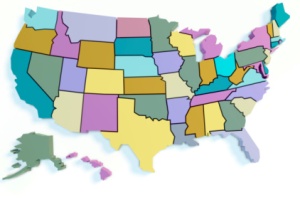 OSHA’s annual evaluation of state workplace safety agencies found a wide range of problems and shortcomings in the state programs, including inadequate enforcement staffing, low fines, poor investigative procedures of whistleblower complaints, slow response to complaints and failure to verify that employers had corrected violations for which they had been cited.
The National Council for Occupational Safety and Health (National COSH) says the report calls into question whether workers in some states that run their own OSHA programs are adequately protected on the job.
“From staffing shortages to insufficient penalties against negligent employers, some of these state-run programs fail to acceptably enforce worker safety rules, said Tom O’Connor, executive director of National COSH.
Under the U.S. Occupational Safety and Health Act (OSH Act), state-run OSHA programs must be at least as effective as federal OSHA. Each year, OSHA issues Federal Annual Monitoring and Evaluation (FAME) reports that measure how state-run programs perform.
Staffing levels, fines low
According to National Cosh’s analysis of the OSHA report:
- A number of states have fallen far below the enforcement staffing benchmarks agreed upon between federal OSHA and the state programs, calling into question whether these programs are capable of enforcing the OSH Act in their states. Cuts to state budgets likely will further exacerbate this situation.
- Many states have very low fines for serious violations, even for repeat violators in some states. But because fines are so low, many companies may factor in the penalties simply as a cost of doing business instead of ensuring safe and healthy conditions for their employees.
- In a number of states, nearly all whistleblower complaints are dismissed as “without merit.” This raises doubts about whether whistleblowers who speak up about unsafe conditions are receiving adequate review and protection.
- Many states regularly classify as “non-serious” violations that federal OSHA believes should be considered “serious,” resulting in lower penalties.
- A number of states offer automatic penalty reductions for “cooperative” employers without any justification.
- Some states fell far below their inspection goals for the year.
Some examples include:
- In South Carolina, the average penalty for “serious” violations is a mere $538 (compared to about $2,000 in federal OSHA jurisdictions and a $7,000 maximum penalty).
- Nevada’s program had an extraordinarily high 53 percent turnover rate due to low pay and mandatory furloughs, severely hampering their enforcement capacity. As a result, the state fell 41 percent short of meeting its inspection goal.
- In North Carolina, penalties for repeat violations are extremely low – averaging only $2,663, compared to $14,326 in federal OSHA jurisdictions.
- California’s OSHA program is drastically understaffed, with 186 enforcement staff, compared to the 805 positions that federal OSHA determined are the minimum necessary for the state to be at least as effective as federal OSHA, as required for a state program to operate.
- Alaska’s program has failed to meet its inspection goals for five consecutive years. This year, it fell short of its goal by 38 percent.
- Indiana’s OSHA program took more than a month, on average, to initiate an inspection in response to a complaint of unsafe conditions by a worker. Federal OSHA considers 10 days to be the maximum reasonable average for Indiana.
- Arizona’s OSHA program is enforcing a state law on residential fall protection that is significantly weaker than federal OSHA standards, failing to protect construction workers who are working at heights up to 15 feet.
A slap on the wrist
“The minuscule fines imposed by state OSHA programs function more as a slap on the wrist than actually forcing employers to clean up their acts,” O’Connor said. “With the maximum allowable fine already woefully insufficient, further reducing penalties against negligent – even repeatedly negligent – employers hardly incentivizes them to operate a safe workplace.”
Repeated attempts to amend the OSH Act to raise these maximum penalties – even to keep up with inflation over the decades since they were established – have failed in the U.S. Congress.
Some state programs, however, have exceeded federal OSHA in developing innovative new outreach, education and enforcement initiatives. For example, several states – including Washington, Oregon, New York, New Jersey, Connecticut and Illinois – have issued rules protecting workers from violence on the job, particularly in healthcare settings. And in Oregon, the state OSHA program has developed a range of specific standards regarding safety in agricultural work, going far beyond federal OSHA. A number of states also have established mandatory safety programs and safety committees in certain workplaces, requirements that do not exist currently under federal OSHA.
Abatement during contest rules
California and Washington have adopted rules that require employers to abate alleged hazards even while contesting fines.
“This ensures that worker safety is not continually jeopardized while an employer fights a violation,” according to National COSH.
“If more states adopt such these mandatory safety programs and ‘abatement during contest’ rules, worker safety can be further protected, even if state-run agencies are financially hamstrung,” O’Connor said.
To read the state reports, visit: www.osha.gov/dcsp/osp/efame/index.html.
For a list of state-run OSHA programs, visit: www.osha.gov/dcsp/osp/index.html.
The National Council for Occupational Safety and Health is a federation of local and statewide organizations; a private, non-profit coalition of labor unions, health and technical professionals, and others interested in promoting and advocating for worker health and safety.
Looking for a reprint of this article?
From high-res PDFs to custom plaques, order your copy today!