Achieving blast-zone safety when using wireless gas detection
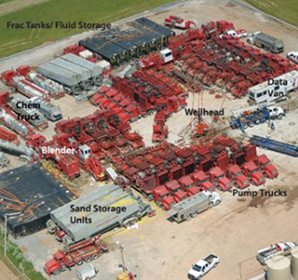 Area monitoring for toxic and flammable gases using wireless detection systems keeps workers and assets safe by providing a cost-effective early warning system for unseen threats such as hydrogen sulfide and methane during oil and gas exploration operations.
Oil and gas exploration often involves the controlled use of explosives to facilitate extraction. Traditionally, wireless devices have been shut off to ensure detonators are not inadvertently triggered by a radio-frequency (RF) signal. Turning off wireless gas-detection equipment, however, leaves workers exposed if the atmosphere becomes bad – that is, until now.
For decades, blast-area security prohibited the use of wireless devices at any location where blasting caps or other explosives are present to prevent a wireless signal from inadvertently detonating explosives. If a radio-frequency signal is powerful enough, the wires of a commercial electric detonator can serve as an antenna and pick up the electromagnetic signal, potentially firing the detonator and prematurely setting off explosives. To eliminate such a risk, wireless devices such as cell phones and two-way radios – as well as radio-based gas-detection systems – need to be shut off in and around active blast-zone areas.
Shutting off wireless gas detectors – which can be placed near potentially hazardous areas such as drill wellheads – leaves workers at the job site potentially exposed to unseen toxic gases and vapors without an early warning system to alert them to contaminated air. Non-wireless portable or personal monitors that cover a worker’s breathing zone are recommended at blast sites, but they only alarm at the time of exposure and do not provide early detection to dangerous or potentially explosive gas. Wireless systems with remote gas detectors can be quickly deployed around a perimeter of a project or in other fixed areas to enhance personal and handheld monitoring by providing continuous, real-time monitoring to detect toxic gases, such as hydrogen sulfide (H2S) and flammable vapors, such as methane (CH4), before they pose a danger to workers or others in the area.
Key applications in oil and gas
In the upstream oil and gas industry, one of the requirements for maximizing production of new or existing wells relies on a process known as “perforation.” It involves generating holes in the production casing to get access to a formation or reservoir. One typical method requires using a perforating gun that electrically fires charges that put holes into the wellbore casing, or liner. Its key advantage includes improved control of the well by providing precision in connecting to formations and the ability to seal perforations that are no longer productive.
While blasting is a key part of the process, it can lead to dangerous emissions of deadly or combustible gases and vapors, including leaks from the wellbore. Wireless detectors can be deployed in and around the wellbore for early detection of any gas or vapor leaks. Data trailer personnel can monitor the readings in real time and the data gets logged for later retrieval. Area-wide alarms can be sounded if leaks threaten personnel, allowing teams to avoid direct contact with dangerous gases that can have both short-term and long-term health consequences. Workers are often also equipped with non-wireless personal gas detection monitors.
Natural gas continues to play a key role in the global energy market. Technological advances in horizontal drilling and hydraulic fracturing, or fracking, have enabled greater access to shale formations, providing a commercially viable and vast source of natural gas reserves.[i]
Fracking begins with traditional vertical drilling to reach deep underground shale formations and then turns horizontal as the drill moves through the shale thousands of feet below the surface. Perforation blasts are then used to punch holes in the casing and shale to create small fissures through which hydrocarbons flow into the well stream. Fracturing fluid, consisting primarily of water and sand, along with chemicals to improve flow, is then pumped into the well to fracture the underground fissures. The water is removed, but the sand remains to hold the fractures open, which permits gas to flow to the surface. While the drilling process can take about 2 to 3 months to complete, fracking can be completed in days and can provide up to 20 to 40 years of well production.[ii]
Fracking sites are typically large areas where trucks bring in source materials and remove spent materials. This makes perimeter monitoring one of the key applications in fracking, which provides safety for workers and any communities or other work sites that may be nearby. At the same time, separate monitors can be deployed near the wellbore and other process equipment to ensure any unrecovered gases can be identified and appropriate safety actions can be taken.
Coalbed methane is a form of natural gas extracted from coal beds. The methane is stored inside the coal, but open fractures, or cleats, allow the gas to escape. Because of the methane content, gas-detection monitoring is critical. While methane is non-toxic, it is extremely flammable and can form explosive mixtures with air. The MeshGuard system monitors LEL and is rugged enough to operate dependably in these harsh monitoring environments.
Wireless gas detection system determined safe to use in blast zones
Third-party tests conducted by independent laboratory, Franklin Applied Physics, Inc.
of Oaks, Pennsylvania, verify the wireless MeshGuard Gas-Detection System is safe to use in blast-zone areas without posing a risk of premature or unexpected detonation of explosives. According to the report, the MeshGuard sends a low-voltage signal in a small fraction of a second, equivalent to about 0.07 milliwatts, which is “imperceptible” by even the most sensitive commercial electric detonators.[iii]
The wireless MeshGuard Gas-Detection System provides simple and rapid deployments in a wide range of industrial-safety and remote-monitoring applications. It combines gas-detection and advanced wireless technology to provide real-time control of area-wide gas and vapor threats, while eliminating the need for time-consuming and costly cable-installation projects.
Blast zone test methodology
The MeshGuard system, which uses a small radio transmitter to send data wirelessly, is safe for use in close proximity to the lead wires and explosive charges of commercial electric detonation systems.
According to the report, any RF transmitter can induce electric currents to flow in nearby electric wires, whereby the wires act like an antenna. If the RF transmitter is near the lead wires of an electric detonator, then current flows through the bridge wire of the detonator. The goal was to determine if enough current would flow to heat the bridge wire, and subsequently cause the detonator to fire. Because any type of commercial electric detonator might be used around the MeshGuard detection system, a worst-case approach was assumed by testing for the “lowest safe power level of any type of commercial electric detonators.” The no-fire level of the detonator was set at 40 milliwatts because most commercial electric detonators operate at a higher no-fire power level.
The tests utilized a recently calibrated volt-ohm meter (VOM) meter to measure signal strength; a vacuum thermocouple (VTC) simulated the blasting cap; insulated hookup wire (AWG 22) was used to simulate the lead wires of an electric detonator; and a #2 incandescent light bulb simulated the detonator. During startup of the MeshGuard monitor, the signal-strength meter went full scale, indicating the unit was indeed emitting electromagnetic radiation.
About one foot (30cm) of wire was connected to the ends of the lead wires of the #2 light bulb to create a dipole antenna. If such an antenna picks up enough RF power to fire an electric detonator, the light bulb glows brightly. When this assembly was placed near the MeshGuard, which was then turned on, the bulb did not glow. Various orientations of the pick-up antenna were attempted, including connecting the wire ends together to form a loop antenna. All of these efforts failed to make the bulb glow, indicating the RF power pick-up was less than the power-level required to fire an electric detonator.
The detector was then tested using the simulated electric detonator. By connecting about two feet (60cm) of the lead wires to the VTC, which is a very sensitive RF detector, a dipole antenna was formed. This assembly is similar to an electric detonator with its lead wires stretched out. It was tested with the MeshGuard many times while re-orienting the antenna in relation to the MeshGuard detector. The vacuum thermocouple registered an output of only 1.50 volts, an indication of negligible RF power pick-up. This corresponds to about 0.07 milliwatts, which is “imperceptible” by even the most sensitive commercial electric detonators.
In a final extreme worst-case test, the ends of the lead wires were twisted together to make a loop and placed on top of the MeshGuard antenna. This compares with putting an electric detonator with short-circuited leads directly on top of the MeshGuard. The simulated electric detonator (that is, the VTC) did not register any RF power pick-up in this scenario.
The end result shows the MeshGuard system can be safely used in blast zones to protect workers from toxic and flammable gases without risk of an unexpected firing of nearby electric detonators. For those who already own a MeshGuard system, it can now be used safely in blast zones without implementing any setting changes or upgrades.
Acronyms and terminology
|
Blasting cap |
A small primary explosive typically used to detonate larger, more powerful secondary explosives. |
|
Bridge wire |
A relatively thin resistance wire used as a pyrotechnic initiator. Electric current heats the wire to set off a chemical reaction that melts the wire and opens the circuit. |
|
Dipole antenna |
A common radio-wave antenna created by wire or metal rods set in a parallel and collinear fashion whereby voltage is applied at the center between the two conductors. |
|
Fracking |
Fracking is short for induced hydraulic fracturing, or hydrofracking. It is a process where highly pressurized fluids are used to create underground fractures to increase the release of petroleum, natural gas and other resources trapped in shale and rock. |
|
H2S |
Hydrogen sulfide (H2S) is a very poisonous chemical compound that is colorless and flammable, with the foul odor of rotten eggs. It is often produced by the bacterial breakdown of organic matter in the absence of oxygen. |
|
LEL |
The lower explosive limit, or LEL, is a flammability limit based on the lowest concentration of gas or vapor in air capable of combustion if it finds an ignition source, such as an electrical arc or flame. |
|
MeshGuard System |
The wireless MeshGuard Gas-Detection System provides rapid deployment in a wide range of industrial- safety and remote-monitoring applications. It combines gas-detection and advanced wireless technology to provide real-time control and eliminate the need for time-consuming and costly cable- installation projects. |
|
Perforation |
Perforation refers to blasting holes in the casing or liner of an oil well to access petroleum or gas reservoirs trapped in porous or fractured rock formations. |
|
ProRAE Guardian |
RAE Systems’ ProRAE Guardian is an advanced virtual command center for real-time monitoring of wireless sensors. A variety of RAE Systems monitors and third-party products can communicate directly or through gateway products with ProRAE Guardian using one of several communication networks, such as AreaRAE or the MeshGuard system. |
|
RF signal |
A radio-frequency, or RF, signal is electric current with distinct properties over direct or alternating currents that make it capable of radiating off a conductor into space in the form of electromagnetic waves, commonly referred to as radio waves. |
|
Self-forming/self-healing network |
A feature of robust wireless mesh-network technology that automatically configures the network and re-routes signals on the network if one or more nodes fail, enabling the network to continue to function without a fixed infrastructure. |
|
Vacuum thermocouple |
A vacuum thermocouple, or VTC, is a common instrument for measuring high-frequency current and voltage. It is a sensitive device that can make a quantitative measurement of power pick-up from an RF signal. |
|
VOC |
Volatile organic compounds, or VOC, are organic chemicals with a high vapor pressure at ordinary, temperate conditions. |
|
VOM |
A volt-ohm meter (VOM), or multimeter, is an electronic measuring instrument that combines several measurement functions into a single unit, including measuring electrical properties such as voltage, current and resistance. |
|
Wellbore |
A hole drilled to explore or extract natural resources such as water, oil or gas. |
[i]EPA (U.S. Environmental Protection Agency) website: Natural Gas Extraction – Hydraulic Fracturing. http://www.epa.gov/hydraulicfracture(Retrieved 12 Sept 2012).
[ii]IBID.
[iii]Radio Frequency (RF) Safety Test on Mesh Guard RF Transmitter August to October 2010; Report 20697-03; Franklin Applied Physics, Inc., Oaks, Pennsylvania; James G. Stuart, Ph.D., Principal Scientist.
Looking for a reprint of this article?
From high-res PDFs to custom plaques, order your copy today!


