ISHN logo
search
cart
facebook twitter linkedin youtube
  • Sign In
  • Create Account
  • Sign Out
  • My Account
ISHN logo
  • NEWS
    • Today's News
    • Global Safety News
    • Government Regulations
  • PRODUCTS
    • Product Innovations
    • Featured Products
  • TOPICS
    • Environmental Health and Safety
    • Facility Safety
    • Workplace Health
    • Occupational Safety
    • PPE
    • More Topics
  • CONSTRUCTION
  • TECHNOLOGY
  • COLUMNS
    • Best Practices
    • Dave Johnson: What’s going on
    • Editorial Comments
    • Leading Safety
  • MULTIMEDIA
    • ISHN Podcast
    • Videos
    • Cold Stress Education Quiz
    • Webinars
    • White Papers
  • MORE
    • Buyer's Guide
    • Newsletters
    • Convention Companion
    • Polls
    • Events
    • ISHN Store
    • Sponsor Insights
  • EMAGAZINE
    • eMagazine
    • Archived Issues
    • Contact
    • Advertise
  • JOIN TODAY!
PPE

Clearing the air about powered air-purifying respirators

By Grant Rowe
May 1, 2014
For some, the thought of moving to powered air-purifying respirators (PAPRs) can be intimidating. Let’s take a look at a few basics that we will call the “ABCs” to help you get started and guide you through the research process.

Airflow: The flow of filtered air into the hood creates a positive pressure and keeps the contaminants out. For hood-style PAPRs, NIOSH requires at least 6 CFM (Cubic feet per minute) or 170 LPM (Litre per minute) and 4.0 CFM or 115 LPM but most workers usually want significantly more airflow than that. Be sure to ask for the airflow specifications of any PAPR you are considering.

Assigned Protection Factor (APF): This is OSHA’s terminology for the level of protection a respirator or class of respirators delivers to the wearer. Here are the APFs:

  • Half Mask PAPRs = 50 APF
  • Full Face PAPRs = 1,000 APF
  • Loose-Fitting Facepiece PAPRs = 25 APF
  • Loose-Fitting Hoods/Helmet PAPRs = 25 APF (unless the employer obtains data from the manufacturer to support 1,000 APF, usually obtained from a simulated workplace protection factor study)

To determine the APF required for your application, have the concentration of the contaminant measured in the work environment and then divide this concentration by the PEL (Permissible Exposure Limit). Many applications with loose-fitting hoods require more than 25 APF, so it’s important to choose a manufacturer that can provide the supporting data for 1,000 APF.

Air Filtration: The filter cartridge of your PAPR must be selected properly to match the requirements of the airborne contaminants of your application. Some PAPRs only have particulate (HEPA) filters and therefore cannot be used in Organic Vapor, Acid Gas, Ammonia, or Formaldehyde applications.

Alarms: When you use a cell phone, you know how much signal and how much battery you have. Depending on the PAPR you choose, you can know your airflow, the proper setpoint, and the status of your battery at all times. This gives you peace of mind when you might be entering a work environment where you are going to depend on your PAPR for the next 4-8 hours.

Batteries: There are many technologies to choose from including Alkaline, Lead Acid, NiMH, NiCd, and Lithium Ion. Each technology has significant differences. For example, the Lithium Ion battery offers the most capacity with the least amount of weight without risking “memory” issues. NiCd batteries can be prone to “memory” issues and are one of the heavier technologies, but if proper maintenance is performed can deliver the most charge/discharge cycles over the course of the product’s life.

Balance: Weight is a good specification to check off on paper, but the perception of how heavy a product is will depend on its ergonomic design and balance. Some PAPRs offer a contoured belt to evenly distribute the weight, while other PAPRs have external batteries with cables connecting them to the blower unit, which can create an imbalance and a potential snag hazard.

Appearance: Over the last several years, industrial psychologists have educated safety managers on how stylish PPE can help with compliance. One of the most obvious examples is safety glasses. In the past, safety glasses were big, boxy and, let’s face it, very unattractive. Now they come in designer styles and are sleek, fashionable and comfortable and much easier to convince a worker to wear. The same holds true with PAPRs. When the product looks good, it is more likely to be worn and taken care of properly.

Chargers: If you have a battery, then you almost certainly have a charger. While charger technology has come a long way, not all chargers are the same. Chargers have been very basic and require the user to remove a battery after a specific length of time. Then technology evolved and “smart chargers” were introduced. These chargers sense when the battery is almost full and change the charge algorithm from rapid charge to trickle charge. Some even monitor for temperature as batteries can be damaged if they stay too warm for too long.

In addition, one must consider how many batteries and chargers are required in order to plan for space requirements. Some PAPRs only offer single chargers, while others offer gang chargers with up to six ports providing great space savings. Finally, some chargers can offer diagnostic capabilities with information such as the number of cycles charged/discharged, serial number, date manufactured, time to charge, present capacity, present voltage, and expected capacity when full.

Comfort: The modern worker increasingly demands comfort in PPE. Comfort is greatly enhanced by balance and airflow, which we have already mentioned. Headtops are also a great piece of the comfort puzzle.

Confidence: Let’s face it, if there weren’t any hazards you wouldn’t be considering a PAPR. You are relying on this device to ensure you stay safe and free from developing a chronic illness in later years. It’s important for you to have confidence in your equipment. Is the product NIOSH approved? Is there APF data? Are there alarms to warn you of changing conditions? Does the company have a proven track record? Be sure to check customer references and investigate thoroughly these issues so you can have confidence in the product you select. Just remember your ABCs.

KEYWORDS: air quality chemicals Respiratory Protection toxic substances

Share This Story

Looking for a reprint of this article?
From high-res PDFs to custom plaques, order your copy today!

Grant (grant_rowe@bullard.com) is the product line manager for Bullard Respiratory Protection. He holds a Bachelor’s Degree in Electrical Engineering from the University of Kentucky, has worked in the safety and industrial industry for 10 years, and is an active member of AIHA.  

Recommended Content

JOIN TODAY
to unlock your recommendations.

Already have an account? Sign In

  • forklift safety

    Exploring the latest technologies in forklift safety

    With more staff and more stock in warehousing now more...
    Workplace Training Strategies
    By: Josh Cramer
  • welding

    All about welder’s flash or arc eye

    A flash burn is a painful inflammation of the cornea,...
    Environmental Health and Safety
  • dangerous jobs

    The 10 most dangerous jobs in the U.S.

    On-the-job deaths have been rising — hitting the highest...
    Occupational Safety
    By: Benita Mehta
Manage My Account
  • eMagazine Subscriptions
  • ISHN Newsletter & Other Newsletter Alerts
  • Online Registration
  • Manage My Preferences
  • Subscription Customer Service

More Videos

Sponsored Content

Sponsored Content is a special paid section where industry companies provide high quality, objective, non-commercial content around topics of interest to the ISHN audience. All Sponsored Content is supplied by the advertising company and any opinions expressed in this article are those of the author and not necessarily reflect the views of ISHN or its parent company, BNP Media. Interested in participating in our Sponsored Content section? Contact your local rep!

close
  • man wearing the the Sundström SR200 Full Face Mask Respirator
    Sponsored byOHD

    5 Fit Testing Mistakes That Could Cost You

  • This image shows Magid AcuSpex polarized blue mirrored safety glasses.
    Sponsored byMagid Glove and Safety

    Construction PPE Guide: What Crews Need for Each Task

  • lone worker in confined space
    Sponsored byAlphasense Ltd.

    GET THE LEAD OUT of your Safety Oxygen Sensors!

Popular Stories

SpaceX 7 launch

OSHA Investigating Fatal Fall at SpaceX Starbase

Automated loading dock equipment

After March 2026 Rivian Death, Safety Managers Reassess Loading Dock Systems Under OSHA's Warehouse Emphasis Program

psychology in the workplace

Most Workplaces Measure Psychological Safety, Ignoring Psychosocial Risks

top 10 most dangerous jobs

Poll

Seasonal Readiness

With the federal heat stress prevention rule on the horizon, which area of your safety program needs the most attention?
View Results Poll Archive

Products

Surviving an OSHA Audit A Management Guide, 2nd Edition

Surviving an OSHA Audit A Management Guide, 2nd Edition

See More Products

ISHN Podcasts

Related Articles

  • Clearing the air about COPD

    See More
  • Air Purifying Respirators

    See More
  • Air Purifying Respirators

    See More

Related Products

See More Products
  • 1119906652.webp

    Alive and Well at the End of the Day: The Supervisor's Guide to Managing Safety in Operations, 2E

  • fearless world.jpg

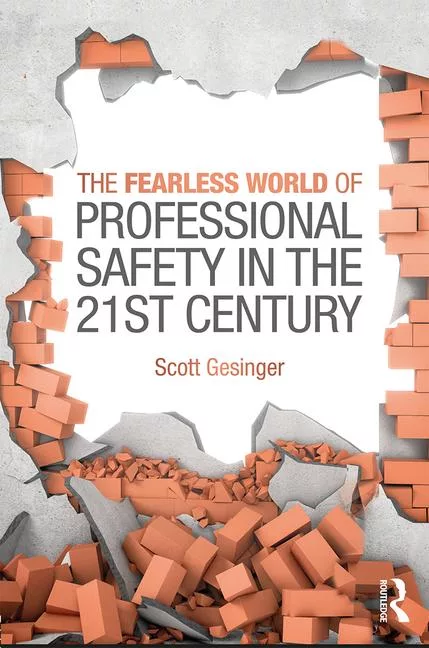
    The Fearless World of Professional Safety in the 21st Century

See More Products

Related Directories

  • SonicAire

    SonicAire is the global leader in engineered solutions for combustible dust control. Our patented fan systems use BarrierAire™ technology to prevent dust from settling in overhead and hard-to-reach areas—helping facilities stay compliant with OSHA, NFPA, and insurance requirements. Thousands of manufacturers across wood products, food, grain, textiles, plastics, and more trust SonicAire to: Eliminate the risk of dust-related fires and explosions Automate housekeeping in overhead areas Protect worker health with improved air quality Reduce manual cleaning costs and production downtime Our systems are engineered for your facility, installed with precision, and backed by our Compliance Guarantee—because when it comes to safety, good enough is never enough. Create a cleaner, safer, and more compliant facility with SonicAire. ���� Visit www.SonicAire.com or call (336) 712-2437.
×

Become a Leader in Safety Culture

Build your knowledge with ISHN, covering key safety, health and industrial hygiene news, products, and trends.

JOIN TODAY
  • RESOURCES
    • Advertise
    • Contact Us
    • Directories
    • Manufacturing Division
    • Store
    • Want More
  • SIGN UP TODAY
    • Create Account
    • eMagazine
    • Newsletters
    • Customer Service
    • Manage Preferences
  • SERVICES
    • Marketing Services
    • Reprints
    • Market Research
    • List Rental
    • Survey/Respondent Access
  • STAY CONNECTED
    • LinkedIn
    • Facebook
    • YouTube
    • X (Twitter)
  • PRIVACY
    • PRIVACY POLICY
    • TERMS & CONDITIONS
    • DO NOT SELL MY PERSONAL INFORMATION
    • PRIVACY REQUEST
    • ACCESSIBILITY

Copyright ©2026. All Rights Reserved BNP Media, Inc. and BNP Media II, LLC.

Design, CMS, Hosting & Web Development :: ePublishing