Do you – and your workers – understand the new GHS labels?
Label deadline will take effect next year
 As of December 1, 2014, manufacturers will no longer be allowed to ship products using old labels. Instead, they must be in compliance with the Globally Harmonized System (GHS) regulations incorporated into the Hazard Communications standard published by OSHA in 2012.
Among the changes: new GHS labels.
What are the GHS label elements?
Some GHS label elements have been standardized (identical with no variation) and are directly related to the endpoints and hazard level. Other label elements are harmonized with common definitions and/or principles. See Figure 4.8 for an illustration of the GHS label elements.
The standardized label elements included in the GHS are:
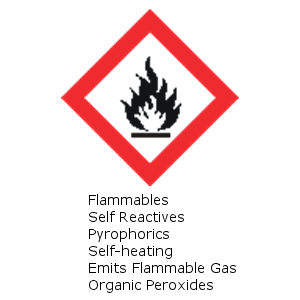
- Symbols (hazard pictograms): Convey health, physical and environmental hazard information, assigned to a GHS hazard class and category.
- Signal Words: "Danger" or "Warning" are used to emphasize hazards and indicate the relative level of severity of the hazard, assigned to a GHS hazard class and category.
- Hazard Statements: Standard phrases assigned to a hazard class and category that describe the nature of the hazard.
Symbols/pictograms
The GHS symbols have been incorporated into pictograms for use on the GHS label. Pictograms include the harmonized hazard symbols plus other graphic elements, such as borders, background patterns or colors which are intended to convey specific information. For transport, pictograms will have the background, symbol and colors currently used in the UN Recommendations on the Transport of Dangerous Goods, Model Regulations. For other sectors, pictograms will have a black symbol on a white background with a red diamond frame. A black frame may be used for shipments within one country. Where a transport pictogram appears, the GHS pictogram for the same hazard should not appear.
Signal words
The signal word indicates the relative degree of severity a hazard. The signal words used in the GHS are
- "Danger" for the more severe hazards, and
- "Warning" for the less severe hazards.
Signal words are standardized and assigned to the hazard categories within endpoints. Some lower level hazard categories do not use signal words. Only one signal word corresponding to the class of the most severe hazard should be used on a label.
Hazard statements
Hazard statements are standardized and assigned phrases that describe the hazard(s) as determined by hazard classification. An appropriate statement for each GHS hazard should be included on the label for products possessing more than one hazard. The assigned label elements are provided in each hazard chapter of the Purple Book as well as in Annexes 1 & 2. Figure 4-11 illustrates the assignment of standardized GHS label elements for the acute oral toxicity categories.
Other GHS label elements include:
- Precautionary Statements and Pictograms: Measures to minimize or prevent adverse effects.
- Product identifier (ingredient disclosure): Name or number used for a hazardous product on a label or in the SDS.
- Supplier identification: The name, address and telephone number should be provided on the label.
- Supplemental information: non-harmonized information.
Precautionary Statements and Pictograms
Precautionary information supplements the hazard information by briefly providing measures to be taken to minimize or prevent adverse effects from physical, health or environmental hazards. First aid is included in precautionary information. The GHS label should include appropriate precautionary information. Annex 3 of the GHS Purple Book includes precautionary statements and pictograms that can be used on labels.
Annex 3 includes four types of precautionary statements covering: prevention, response in cases of accidental spillage or exposure, storage, and disposal. The precautionary statements have been linked to each GHS hazard statement and type of hazard. The goal is to promote consistent use of precautionary statements. Annex 3 is guidance and is expected to be further refined and developed over time.
Product Identifier (Ingredient Disclosure)
A product identifier should be used on a GHS label and it should match the product identifier used on the SDS. Where a substance or mixture is covered by the UN Model Regulations on the Transport of Dangerous Goods, the UN proper shipping name should also be used on the package.
The GHS label for a substance should include the chemical identity of the substance (name as determined by IUPAC, ISO, CAS or technical name). For mixtures/alloys, the label should include the chemical identities of all ingredients that contribute to acute toxicity, skin corrosion or serious eye damage, germ cell mutagenicity, carcinogenicity, reproductive toxicity, skin or respiratory sensitization, or Target Organ Systemic Toxicity (TOST), when these hazards appear on the label. Where a product is supplied exclusively for workplace use, the Competent Authority may give suppliers discretion to include chemical identities on the SDS, in lieu of including them on labels. The Competent Authority rules for confidential business information (CBI) take priority over the rules for product identification.
Supplier Identification
The name, address and telephone number of the manufacturer or supplier of the product should be provided on the label.
Supplemental Information
Supplemental label information is non-harmonized information on the container of a hazardous product that is not required or specified under the GHS. In some cases this information may be required by a Competent Authority or it may be additional information provided at the discretion of the manufacturer/distributor. The GHS provides guidance to ensure that supplemental information does not lead to wide variation in information or undermine the GHS information. Supplemental information may be used to provide further detail that does not contradict or cast doubt on the validity of the standardized hazard information. It also may be used to provide information about hazards not yet incorporated into the GHS. The labeler should have the option of providing supplementary information related to the hazard, such as physical state or route of exposure, with the hazard statement.
How are multiple hazards handled on labels?
Where a substance or mixture presents more than one GHS hazard, there is a GHS precedence scheme for pictograms and signal words. For substances and mixtures covered by the UN Recommendations on the Transport of Dangerous Goods, Model Regulations, the precedence of symbols for physical hazards should follow the rules of the UN Model Regulations. For health hazards the following principles of precedence apply for symbols:
- if the skull and crossbones applies, the exclamation mark should not appear;
- if the corrosive symbol applies, the exclamation mark should not appear where it is used for skin or eye irritation;
- if the health hazard symbol appears for respiratory sensitization, the exclamation mark should not appear where it is used for skin sensitization or for skin or eye irritation.
- If the signal word 'Danger' applies, the signal word 'Warning' should not appear. All assigned hazard statements should appear on the label. The Competent Authority may choose to specify the order in which they appear.
Is there a specific GHS label format / layout?
The GHS hazard pictograms, signal word and hazard statements should be located together on the label. The actual label format or layout is not specified in the GHS. National authorities may choose to specify where information should appear on the label or allow supplier discretion.
Click here for more information about GHS labels.
Source: OSHA
Looking for a reprint of this article?
From high-res PDFs to custom plaques, order your copy today!


