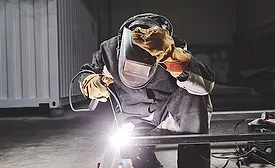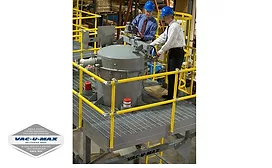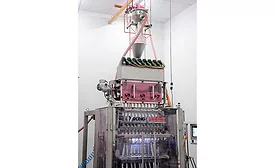
Dust particles become airborne during indoor metalworking processes like welding and plasma cutting. They also become airborne during the manufacturing and processing of food, chemicals, pharmaceuticals and other dry products.
Dust collection is an important safety and operational precaution for organizations in virtually every industry. For those with production-heavy environments, the need for efficient, ongoing dust collection is even more critical.
Recognizing dangerous combustible dust situations in manufacturing plants and processing facilities helps you to quickly observe and recognize an unsafe situation in everyday work environments, evaluate whether you and your coworkers are in harm’s way, and decide what steps are necessary to make the area safe.
Industrial vacuums are the right tool for preventing secondary explosions
January 13, 2020
The issue of dust explosions has been a hot topic since the early 20 century. In a book published by the NFPA in 1922, titled Dust Explosions, the authors, David J. Price and Harold H. Brown, acknowledge the need for a vacuum that can withstand the rigors of an industrial environment.
Although we talk about a company’s bottom line as the reason to implement engineering controls to reduce or eliminate respiratory hazards in the workplace, that doesn’t mean most organizations put profit above worker safety.
As defined by OSHA, combustible dust is “a solid material composed of distinct particles or pieces, regardless of size, shape or chemical composition, which can present a fire or deflagration hazard when suspended in air or some other oxidizing medium over a range of concentrations.”
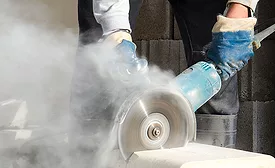
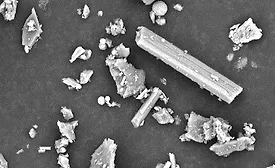
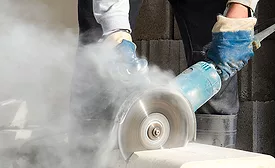
Crystalline silica is one of the most common elements on the planet, just behind oxygen. About 2.3 million workers are exposed to it in their workplace. It’s about 100 times smaller than sand and can be found on construction sites in building materials such as concrete, block, stone, sand, and mortar.
Crystalline silica is one of the most common minerals found worldwide in the earth’s crust. It is frequently used in many industrial processes such as mining, quarrying and stone-cutting. Breathing air contaminated with crystalline silica particles can cause serious respiratory and lung diseases.
OSHA estimates some two million construction employees are exposed to respirable crystalline silica in more than 600,000 workplaces across the country. To comply, companies need to follow multiple steps that aren’t always as easy as they might seem.