OSHA has cited Northridge Construction Corp. for willful and serious violations of workplace safety standards at the company's headquarters in East Patchogue, New York. The company faces $224,620 in penalties.
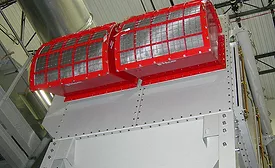
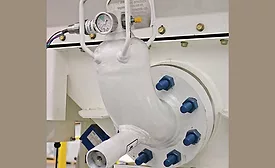
Operations that produce dust as a byproduct of their processes rely on an industrial dust collection system to provide clean air to the workplace. However, the dust collection system itself could be a source of danger if it isn’t properly equipped and maintained.
Combustible dust is present in a variety of industries and is the precursor to a serious hazard. This hazard’s often-destructive nature makes it vitally important to understand. When accounting for the hazard, several questions arise, highlighting the true complexities of combustible dust.
Recent studies show that the occurrence of Pneumoconiosis, or Black Lung disease, among coal miners across the Nation has skyrocketed beyond anything ever seen before in the industry. Younger, less experienced miners are contracting the disease at an earlier age, subjecting them to a shortened and debilitating existence until they ultimately succumb to the ravages of the illness.
Preventive safety evaluations help protect personnel and equipment, cut costly downtime and losses, and minimize liability exposure. This article highlights common areas of hazards in a manufacturing facility, and some potential solutions to explore.
The U.S. Chemical Safety Board has long asserted that chemical dust explosions are a "serious industrial safety problem." CSB research reveals that nearly 200 dust fires and explosions have occurred in U.S. industrial facilities over the past 25 years, resulting in approximately 100 fatalities and 600 injuries.
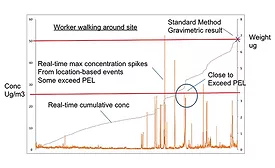
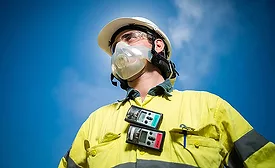
A new approach to dust monitoring is starting to spread throughout the industrial hygiene field. It is the use of a device that simultaneously does real-time direct reading combined with standard method in a compact wearable product. The beauty of this type of device is three-fold.
Due to a growing number of catastrophic fires and explosions caused by combustible dust in the last decade, OSHA has recognized combustible dust as a hazard. The presence of dust in a factory is now at the top of the list of items to inspect during an audit.
An estimated 2.3 million workers are exposed to respirable crystalline silica in their workplaces, primarily in construction, general industry and hydraulic fracturing.