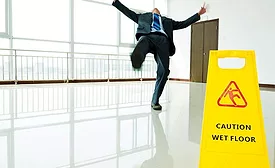
It's easy to think that a slip or fall won't happen to you, your employees or your loved ones. But the statistics aren't favorable to anyone. That's why we echo OSHA's recent improvements to the "Walking and Working Surface Rule" and call for increased prevention of slip, trip, and fall injuries.
For decades, leading causes of death on construction sites have been “Falls” and “Struck by Object” according to the Bureau of Labor Statistics (BLS). In 2015, OSHA recorded 364 deaths from falls (38.8 percent of the total construction deaths) and 90 from being struck by objects (9.6 percent of the total construction deaths).
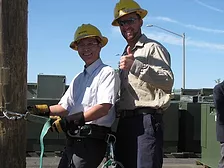
Injuries and deaths from falls are a problem in the utility industry in Japan and regulations are changing to keep workers safer when working on power poles and transmission towers.
The U.S. utility industry worked through its own regulation shift three years ago, when the Occupational Safety and Health Administration required an upgrade to the traditional body or safety belt that linemen had been using for decades.
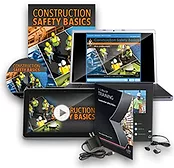
One in five private-industry fatalities in 2015 was construction-related (Source: Bureau of Labor Statistics). To help construction companies foster a strong safety culture, J. J. Keller & Associates, Inc. developed its Construction Safety Basics training program.
Same-level slip and fall accidents were the primary source of workplace injuries in 2015, totaling nearly 200,000, according to the U.S. Bureau of Labor Statistics.
Despite this statistical evidence of the problem, a survey conducted by New Pig found that almost all (92 percent) companies surveyed place floor mats in their entranceways – but left many other risk zones uncovered.
Turks and Caicos Islands Hospital (Turks and Caicos is an archipelago of 40 low-lying coral islands in the Atlantic Ocean, a British Overseas Territory southeast of the Bahamas) has implemented a revised program of best practices in fall prevention to help minimize the incidence and severity of falls.
During 2003–2013, fatality rates for oil and gas extraction workers decreased for all causes of death except those associated with fall events, which increased two percent annually during 2003–2013.
To better understand risk factors for these events, CDC examined fatal fall events in the oil and gas extraction industry during 2005–2014 using data from case investigations conducted by OSHA.
Trade in old equipment for industry-leading 3M Fall Protection equipment plus cash rebates
June 29, 2017
For safety professionals, keeping workers safe means providing them with effective, dependable equipment while staying compliant with changing safety standards and regulations. For workers at height, 3M™ Fall Protection designs safety equipment to meet the strictest industry standards, as is the case with its DBI-SALA® and Protecta® fall protection products.
ANSI (United States) and CSA (Canada) standards have, for almost four decades, provided best practices for safe, reliable access to work at height and have delivered a consistent benchmark for safe machine design in North America.
To help reduce same-level slip, trip and fall incidents, OSHA recently a provision to the walking-working surface rules for facilities to conduct regular inspections of all walking-working surfaces. This, coupled with the new requirement to fix any hazards that are found will help prevent slip, trip and fall incidents.