A World Health Organization (WHO) report, published late last year, highlighted the latest scientific evidence linking exposure to air pollution to adverse health effects in children.
It wrote that although air pollution is widely recognized as a major health threat causing about 7 million premature deaths worldwide each year, the critical aspect that it is affecting children in uniquely damaging ways is often overlooked.
From R&D specialists to the disposal crew, products and projects often require a village of workers onsite. While some of these workers may be part of your organization, successful businesses often require third-party contractors to better manage resources and deliver quality results.
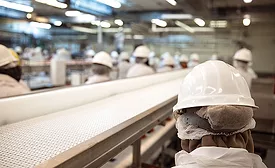
From the oil industry to mining, agriculture to research, any working environment that puts employees in close proximity to occupational hazards such as potentially harmful chemicals must make workplace safety a priority. The food processing and packing industries are no exception.
OSHA has launched a new program to address hazards from exposure to fertilizer-grade ammonium nitrate (FGAN) and agricultural anhydrous ammonium. The Regional Emphasis Program (REP) will be effective in the states of Arkansas, Kansas, Louisiana, Missouri, Nebraska, Oklahoma, and Texas.
3D printing or additive manufacturing allows users to “print” a variety of items, from airplane parts to prosthetic limbs. 3D printing is still a relatively new technology and there are many gaps in the information available about health and safety implications. As with many innovations, workers are the first groups exposed to potential hazards.
The Environmental Protection Agency has a proposal on the drawing board that critics say could expand the use of asbestos — an industrial material known to cause cancer and lung disease. Since the health hazards of asbestos emerged 40 years ago, use of the material has dropped dramatically across the globe. By 2013, more than 60 countries had implemented partial or full bans of asbestos.
A new Canadian study has linked four common hazardous substances to an aggressive form of early onset prostate cancer.
The researchers from the University of Quebec studied nearly 2000 men who developed prostate cancer between 2005 and 2009.
To help prevent injuries and deaths from working with hazardous chemicals, OSHA requires employers to establish a hazard communication program [29 CFR 1910.1200.]
J. J. Keller introduces hazardous materials management services
July 24, 2018
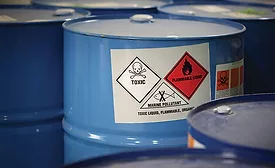
To help companies package and ship hazmat safely and correctly, J. J. Keller & Associates, Inc., the leader in transportation safety and compliance, has added Hazardous Materials Management Services — including classification, information management, and training — to its Hazmat Services.
World’s first cellular-connected gas detector with integrated pump changes gas monitoring for confined space
June 27, 2018
At the 27th World Gas Conference 2018, Blackline Safety Corp. (TSXV: BLN) announced a new multi-gas cartridge with a built-in pump to monitor atmospheric hazards when entering confined spaces and performing leak checks.