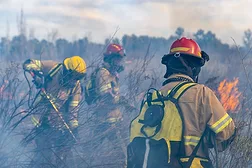
Here is a discussion of the short and long-term health risks wildfire clean-up crews face and how local and federal governments are working to make their jobs safer.
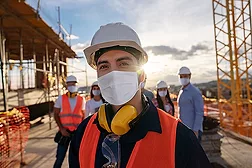
How well an organization plans for emergencies that may occur at remote locations can be the dividing line between tragedy and success story, whether an employee’s life is saved or lost, or if an operation and capital infrastructure is lost due to an incident.
A high-quality telecommunicator CPR (T-CPR) program can save more lives from out-of-hospital cardiac arrest and strengthen the chain of survival, according to a new advisory from the American Heart Association (AHA) published in Circulation, a journal of the AHA, today.
Each year in the United States, an estimated 350,000 people experience sudden cardiac arrest in out-of-hospital environments. Sudden cardiac arrest is the unexpected loss of heart function, breathing and consciousness and commonly the result of an electric disturbance in the heart.
During emergencies at facilities, a lot of different fast-paced activities are often happening simultaneously. Objectives can include accounting for all personnel, putting out a fire, containing a chemical release, coordinating with outside resources and many others.
NSC: This short-sighted decision puts convenience above safety
December 1, 2019
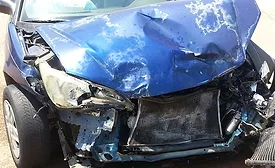
“Forty thousand people died in 2018 on American roadways. Forty thousand died the year before. How many more people need to die in crashes to help FCC commissioners understand that support for this proposal will cost lives? Technology to advance safety has the potential to save thousands of lives each year, and having dedicated spectrum allows transportation industry players to test promising services without the threat of harmful interference from Wi-Fi users."
With millions of passengers travelling on trains and through railway stations every day in the Netherlands, the chance that an employee of railway company Nederlandse Spoorwegen (NS) will have to respond to an emergency situation is high.
Medical emergencies due to sudden illness are most common, but staffers need to be prepared for more complex, and even dangerous, situations.
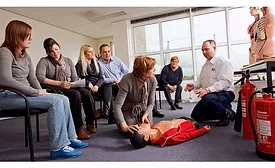
Most adults are unprepared or lack confidence to help if a medical emergency occurs, according to a new public poll from the American College of Emergency Physicians (ACEP). And, that confidence wanes as medical emergencies become more serious.
“Anyone can become a first responder in an emergency,” said William Jaquis, MD, FACEP, president of ACEP.
It’s mid-shift, and your workplace is humming with activity. Suddenly, a fire breaks out. It’s relatively small – at least for the moment. Employee safety is your first priority, of course. Ordering an immediate evacuation is the obvious action to take.
Or is it?
A study reveals 83% of manufacturing leaders see increased productivity from safety programs. Improving worker safety with IoT in manufacturing is one of the best ways manufacturing companies can deal with safety concerns and risks.