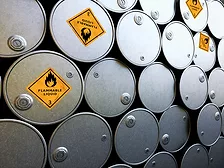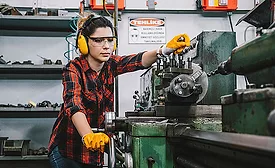
Among the properties of chemicals such as molecular weight, solubility, reactivity, pH and such, vapor pressure (VP) is the most important property for worker health considerations.
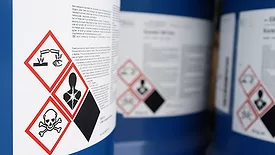
On OSHA’s Top 10 list of the most frequently cited standards in fiscal year 2020, Hazard Communication (HazCom) took the no. 2 spot, as it has for the last eight years. Although the HazCom standard has numerous requirements, training violations are among the most common for employers.
The Occupational Safety and Health Administration (OSHA) proposed rules to modify the Hazard Communication Standard (HCS) to conform to the United Nations’ Globally Harmonized System of Classification and Labelling of Chemicals (GHS) Revision 7.
Federal OSHA is stagnant and ill-prepared to regulate future risks. OSHA has only 1,850 inspectors to cover 8 million U.S. workplaces. OSHA has no regulations for rising concerns such as infectious disease, EMFs, psychosocial hazards, or ergonomics.
Workplace hazards today are broad and complex. Where specificity of law is absent or ambiguous, such as workplace safety for Covid-19, OSHA’s “General Duty” clause, section (5)(a)(1) of the OSH Act, becomes an enforcement incentive.
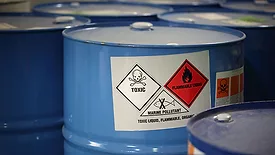
Let’s face it — no matter how much we try to avoid them, spills happen. Common spills involve substances such as gasoline, oil, solvents, and cleaning chemicals. While small, in-house spills might be easy to clean up quickly, some fluids can be toxic when ingested or exposed to skin and can be hazardous to the environment.