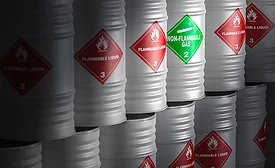
In addition to following the specific OSHA-mandated requirements for safety data sheets (SDS), there are a few easy ways to upgrade your SDS binder to create a more thorough right-to-know station.
Dust collection is an important safety and operational precaution for organizations in virtually every industry. For those with production-heavy environments, the need for efficient, ongoing dust collection is even more critical.
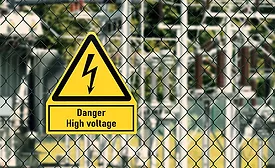
Workplaces can sometimes be dangerous and that’s why OSHA requires employers to alert employees to hazards that they could encounter. A proactive way to provide this protection is to use the necessary signage, alarms, and signals to alert workers to these hazards.
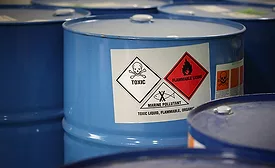
OSHA’s hazard communication standard was the second most-frequently cited agency standard in FY 2019. The Hazard Communication Standard (HCS) is now aligned with the Globally Harmonized System of Classification and Labeling of Chemicals (GHS).
Today’s workplaces look far different than they have in the past, taking on many shapes, sizes and settings. As a result, more workers from multiple employers are working side-by-side at the same locations, increasing the shared responsibility for worker safety among employers.
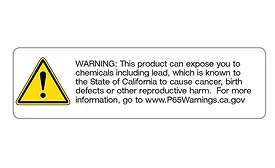
California’s Safe Drinking Water and Toxic Enforcement Act of 1986, aka Proposition 65 (Prop 65) was revised August 30, 2018. The revised Prop 65 requires a warning label, example shown below, for any consumer product containing any of the more than 950 chemicals known to the State of California to cause cancer or birth defects.
Software is radically changing chemical management. But while the growing chemical safety software options available help more businesses keep their workers safe and workplaces compliant, the crowded space also makes it harder for those shopping for a solution to select one that best fits their needs.
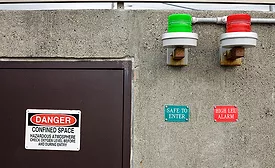
We have all read the articles or posts on the questions regarding confined spaces such as “What is a confined space?” or “What makes your confined space permit required?” You might have even been asked “How do you re-classify a permit-required confined space?” or one of my favorites, “When do I need a rescue team at my confined space?” Let’s break it all down.
Hazard Communication (1910.1200) OSHA’s hazard communication standard was the second most-frequently cited agency standard in FY 2018.
January 7, 2019
This occupational safety and health standard is intended to address comprehensively the issue of classifying the potential hazards of chemicals, and communicating information concerning hazards and appropriate protective measures to employees, and to preempt any legislative or regulatory enactments of a state, or political subdivision of a state, pertaining to this subject.
Like so many things in life, our most productive work experiences are often a result of our willingness to try something new. In his 1962 book “Diffusion of Innovations,” Everett Rodgers popularized a theory outlining how innovation moves through a social system.