RMS Utilities Inc. is facing $92,819 in penalties after OSHA found that the Colorado company:
failed to protect employees from cave-in hazards
failed to keep the spoil pile at least two feet back from the edge of the excavation, and f
allowed employees to work beneath an excavator bucket...
Opti-Vu® platform elevates Industrial Internet of Things technology with data analytics to help managers improve productivity, energy, safety and asset management
October 11, 2019
In today’s busy warehouses and other industrial facilities, what might seem like small events can add up to big impacts on efficiency, productivity and safety.
A door activates, but no one goes through. A forklift collision is narrowly avoided at a busy intersection. A loading dock sits empty, while a full trailer waits to be unloaded.
A collision earlier this year involving two trains owned by the same company resulted in minor injuries to both engineers and the derailment of one locomotive and more than two dozen railcars.
The National Transportation Safety Board’s (NTSB) preliminary report into the incident reveals that a westbound CSX Transportation (CSX) freight train collided with an eastbound CSX freight train near Carey, Ohio at 5:08 a.m. on August. 12.
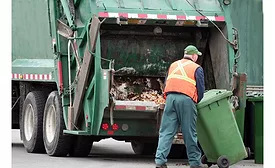
OSHA has formed a national alliance with the National Waste & Recycling Association (NWRA), and Solid Waste Association of North America (SWANA) to protect the safety and health of workers in the solid waste industry.
During the two-year agreement, the Alliance will address transportation hazards, including backovers and distracted driving; slips, trips, and falls; musculoskeletal injuries; heat and cold stress; and needle stick and other hazards.
Safety professionals in a wide range of industries are well aware of the importance of personal protective equipment (PPE).
When it comes to protecting eyes and faces, the employer or safety manager must assess the workplace and determine if there are hazards present that that necessitate the use PPE by workers. [29 CFR 1910.132(d)]
Approximately 60 Amazon warehouse workers in Eagan, Minnesota walked out of their workplace last week mid-shift, to protest working conditions, pay and limits on total weekly hours that prevent them from receiving health care benefits. Among the workers’ demands: weight restrictions on the boxes they must lift, which currently can weigh up to 70 pounds.
Like many small businesses starting out, SigmaPro Engineering and Manufacturing, LLC had a safety program in place, but they were unsure if it met all of the state and federal requirements. The small electronic connector manufacturing facility in northern Fort Worth, Texas found the Texas Occupational Safety and Health Consultation Program (OSHCON) on the Occupational Safety and Health Administration (OSHA) website and set up a consultation with a Texas OSHCON safety consultant in their area.
Unsafe shortcuts lead to worker deaths, how to liven up safety trainings and the feds limit opioid prescriptions for injured workers. These were among the top occupational safety and health stories featured on ISHN.com this week.
Atlas Oil was named the Excellence in Health and Safety award winner at the 2019 Texas Oil and Gas Awards, marking the company's second consecutive win in this prestigious category – last year in the Rocky Mountain region.
Working in a manufacturing setting requires many people to perform the same task repeatedly every day. That can mean eight hours or more a day on your feet, as well as straining your back, hips, knees and hands.
For those who hope to retire from manufacturing jobs, repetitive-motion injuries — also called repetitive-stress injuries — could prove a bigger risk than a catastrophic workplace accident.