Thirty-five years ago in a downtown St. Paul (MN) hospital, Ergodyne founder Dr. Thomas W. Votel sparked an industrial safety revolution with a unique solution to a widespread — and costly — problem.
“I always had a concern about the injuries we saw in work comp claimed in the health services industry,” recalls Dr. Votel. “Most of those complaints were due to injuries which occurred on the job.
Two workers were injured Sunday in Pennsylvania when they were struck by equipment they were using to clean the interior of a 20” underground pipeline. One worker was treated at a local hospital and released. The other was hospitalized with a broken arm.
The comment period is now open for the U.S. Department of Health and Human Services (HHS) proposed objectives for Healthy People (HP) 2030. This includes proposed core objectives for Occupational Safety and Health (OSH).
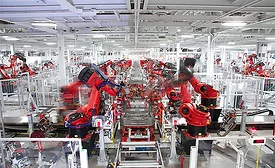
One month after ISHN published its October issue cover story on Tesla’s quest to have the safest factory in the world, Tesla’s safety and health practices were again in the news. On November 5, 2018, the Center for Investigative Reporting published an article, “Inside Tesla’s factory, a medical clinic designed to ignore injured workers.”
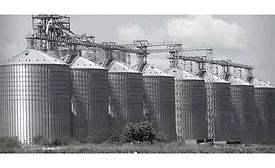
OSHA and its Alliance partner, the National Grain and Feed Association (NGFA), in cooperation with the Grain Elevator and Processing Society, will hold Stand-Up for Grain Safety Week, March 25-29, 2019. The event will focus on grain bin entry, machine guarding, respiratory protection, falls, heat, lockout/tagout, and other industry issues.
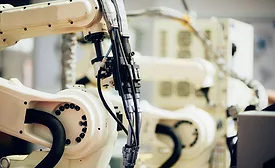
With the recent focus on robots and worker safety, it may be surprising to learn that the National Institute for Occupational Safety and Health (NIOSH) first addressed this issue 34 years ago. In 1984, the agency released safety recommendations for working with robots after an experienced operator of an automated die-cast system died when he became pinned between the back end of an industrial robot and a steel safety pole.
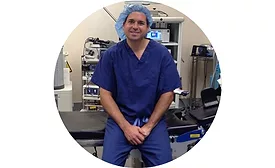
We sat down with Dr. Joshua Alpert, an orthopedic surgeon at Midwest Bone & Joint Institute in the northwest suburbs of Chicago, to talk about the ins and outs of hand injuries. He helped us to understand why hand injuries can be particularly serious and what recovery from an injury looks like.
The oil and gas extraction industry continues to expand in the United States, but this growth comes with increased risks for workers in the industry. During 2003–2016, 1,485 oil and gas extraction workers were killed on the job, resulting in an annual fatality rate more than six times higher than the rate among all U.S. workers.
A new website from the National Occupational Research Agenda (NORA) Manufacturing Sector Council features ways in which businesses and companies can safeguard employees from the release of hazardous energy (any source of electrical, mechanical, hydraulic, pneumatic, chemical, thermal, or other energy) during service and maintenance activities.
A blistering report on small farm safety, Samsung Electronics apologizes for work-related illnesses and a dire warning about the effects of climate change on human health. These were among the top occupational safety and health stories featured on ISHN.com this week.