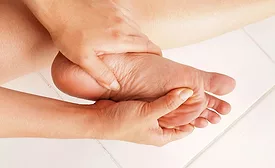
The Big toe, great toe, or the medical term "hallux"-whatever you call that first toe of yours - it's an important digit you don't want to injure, because it could turn out to be a bigger problem than you think.
If you can't stand on one foot for a minute, you have company. Here's why you should care.
If you are over 50, stop what you are doing right now and take a little test: See if you can stand on one foot for a full minute.
Puncture wounds are not the same as cuts. A puncture wound has a small entry hole caused by a pointed object, such as a nail that you have stepped on. In contrast, a cut is an open wound that produces a long tear in the skin. Puncture wounds require different treatment from cuts because these small holes in the skin can disguise serious injury.
A foot injury is, according to the Comp Pinkbook, the eighth most common workers’ compensation injury in Maryland. (The Comp Pinkbook represented a study of over a quarter million comp claims that had some kind of permanency award from the period of 1/1/11 to 6/30/12. The book is for sale at Amazon.com.)
Have you ever wondered if your job involves more standing, bending, or lifting than other jobs? Or if there are ways you could avoid injuries from these movements while on the job?
Last week, NIOSH published an article on frequent exertion and frequent standing among US workers by industry and occupation group.
For over a decade, thousands of users have deployed Permanent Electrical Safety Devices (PESDs) to reduce the risks in isolating electrical energy. This elegantly simple innovation increases the probability that workers are only exposed to ‘zero voltage’ when doing an absence of voltage test. The cumulative experience end users have amassed by using PESDs encouraged UL to create a new product specification for permanently mounted Absence of Voltage Testers (AVTs).
The National Institute for Occupational Safety and Health Fatality Assessment and Control Evaluation (NIOSH FACE) program investigates selected work-related fatalities, collecting information not captured in other data sources - including safety management and training programs, use of engineering controls and personal protective equipment on the jobsite, and recommendations for preventing similar incidents.
A rating system helped predict which solutions construction workers would use to prevent musculoskeletal disorders (MSDs), according to a study at Washington University School of Medicine in St. Louis, Missouri that was funded by the National Institute for Occupational Safety and Health (NIOSH). The study appeared in the American Journal of Industrial Medicine.
OSHA standards clearly define mandatory compliance and requirements for employers to follow with respect to eye and face protection. Following these requirements ensures protection against chemical, environmental, and radiological hazards or mechanical irritants.
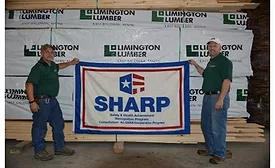
A Maine lumber mill has seen lower injury rates, lower turnover better employee morale and an improved safety culture since partnering with government agencies to help make inherently high-hazard work tasks safer.