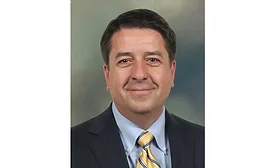
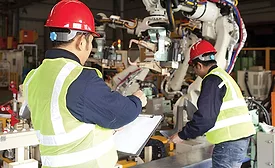
A video series intended to make ambulances safer for both the patients being transported in them and the EMTs tending to those patients has garnered its creator a new honor.
National Institute for Occupational Safety and Health (NIOSH) safety engineer James Green should be used to the accolades by now. The merit award he just received from the Health Information Resource Center (HIRC) is the latest of four awards he’s wracked up for the seven-part video series he created about ambulance crash test methods.
Every workplace has unique health and safety requirements: office settings aren’t hard-hat zones and crab fishers don’t worry about typing-related carpal tunnel syndrome. Yet hand safety is a concern regardless of environment or job type.
The year has come full circle as we begin to enter winter months once again. Soon enough, businesses will reflect on the year’s accomplishments and potential areas for improvement. One area safety and operations leaders can master this season is workplace safety, as they find themselves shifting focus from summertime hazards to the risks brought on by harsh winter conditions.
Nurse Carmelita Kinjo was eager to begin her night shift in the intensive care unit at the Veterans Administration hospital where she worked. As her thoughts turned to the evening that lay ahead of her and the patients she would tend to, she slipped on a wet floor. Someone had forgotten to replace the sign warning that it was wet. Kinjo fell backward, hitting her head and slamming into a wall.
A Tulsa, Oklahoma safety services company doesn’t just talk the talk. Having just achieved one million man-hours without a recordable injury, JCL Service Company apparently walks the walk, too.
Both divisions of the JCL company—JCL Safety Services and JCL Risk Services—reached this safety milestone by completing over one million man-hours without any of the following injury-related incidents occurring: days off work, restricted work, transfer to another job, medical treatment beyond first aid, loss of consciousness, or an injury resulting in death.
Major or “large-loss” fires in the U.S. in 2016 cost $1.2 billion in property losses and resulted in 14 deaths and dozens of injuries, according to the latest edition of the National Fire Protection Association’s (NFPA) “Large-loss Fires in the United States” report. Large-loss fires are defined as events that result in property damage of at least $10 million.
The 62,085 injuries to U.S. firefighters in 2016 reflected an 8.8 percent decrease from 2015, making this the lowest rate of injury since 1981 – the year the National Fire Protection Association (NFPA) began analyzing firefighter injury data.
The latest data from the NFPA, released as part of the latest edition of its “U.S. Firefighter Injuries” report, show that the leading injury types in 2016 were: Strains, sprains and/or muscular pains (52.6 percent), and wounds, cuts, bleeding, and bruising (15.2 percent).
An arc flash at the Panda Power station in south Sherman, Texas, sent one employee to the hospital. Sherman Fire says It happened around 7:30 a.m. at 510 Progress Drive in Sherman. The Panda Sherman Power Project is a clean natural gas-fueled, 758-megawatt combined-cycle generating facility. The plant can supply the power needs of up to 750,000 homes.
Zach Spicer, a substation supervisor for DES, Dickson County, Tenn., suffered second-degree burns to his face and neck and third-degree burns Aug. 25 afternoon on his hands and forearm at the DES Old White Bluff Substation just as he prepared to teach a class.
He was accessing a breaker cabinet, high voltage side when contact or an arc formed, causing an electrical fault that released heat and energy.
The US Department of Labor estimates that every day in the United States five to ten Arc Flash Explosions occur on the job. Arc Flashes are incredibly violent and devastating to any worker exposed to the instantaneous phenomenon. Most of the time the exposure will result in serious injury or even death. Electrical equipment is designed to withstand up to a certain amount of current.