Severe burns to a worker have resulted in safety citations being issued to a Montana general contractor and a Wyoming contractor, according to OSHA, which is proposing $249,516 against the two companies.
On May 5, 2017, a Coleman Construction Inc. employee suffered third-degree burns when compressed oxygen inside an underground duct caused a fire. The subcontractor was cited for failing to provide mechanical ventilation or an underground air monitoring system, and failing to report the hospitalization of the burned employee in a timely manner. The company faces $189,762 in penalties.
High hazard industries could be a little less hazardous in the future, if researchers can find a way to thwart the biggest challenge to promising new technology: trees.
The same kinds of collision-avoidance technologies used by self-driving cars could help logging and other workers monitor their surroundings through a mobile virtual fence, or geofence, according to NIOSH-funded research at the University of Idaho. Geofences could be used to maintain safe work areas in logging, for instance, by sending alerts of approaching hazards.
After an audit at a small Pennsylvania manufacturer revealed some safety complacency cropping up in day-to-day operations, the company reached out to OSHA’s On-Site Consultation Program for assistance. The result: McGregor Industries Inc. has been free of recordable injuries since September 2015, is working to find new ways of reducing injuries and has been able to secure better insurance for individual jobsites.
Dunmore-based McGregor Industries Inc. fabricates, delivers, and installs light structural and metal products for buildings, artistic projects, and anything requiring the shaping and finishing of metal.
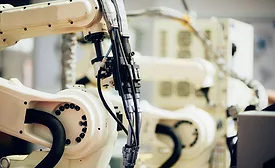
The National Institute for Occupational Safety and Health (NIOSH) has established a new Center for Occupational Robotics Research (CORR) to provide scientific leadership to guide the development and use of occupational robots that enhance worker safety, health, and well-being.
Although robots have been used in workplaces for decades, the use of robots that are designed to be used alongside human workers is increasing, as is the likelihood of robot-related deaths, according to NIOSH.
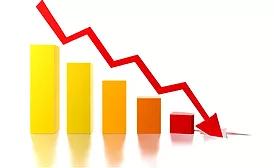
The American Society of Safety Engineers (ASSE) says it is “encouraged” after seeing newly released data that shows a continued decrease in occupational injuries and illnesses, but thinks even more can be done to protect workers.
The U.S. Bureau of Labor Statistics reported Nov. 9 that workplace injuries and illnesses at private industry employers were down by 48,500 cases in 2016 compared to the previous year.
Private industry employers reported nearly 48,500 fewer nonfatal injury and illness cases in 2016 compared to a year earlier, according to estimates released yesterday from the U.S. Bureau of Labor Statistics’ (BLS) Survey of Occupational Injuries and Illnesses (SOII).
There were approximately 2.9 million nonfatal workplace injuries and illnesses reported by private industry employers in 2016, which occurred at a rate of 2.9 cases per 100 full-time equivalent (FTE) workers.
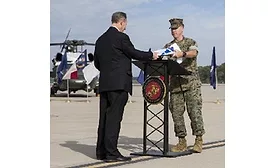
A Marine Corps Air Facility (MCAF) in Quantico, Va. has been recognized for its achievements in workplace safety and health. OSHA Regional Director Richard Mendelson presented MCAF Commanding Officer Lt. Colonel Daniel Murphy with a plaque and flag signifying the facility’s Star Status in OSHA’s Voluntary Protection Programs.
On the heels of an incident in which a worker was injected with a flammable propellant gas, OSHA has reached agreements with three Massachusetts packaging companies to correct workplace hazards and enhance safety.
OSHA found that Dudley- based Shield Packaging Co. Inc. – which packages aerosol containers – failed to implement required procedures to lock out the machine's power sources or train the employee on how to recognize and avoid the hazard.
Despite the fact that most worksites require eye protection, the Center for Disease Control reports nearly 2,000 work-related eye injuries requiring medical attention a day. Among the root causes is compliance – not wearing eye protection – which continues to be an issue on jobsites and in workzones.
Before the end of World War II, there was little interest in fitting workplace conditions and job demands to the capabilities of the working population—a scientific practice known as ergonomics. By the 1970s, NIOSH researchers were pioneering the study of musculoskeletal health as professional ergonomists, examining physical and social components of work environments (such as conveyer belt height and lunch break routines, respectively) to mitigate musculoskeletal injury risks.