With some of President Trump’s first official actions involving federal regulations and federal agencies, ISHN thought it a good time to conduct an online flash survey to find out what our readers think about OSHA and what changes, if any, they’d like to see happen within the agency and to the regulations it promulgates and enforces.
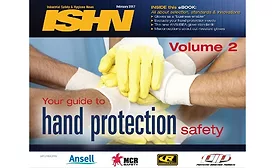
Welcome to ISHN’s second volume of feature articles and sponsored content relating to workplace hand protection. Safety and health professionals in every industry will benefit from the latest updates and innovations in work gloves. Think about it. Almost everyone uses their hands on the job, especially in manufacturing and construction.
OSHA’s beryllium standard, published 11 days before President Trump’s inauguration, is one of the rules delayed 60 days by the Trump administration’s Jan. 20 regulatory freeze and review instructions. Federal agencies are to send no new rules to the Federal Register, withdraw rules sent but not yet published, and delay the effective date by 60 days of any rule published that has not taken effect.
OSHA has issued a Notice of Proposed Rulemaking to add two quantitative fit-testing protocols to the agency's Respiratory Protection Standard. The protocols would apply to employers in the general, shipyard and construction industries.
Appendix A of the standard contains mandatory respirator fit-testing methods that employers must use to ensure their employees' respirators fit properly and protect the wearer.
The personal protective equipment (PPE) market size is forecast to hit $67.6 billion by 2023; as per a new research report by Global Market Insights, Inc.
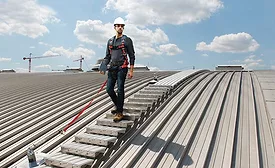
New year, new rule. As we ring out the old in 2016, we ring in the first major general industry OSHA update since the 1970s for walking-working surfaces (subpart D) and fall protection systems standards (subpart I) when a new ruling takes effect on January 17.1
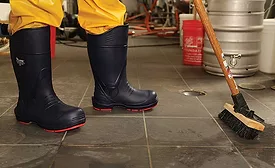
At the time of this writing, no U.S. government agency mandates performance specifications, nor is there any industry consensus defining slip resistance for PPE footwear in the US.
An estimated 2.3 million workers are exposed to respirable crystalline silica in their workplaces, primarily in construction, general industry and hydraulic fracturing.
An estimated 5 million workers are required to wear respirators in 1.3 million workplaces throughout the United States. The general industry standard protects the health of employees from harmful dusts, fogs, fumes, mists, gases, smokes, sprays, and vapors.