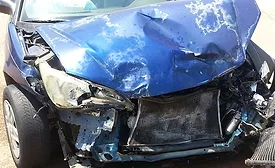
The national opioid epidemic and the growing number of states legalizing marijuana is prompting the U.S. Department of Transportation’s National Highway Traffic Safety Administration (NHTSA) to launch a new initiative aimed at drugged driving.
The agency says combating drugged driving has become “a top priority” in its bid to improve safety and reduce motor vehicle crashes on the nation’s roadways.
The Federal Highway Administration (FHWA) published new data today showing a record-high 221.7 million licensed drivers in the U.S. in 2016, including 41.7 million – or almost one in five – who are 65 years or older. This age group is growing faster than any other, and is far outpacing their teenage counterparts.
The largest single-year percentage increase in licensed drivers that year was among those who are between 75-79 years old, increasing by 4.98 percent over the previous year. Except for five states – Michigan, Oklahoma, South Dakota, West Virginia and Wyoming – the nation saw increases among licensed drivers in 2016 compared to the previous year.
The NIOSH Center for Motor Vehicle Safety (CMVS) is taking up the challenge of communicating to employers and workers about the risks of driving for work and how to avoid motor vehicle crashes. Crash risk affects workers in all industries and occupations, whether they drive tractor-trailers, cars, pickup trucks, or emergency vehicles, and whether driving is a primary or occasional part of the job.
Fatalities caused by distracted driving decreased in 2016, while deaths related to other reckless behaviors – including speeding, alcohol impairment, and not wearing seat belts – continued to increase, according to new figures released by the U.S. Department of Transportation’s National Highway Traffic Safety Administration (NHTSA).
The National Transportation Safety Board (NTSB) will meet on Sept. 12, 2017 to determine the probable cause of the fatal, May 7, 2016, crash of a Tesla car near Williston, Florida.
Although speeding is one of the most common factors in motor vehicle crashes in the US, it is an underappreciated problem, involved in about 10,000 highway fatalities each year according to the National Transportation Safety Board (NTSB).
The risk of dying in a crash in a late-model vehicle has gone up slightly, as a stronger economy has led drivers to take to the road more often and in more dangerous ways, according to a report from the Insurance Institute for Highway Safety’s Highway Loss Data Institute.
Teenagers are among the riskiest drivers, but they often end up with inexpensive vehicles that don’t offer adequate protection in a crash. If you are considering buying a used car for your young driver, you can get some help from The Insurance Institute for Highway Safety (IIHS), which annually issues a list of recommended used vehicles for teens.
It’s that time of year again – time for about 10,000 law enforcement agencies across the nation to coordinate efforts for the U.S. Department of Transportation’s National Highway Traffic Safety Administration’s annual Click It or Ticket campaign to crack down on seat belt scofflaws.
Helmets and high visibility clothing were no help to a group of bicyclists when a Michigan man who was under the influence of several drugs got behind the wheel of his pickup truck on June 7, 2016.