Stronger economy equals higher traffic death rate
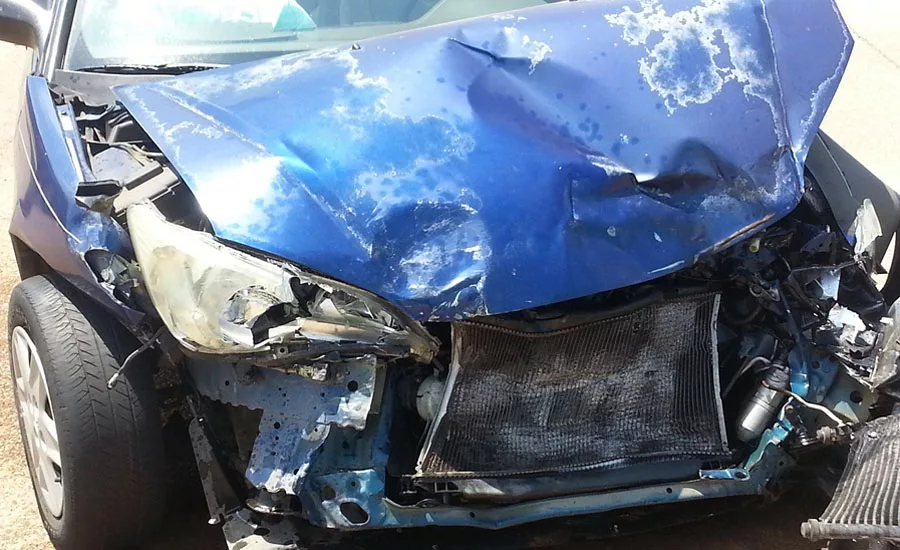
The risk of dying in a crash in a late-model vehicle has gone up slightly, as a stronger economy has led drivers to take to the road more often and in more dangerous ways, according to a report from the Insurance Institute for Highway Safety’s Highway Loss Data Institute. Meanwhile, a new study predicts traffic deaths will fall only slightly over the coming years, given current expectations for the economy.
The overall rate of driver deaths for 2014 models is 30 per million registered vehicle years, up from 28 for 2011 models. The death rate for individual vehicles varies widely, from 0 for 11 vehicles to 104 per million registered vehicle years for the Hyundai Accent, a minicar.
The overall rate of driver deaths for 2014 models is 30 per million registered vehicle years, up from 28 for 2011 models. The death rate for individual vehicles varies widely, from 0 for 11 vehicles to 104 per million registered vehicle years for the Hyundai Accent, a minicar.
Improved tech not enough
The last time IIHS calculated driver death rates, the overall rate had fallen by more than a third over three years. Researchers found that the drop was driven largely by improved vehicle designs and safety technology. Such improvements have continued, but the new results show that, by themselves, they won't be enough to eliminate traffic deaths.
"Vehicles continue to improve, performing better and better in crash tests," says David Zuby, IIHS executive vice president and chief research officer. "The latest driver death rates show there is a limit to how much these changes can accomplish without other kinds of efforts."
The new driver death rates are based on deaths that occurred during 2012-15. The increase in the overall driver death rate for 2014 models is likely connected to the increased number of fatalities toward the end of that period.
Falling unemployment, rising crash deaths
Road deaths have been trending downward since the early 1970s, with an especially large dip beginning in 2008. However, that changed in 2015, with deaths increasing 7 percent over the previous year. Preliminary data indicate the toll increased in 2016 as well. In the new study, Charles Farmer, IIHS vice president for research and statistical services, looked at what economic forecasts can tell us about traffic fatalities over the coming years.
An increase in traffic deaths is a predictable downside to an improving economy. As unemployment falls, both vehicle miles traveled and crash deaths increase. In a stronger economy, people tend to drive more. Riskier, discretionary driving — for example, going out to dinner or traveling for vacation — is affected by economic fluctuations even more than day-to-day commuting. Economic conditions also affect how fast people drive.
An increase in traffic deaths is a predictable downside to an improving economy. As unemployment falls, both vehicle miles traveled and crash deaths increase. In a stronger economy, people tend to drive more. Riskier, discretionary driving — for example, going out to dinner or traveling for vacation — is affected by economic fluctuations even more than day-to-day commuting. Economic conditions also affect how fast people drive.
To estimate how the annual death toll might change in the coming years, Farmer designed a statistical model based on the connection between traffic deaths and unemployment since 1990. The model also includes calendar year, thereby accounting for safer vehicle designs and other highway safety improvements that have taken hold over time.
It's not all about the economy
Farmer found that a decline in the unemployment rate from 6 percent to 5 percent is associated with a 2 percent increase in vehicle miles traveled. That jump in exposure leads to an equivalent 2 percent jump in fatalities. However, after accounting for the change in miles traveled, the decline in the unemployment rate is associated with an additional 2 percent increase in road deaths. In other words, only half of the effect of an improved economy on traffic deaths is due to increased driving.
Given the U.S. Bureau of Labor Statistics' forecast of a 1.7 percent annual reduction in unemployment from 2014 to 2024, he predicts that the recent increase in deaths will have peaked in 2016 and estimates there will be approximately 34,400 traffic deaths in 2024, compared with 35,092 in 2015.
If unemployment doesn't change as predicted but remains steady at the 2016 rate of 4.9 percent, there will be 33,600 traffic deaths, Farmer estimates. In either case, the projected number of crash deaths for 2024 is still higher than the 32,744 deaths seen in 2014.
Technology will help, but...
The recent surge in crash avoidance technologies, along with the development of autonomous vehicles that in theory could eliminate all crashes, has the potential to bring down crash rates. However, it will take decades before such technologies are present in all new vehicles. Vehicles with varying degrees of automation will be sharing the road with conventional vehicles for some time.
"Improvements in vehicle technology are important, but we also need to address old problems such as speeding and driving while impaired," Farmer points out.
Source: Insurance Institute for Highway Safety
Looking for a reprint of this article?
From high-res PDFs to custom plaques, order your copy today!



.webp?t=1721257160 "download (1).jpg")