VelocityEHS, the global leader in cloud-based environment, health, safety (EHS) and sustainability solutions, announces a partnership with Kinetica Labs (based in Ann Arbor, Michigan) to incorporate video-based, sensorless motion-capture technology to its Humantech ergonomics software platform. Using artificial intelligence and computer vision, this new technology replaces time-consuming effort required to complete manual, observation-based musculoskeletal disorder (MSD) risk assessments in the workplace.
People who work outside or who do the heavy lifting for a living are often jealous of office workers. “They have it so easy!” you hear them say, “They never have to worry about the heat, the cold, or being injured.”
While the office temperature is debatable, it is not true that desk jobs carry no risk of injury. The CDC states that in 1999, about 1 million people took time off work to recover from musculoskeletal injuries due to poor economics, costing businesses about $50 billion each year in lost wages and productivity.
Hamilton Caster is proud to announce a new lineup of ergonomic casters, wheels, and related accessories. The new running gear is designed to satisfy high standards established by leading ergonomists and safety managers in today’s manufacturing environments.
The new ergo caster series is a marriage of Hamilton’s best rolling and quietest polyurethane wheels mounted in Hamilton’s newest Spinfinity maintenance-free kingpinless casters.
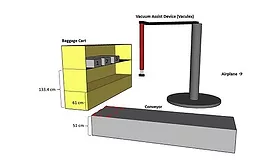
For travelers, restrictions on baggage weight may mean packing fewer pairs of shoes. For airport baggage handlers, weight restrictions, combined with proper lifting, are important to safety and health but may not be enough to prevent work-related back injuries.
Low back strains, carpal tunnel syndrome, and other soft-tissue musculoskeletal injuries are the most frequent causes of missed workdays in the United States, and most result from ergonomic, slip, trip, or fall hazards, according to the Bureau of Labor Statistics.
California has adopted the first ergonomic standard in the nation written specifically to protect hotel housekeepers.
The new workplace safety and health regulation to prevent and reduce work-related injuries to housekeepers in the hotel and hospitality industry was approved March 9 by the Office of Administrative Law and will become effective July 1.
In a move that surprised and pleased food and worker safety advocates, the USDA has denied a bid by the U.S. poultry industry to allow inspection lines to speed up. It was the second defeat for the National Chicken Council (NCC), which had attempted to get the limit raised under the Obama administration.
Trumpworld to Government Scientists: No Science for You! This falls into “The Onion or Real News” category. Imagine my alarm when I read in The Intercept that “Republicans on the House Science Committee are accusing Linda Birnbaum, director of the National Institute of Environmental Health Sciences, of lobbying.” Lobbying, as any political appointee or high level government official can tell you, is strictly verboten for government employees.
Have you ever wondered if your job involves more standing, bending, or lifting than other jobs? Or if there are ways you could avoid injuries from these movements while on the job?
Last week, NIOSH published an article on frequent exertion and frequent standing among US workers by industry and occupation group.
In October 2017 we published the first blog in a series to highlight musculoskeletal health research at NIOSH. With the holiday season upon us, this next installment will take the opportunity to discuss how best to promote musculoskeletal health in retail establishments to reduce the incidence of musculoskeletal disorders among temporary retail workers.