The Coca-Cola Company commissions SelectFlex® pilot study at three plant locations and sees promising results among employees who tested the arch control insoles
As the second leading preventable workplace injury, falls plague the workforce. The impact of fall related injuries is felt heavily in service-providing industries as well as transportation, utilities and the health care sector.
The work world has been entirely upended with unemployment, business concepts changing, people restricted to their homes, social distancing, etc. Within recent weeks, businesses and office settings have experienced a dramatic change in daily operations.
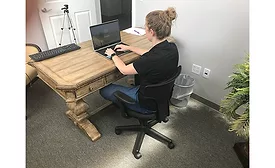
If you’ve transitioned into working from home recently, along with many non-essential workers, you might be in danger of developing heath issues. Ergonomics is an area often ignored, but considered essential to eliminate pain from repetitive movements and bad posture.
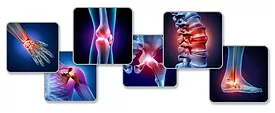
No magic pills make musculoskeletal disorders (MSDs) disappear, yet risk, human resources and safety departments continue to buy into programs and systems that do not affectively aid in helping employees deemed the “walking wounded.”
Exoskeletons used in the workplace are referred to as “industrial exoskeletons.” Their purpose is to augment, amplify, or reinforce the performance of a worker’s existing body components—primarily the lower back and the upper extremity (arms and shoulders). Despite a lack of research, manufacturers of these devices claim productivity gains, work quality improvements, and a reduction of the risk of work‐related musculoskeletal disorders (WMSDs).
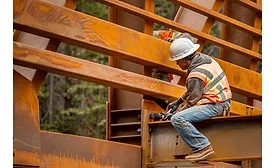
The hard hat celebrates a landmark birthday, drug use among construction workers – and how to test for it – and safety technology comes to the construction industry. These were among the top construction industry safety stories of 2019.
A controversial rule with worker safety implications gets sidelined, construction company personnel charged with felonies after an occupational fatality and making sure holiday decorating is safe were among the stories featured this week on ISHN.com.
A report by the Massachusetts Department of Public Health (DPH) shows a strong correlation between hazardous jobs and opiate addiction and overdoses in that state.
The 21-page study titled Opioid-related Overdose Deaths in Massachusetts by Industry and Occupation, 2011-2015 found that there were a total of 5,580 opioid-related overdose deaths in Massachusetts from 2011 through 2015. Of the 4,284 worker death certificates deemed comprehensive enough to study, 1,096 were found to be employed in construction/extraction.
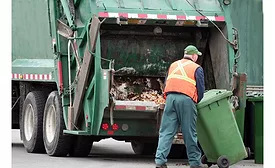
OSHA has formed a national alliance with the National Waste & Recycling Association (NWRA), and Solid Waste Association of North America (SWANA) to protect the safety and health of workers in the solid waste industry.
During the two-year agreement, the Alliance will address transportation hazards, including backovers and distracted driving; slips, trips, and falls; musculoskeletal injuries; heat and cold stress; and needle stick and other hazards.