Wildeck, Inc. is excited to announce that their suite of pick module products will be on display at ProMat’s 2019 conference and expo. Located in booth S1241, Wildeck’s team of pick module experts will be available to discuss the ways in which their suite of products can be customized to a company’s exact specifications, optimizing product flow through a facility.
OSHA has cited Bruce Foods Corporation – a Mexican food manufacturer based in El Paso, Texas – after an employee suffered an amputation. The company now faces $194,350 in fines.
OSHA cited the company for 24 serious safety violations including failing to train employees in lockout/tagout procedures, inadequate machine guarding, lack of fall protection, and exposing employees to live electrical parts.
When new hires or temporary staff members join your team, it isn't enough to simply lay out the plan, give them their tools and expect them to get to work. In fact, failing to educate your team on proper safety protocols is exactly the kind of negligence that often leads to workplace eye injuries — or worse.
When it comes to eye injuries, the numbers are astonishing. In the U.S., more than 2,000 workers injure their eyes on the job every single day, with roughly one out of every 10 of those injuries resulting in employees missing work in order to recuperate. That's a drain on your bottom line to the tune of $300 million in medical bills, compensation and time off annually — and that's something you just can't afford.
At Malta Dynamics, we not only manufacture high-quality safety equipment, we also want you to know how to inspect and use each piece properly to prevent injury. While it sounds pretty easy to just put on a harness before you start work for the day, the process to actually don this important safety equipment is quite extensive.
Radians®, Inc., a leader in the development and manufacturing of quality safety products, recently promoted Dave Larimer to Vice President of Industrial Sales.
Larimer, a steadfast safety advocate for over 30 years, has been with Radians since 2007 where he first served as a regional sales manager for the Western Region.
OSHA is now enforcing the requirement that employers must evaluate the competency of their operators before allowing them to operate cranes independently.
The agency updated its standard for cranes and derricks in construction by clarifying each employer's duty to ensure the competency of crane operators through training, certification or licensing, and evaluation.
Companies tried to avoid responsibility by creating "a legal web of confusion"
February 26, 2019
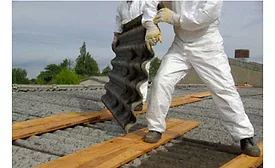
It almost sounds like the plot of a movie. Alert neighbors living near a home being renovated notice that some workers are improperly removing exterior asbestos tiles from the structure. They confront the man who claims to be the homeowner. He promises to remove the asbestos correctly, but the neighbors take videos showing that his workers continue to commit asbestos-related violations. Angry that the neighborhood’s residents – and those workers – are being exposed to the dangerous substance, they contact the...
MSA is offering the following webinars in March: An overview of Fire and Gas Sensing Technologies; How to Integrate Cloud-Based Safety Monitoring into your Portable Gas Detection Program; and Gas Detection Then and Now - From the Canary to the Cloud.
Solution streamlines shop floor processes, manages the entire nonconformance lifecycle, and supports enterprise-wide continuous improvement initiatives
February 26, 2019
Cority, the most trusted provider of environmental, health, safety, and quality (EHSQ) software, today announced the availability of its enhanced Quality Management solution. Designed to provide Quality professionals with a closed-loop continuous improvement process to ensure product safety, compliance and drive operational efficiency, Cority increases visibility across the supply chain to monitor suppliers, capture customer feedback, and ensure the highest product standards.
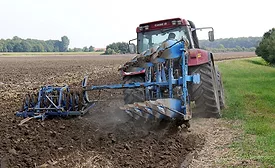
Long hours of sitting on machinery and working in uncomfortable positions, like kneeling and crawling, along with lifting heavy loads can lead to injuries for farmers. Because of such physically demanding environments, farmers have a greater risk than workers in many other industries of experiencing musculoskeletal disorders—soft-tissue injuries from frequent motion, force, and awkward positions—especially low back pain.