An initiative to address the significantly higher fatality rates suffered by Hispanic and Latino workers in the U.S. moved forward at a Hispanic/Latino Worker Safety Workshop held earlier this month in Chicago. The event was launched by the American Society of Safety Engineers (ASSE) and included representatives from the National Institute for Occupational Safety and Health (NIOSH), OSHA, the National Safety Council, New Jersey Department of Labor and Workforce Development, Latino Worker Safety Center, Oregon OSHA, Associated Builders and Contractors, and other organizations from the agriculture, construction and manufacturing industries.
The third staging of TOS+H Expo, Turkish Occupational Safety + Health Exhibition, in Istanbul, confirmed its position as Turkey’s leading platform for this sector. A total of 5,034 trade visitors from 50 countries attended and the 119 exhibiting companies reported that their high expectations were met.
The amputation of a worker’s fingers in unguarded moving belts and pulleys has resulted in 11 citations and $86,615 in penalties against UMC Acquisition Corp. of Downey, California.
California OSHA concluded that the company failed to assess the workplace for hazards, ensure that proper lockout/tagout procedures were implemented, and install guards on moving machinery.
The rate of nonfatal injury from work-related assaults has increased among law enforcement officers, according to a National Institute for Occupational Safety and Health (NIOSH) study in the American Journal of Preventive Medicine. The study is the first national investigation of nonfatal injuries from assaults and other unintentional injuries, including accidental falls and motor vehicle crashes.
Just last week, a California worker was buried alive under tons of soil in an unprotected 17 foot deep trench and two weeks ago an unidentified 34-year old South Dakota construction worker was crushed to death in a 10 to 15 feet deep trench.
Unfortunately, par for course in these United States. Why, I don’t know.
Every day in the U.S. approximately 2,000 employees suffer an eye injury that is serious enough to rush to an ophthalmologist. While most of these eye injuries involve small flying particles that abrade the eye, some are severe and result in total blindness. However, eye injuries can be easily avoided by wearing appropriate personal protective equipment.
Major chemical incidents can be prevented by applying process safety management principles. Process safety management (PSM) is the control of process hazards in order to prevent process-related injuries and incidents. The CSB has conducted seven investigations with 26 resulting recommendations relating to improving state and federal process safety management programs.
The U.S. Chemical Safety Board (CSB) investigation team that deployed to the April 26, 2018, explosion at the Husky Energy oil refinery in Superior, Wisconsin. This is a brief update of the CSB’s ongoing work: The CSB investigation team arrived in Superior the evening of April 26 and to date has photo-documented a large percentage of the refinery.
Moments before the fatal May 2017 explosions at the Didion milling facility in Cambria, Wisconsin, workers reported seeing dust clouds suspended in the air inside the facility, according to a preliminary report recently released by the United States Chemical Safety and Hazard Investigation Board.
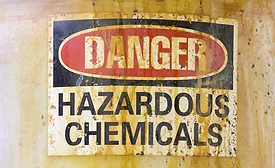
Among hazardous chemicals and substances handled in industry, gases are often the most dangerous. In addition to being harder to contain than liquids or solids, many gases are invisible and odorless, forcing workers to rely on sensors and meters to detect leaks.