Several years ago one of our upper leadership persons came to me stating he wished he had been with us from the start. On board all but a few of those years, he said he wished he would have experienced ”those fun, exciting, beginning years of building the business foundation..."
The global competition of today’s business world requires people to work smarter. For this to happen, corporate decision-makers need more input from their employees. For safety performance to improve beyond current plateaus, hourly workers need to provide more advice, involvement, and interpersonal accountability.
With our cover story this month taking a look at the future of industrial hygiene, I thought I’d dust off some predictions I made a dozen years ago and see how they turned out.
The legislation would apply federal safety
standards to workers who are not currently covered, including federal, state
and local employees, and some private sector employees; increase penalties for
repeated and willful offenses; and allow OSHA to apply felony charges for
repeated or willful violations that result in a worker death.
Fifteen years flies by, just watch kids grow. Back in 1992, about one in five members of the American Industrial Hygiene Association were consultants (22 percent to be exact). AIHA had just moved its headquarters from Akron, Ohio to Fairfax, Va., and just signed on its 10,000th member.
ASSE
recently announced the approval of the new American National Standard Institute
(ANSI)/ASSE Z359.2-2007 standard. The standard, Minimum Requirements
for a Comprehensive Managed Fall Protection Program, is the first
approved in a series of standards that focus on fall protection and related
systems.
OSHA is reminding employers that they must
provide cave-in protection whenever their employees work in excavations five
feet or deeper. The warning follows an investigation into the Jan. 10, 2007,
death of an employee at the Tamarack Country Club, Greenwich, Conn., who was
killed in a cave-in while installing drainage pipes in an unprotected six-foot
deep trench on the club's golf course.
ASSE Governmental Affairs committee chair Thomas
F. Cecich, CSP, CIH, of Apex, N.C., testified today on the benefits of OSHA's
cooperative programs before a Senate subcommittee.
The future of workplace safety, occupational leadership challenges, corporate safety perspectives, key issues and more will be featured at the ASSE’s Professional Development Conference and Exposition, Safety 2007, to be held June 24-27 in Orlando, Fla., at the Orange County Convention Center.
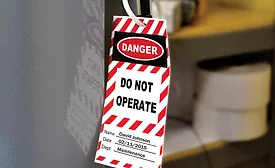
In the nearly 20 years since OSHA 29 CFR 1910.147, The Control of Hazardous Energy (lockout/tagout) was enacted, thousands of tragic incidents from hazardous energy sources have no doubt been avoided through application of the standard. Yet many accidents and fatalities still occur every year.
 RSS
RSS