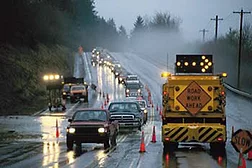
For motorists and the workers who build, repair, and maintain streets, bridges, and highways, roadway work zones can be dangerous. In these areas, a variety of complicated road signs, barrels and lane changes could increase the risk of motor vehicle crashes.
New York City continued its string of construction industry fatalities on Saturday, when a 49-year-old worker fell 30 feet to his death at a Madison Avenue worksite.
The city’s Department of Buildings issued a full stop-work order for the site after the incident, which occurred shortly before noon.
They tend to happen more on Mondays. They can occur in an instant. And trench deaths kill about 25 workers a year, according to the Bureau of Labor Statistics (BLS). About 75 percent of those deaths are due to cave-ins, which are largely preventable through cave-in protection and soil analysis. The remainder are mainly caused by struck-bys or electrocutions – also largely preventable.
OSHA’s chance for a chief steps aside, pesticide hazards grab headlines and OSHA issues a rule that revises some standards. These were among the top stories featured on ISHN.com this week.
OSHA requirements "are not just paperwork exercises"
May 16, 2019
An Ohio roofing contractor who has never paid penalties for one of the many OSHA citations it’s been issued was ordered earlier this month to get right with OSHA.
The U.S. Sixth Circuit Court of Appeals ordered Holland-based Casey Bortles to immediately comply with the final orders resulting from uncontested citations.
OSHA has issued a final rule that revises 14 provisions in the recordkeeping, general industry, maritime, and construction standards that may be confusing, outdated, or unnecessary. The revisions are expected to increase understanding and compliance with the provisions, improve employee safety and health, and save employers an estimated $6.1 million per year.
Advocates in Florida are pushing for tougher standards for growers to protect their employees, arguing that rising global temperatures will make outdoor work unsustainable without the proper regulations.
Florida’s agriculture and construction employers could soon be required to train outdoor workers and managers on avoiding heat-related illnesses under proposed legislation.
The heat illness prevention bill, sponsored by Orlando Democrat Rep. Carlos Guillermo Smith, would set a statewide standard for all outdoor workers to be given plenty of drinking water, access to shade and ten-minute rest breaks enforced after every two hours of outside labor.
Whenever heat stress exceeds occupational exposure limits, workers should be protected by acclimatization programs, training about symptom recognition and first aid, and provision of rest breaks, shade, and water. A Heat Index of 85°F (29.4°C) could be used as a screening threshold to prevent heat-related illness.
Cooperating with OSHA gets two employees fired – and their employer found guilty of retaliation; health experts want asbestos banned and the Association Health Plans program gets a defeat in court. These were among the top occupational safety and health stories featured on ISHN.com this week.
It’s a safety tool that you can launch from your computer, yet the National Institute for Occupational Safety and Health (NIOSH) promises that its Aerial Lift Hazard Recognition Simulator offers realistic workplaces – complete with hazards.
 RSS
RSS