Myth 1: Residential contractors don’t get injured as badly as commercial construction workers.
FACT: Half of all construction workers who have fallen to their death in Massachusetts worked in residential construction.
A 30-year-old roofer was rolling tar paper on a new pitch roof of a 2-story Cape when he backed off the edge. He fell 24 feet to his death, and left behind a wife and children.
Myth 2: You have to fall a long distance to kill yourself.
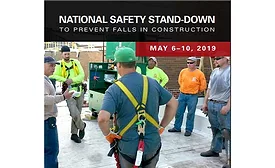
The 6th annual National Safety Stand-Down to prevent falls takes place the week of May 6-10, 2019.
The Stand-Down was conceived by OSHA in 2014 as part of the National Falls Campaign to raise awareness surrounding the severity of fall hazards in construction and the importance of preventing them.
In a construction setting, the term “safety stand-down” is used to describe a wide variety of activities where normal work is paused and the entire site focuses on a particular safety issue.
"Providing workers with fall protection is not optional"
April 15, 2019
An Ohio-based construction company failed to ensure that workers used fall protection while doing roofing tasks, leading to a worker sustaining a serious injury, according to an OSHA inspection following the incident.
The agency has cited Hiebert Bros Construction LLC for exposing employees to fall hazards after the worker was injured from a 26-foot fall at a construction worksite in Gainesville, Florida.
The Stand-Down was conceived by OSHA in 2014 as part of the National Falls Campaign to raise awareness surrounding the severity of fall hazards in construction and the importance of preventing them.
It’s an opportunity for employers to pause work and have a conversation with workers about fall hazards, protective methods, and the company’s safety policies, goals and expectations.
The 6th annual National Safety Stand-Down to prevent falls takes place the week of May 6-10, 2019.
The Stand-Down was conceived by OSHA in 2014 as part of the National Falls Campaign to raise awareness surrounding the severity of fall hazards in construction and the importance of preventing them. In a construction setting, the term “safety stand-down” is used to describe a wide variety of activities where normal work is paused and the entire site focuses on a particular safety issue.
Three New York City construction workers died last week at three different worksites – two as the result of struck-by incidents.
In Brooklyn, news sources report that 34 year-old Gregory Echevarria was killed when part of a crane he was helping to assemble fell on him. The incident occurred at 3:15 a.m. on Saturday at the entrance to the Holland tunnel, when a 7.5 ton counterweight fell on Echevarria.
Last August, Higinio Romero was working on the roof of a condo in South Florida when he slipped and fell two stories, landing on rocks below. Emergency workers found him unconscious and bleeding from his ears. Romero — a father of two children, 4 months old and 10 years old — died about an hour later. According to a sheriff’s report, he had unclipped his safety harness shortly before the fall.
Falls are the leading cause of construction-worker fatalities, accounting for one-third of on-the-job deaths in the industry. In 2017, there were 366 fall fatalities out of 971 total fatalities in construction. According to the CPWR, from 2011-2015, 61% of fatal falls in construction occurred in small businesses with fewer than 10 employees. Almost two-thirds of fatal falls were from roofs, scaffolds, and ladders.
A worker who was replacing a roof at a Jefferson County, Kentucky high school died March 28 after falling through the roof. News sources say 40-year-old Fredy Godoy-Mendoza died shortly after 5 p.m. at Waggener Traditional High School.
Godoy-Mendoza was reportedly employed by a roofing contractor.
In Pacoima, California, a forklift operator was killed March 31, when he was struck by a car while making a delivery.
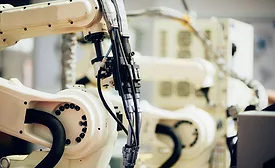
The construction workers who participated in a recent poll on behalf of Volvo Construction Equipment (Volvo CE) have some very complicated attitudes towards automation and artificial intelligence (AI) in the workplace. Some 31 percent said they fear that their jobs were at risk from automation, but far more – 46 percent – worry that their safety is at risk from their non-human co-workers.