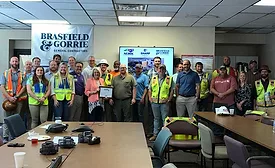
A North Carolina construction firm has received Safety and Health Achievement and Recognition Program (SHARP) accreditation for its work on a new health care facility.
Brasfield & Gorrie was presented with a certificate of completion last month at the Mission Hospital for Advanced Medicine project, a 12-story, 615,000 square sq foot ft surgical tower with 220 patient beds, a newly expanded emergency department with 94 prep/recovery exam rooms, 10 operating rooms, 40 PACU bays, and a rooftop helipad.
California OSHA issued four citations and $63,560 in penalties to Mercer-Fraser Co. after a worker driving a truck collided with a front end loader and suffered a serious head injury. Inspectors determined that the company failed to require seat belt use, develop and implement safe practices for workers operating haul trucks, and ensure that trucks were operated at safe speeds.
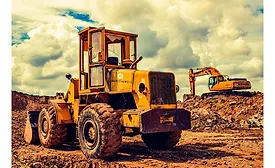
Construction is a high hazard activity. Workers face serious dangers posed by heavy machinery, sharp objects, falling objects, falls from heights, asbestos, silica, electrocutions, among many other hazards. It's in the best interest of workers and construction companies to ensure the highest safety standards.
An effort currently underway - timed to coincide with Construction Safety Week - is aimed at preventing fatalities and injuries from dropped objects.
Through its 2019 Safety at Heights campaign, the International Safety Equipment Association (ISEA) The campaign is providing employers and workers educational information at SafetyAtHeights.org.
A fall from the fourth floor of a building under construction claimed the life of a 24-year-old worker last month. News sources say Alexander J. Kanouse fell at approximately 8 a.m. while working at a jobsite in Madison. When first responders arrived, Kanouse was barely breathing and was bleeding profusely from a head wound.
Having a detailed fall protection plan is essential to providing a safe work environment for employees working at heights. While OSHA only requires a written fall protection plan for employees engaged in specific types of work who can demonstrate that it is infeasible or hazardous to use conventional fall protection equipment (See 1926.501(b)(2), (b)(12), and (b)(13)), CPWR feels that the use of a plan is beneficial to the safety of all workers at risk for a fall.
Anyone who has worked in construction knows that there is potential to suffer on-the-job injuries. The strain associated with heavy lifting or even repetitively performing the same activity, puts workers at risk of being injured every day. Exoskeletons are an emerging solution to this problem and reduce the risk of work-related injuries in highly manual environments, such as construction sites.
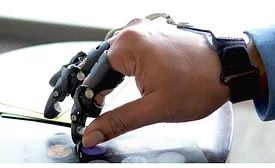
Created by Naked Prosthetics , this prosthetic moves with a person's hand mimicking a natural finger.
“For us, function is about getting somebody back to work, back to life, back to doing what they want to do," said Bob Thompson, CEO of Naked Prosthetics.
They created the product to help the vast amounts of construction workers who've lost partial fingers and wanted to get back on the job.
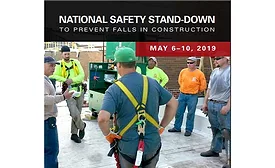
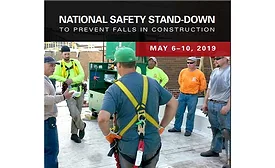
OSHA and its partners are hosting events throughout the country this week for the sixth annual National Safety Stand-Down to Prevent Falls in Construction. Employers and workers will pause to talk about fall hazards, OSHA compliance, and industry best practices to prevent falls. The 2019 poster is available on OSHA's publications page.
Did you know that falls are among the leading causes of workplace injury and death each year? Even worse, 54% of the workers killed had no access to fall protection. Join us this week for the National Safety Stand-Down by understanding the risks and sobering statistics regarding fall fatalities.
 RSS
RSS