With a growing number of states legalizing marijuana, causing a rapid increase in the cannabis industry workforce, increasing attention is being given to the health and safety of those involved in the cultivation and distribution of the substance in its various forms. One potentially serious health risk is from occupational exposure to mold.
The World Economic Forum “Global Competitiveness Report 2018” ranked the U.S. as the most competitive country in the world with an overall score of 86. The U.S. ranked 1st in labor market, financial systems and business dynamism categories.
Sometimes, things just don’t work out. It might not be anyone’s fault — or perhaps you feel strongly that it is entirely someone’s fault — but regardless, regularly working with outside contractors brings about the occasional conflict.
But should a conflict arise, it doesn’t necessarily mean that a situation is beyond all repair.
A new website from the National Occupational Research Agenda (NORA) Manufacturing Sector Council features ways in which businesses and companies can safeguard employees from the release of hazardous energy (any source of electrical, mechanical, hydraulic, pneumatic, chemical, thermal, or other energy) during service and maintenance activities.
Class action lawsuits regarding reproductive health rights were recently filed against Walmart, the U.S.’s largest private employer, in Illinois, New York and Wisconsin. Many other employers such as Amazon, Merck and Novartis face similar lawsuits, too, relating to pregnancy discrimination, failure to provide reasonable accommodations and violations of EEOC rules.
The industrial internet of things (IIoT) has significantly impacted safety for workers and entire companies, and many results are undoubtedly positive.
However, since IIoT devices connect to the internet, organizations must follow cybersecurity best practices to ensure cybercriminals don't infiltrate systems and cause dangerous malfunctions.
We all know that good safety training helps to keep workers safe. But anyone who ever crammed for a test in school knows that something you memorize for just one day is something you’ll forget next week. So what can you do to ensure that the safety lessons learned in training stick with your workers on the job?
A Pennsylvania metal parts manufacturer thought it already had an “exceptional” safety program when it reached out to a government program for assistance. Brockway-based Phoenix Sintered Metals, LLC, a family-owned manufacturer of sintered (compacted and formed without liquefaction) metal parts, is “committed to continuous improvement,” according to the company.
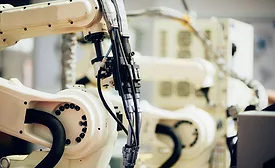
Robots are becoming increasingly popular in workplaces around the globe, especially cobots, the machines designed to work next to humans. But when considering implementing any technology, it's essential to keep safety at the forefront.
What possibilities exist for robots malfunctioning and hurting people or otherwise compromising worker well-being?
The National Institute for Occupational Safety’s (NIOSH) Total Worker Health® (TWH) model will be the focus of a session at the American Society of Safety Professionals’ (ASSP) Seminarfest 2019 in Las Vegas.
 RSS
RSS