The warmer temperatures that are not too far ahead – depending upon where you live – will invariably motivate many people to drag the grill out of the garage and fire it up for some outdoor cooking.
Here are some tips for enjoying safely barbecued or grilled food from the According to Stop Foodborne Illness, a national, nonprofit, public health organization dedicated to preventing illness and death from foodborne pathogens.
The increase in recent years in heavy downpours, severe flooding and other severe weather events caused by climate change keeps electricians busy making repairs. It also keeps them in danger. Electrocutions are the fifth leading cause of all reported occupational deaths.
On April 3, I represented the National Transportation Safety Board (NTSB) at an event kicking off Distracted Driving Awareness Month and California Teen Driver Safety Week, in Sacramento. I challenged California to lead the nation in acting on NTSB’s 2011 recommendation to ban the non-emergency driver use of portable electronic devices that do not support the driving task.
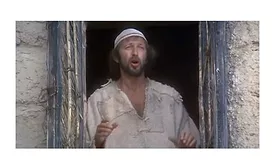
The Monty Python fans among you will instantly picture the scene from “The Life of Brian” movie. The massed crowd outside their new-found saviour’s ramshackle bedroom window arguing over their individuality with their new “Messiah” Brian and his mother.
But it would take a ‘serious’ movie geek to remember the next few lines when in unison the crowd chant “Yes we are all different” only to be answered by a lone wavering dissenting voice shouting “I’m not.”
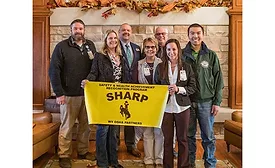
Hospice partnered with state’s OSHA Consultation program to improve workplace health and safety
April 22, 2019
A skilled nursing facility in Cheyenne, Wyoming has achieved injuries, illnesses and lost days that are dramatically below the average for their industry since it began working with Wyoming OSHA Consultation.
From 2016 through 2017, the Davis Hospice Center’s Total Recordable Case Rate (TRC) rate was zero, and their Days Away from Work, Job Transfer and Restriction (DART) rate was also zero. These rates are astounding when discussing the healthcare industry and health and safety challenges they face.
Every day, an average of 137 workers in the United States lose their lives to diseases and
illnesses caused by on-the-job exposures to hazards like silica dust, asbestos, and a wide variety
of toxic chemicals. That means every year, roughly 50,000 people die from occupational
illnesses, and the toll is likely much higher because of underreporting and incomplete statistics.
Appendix A to federal OSHA’s 1978 lead standard (current today) provides that blood lead level (BLL) of workers, both male and female, who intend to have children should be maintained below 30 micrograms per deciliter (ug/dL) “to minimize adverse reproductive health effects to the parents and to the developing fetus.
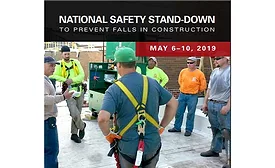
The 6th annual National Safety Stand-Down to prevent falls takes place the week of May 6-10, 2019.
The Stand-Down was conceived by OSHA in 2014 as part of the National Falls Campaign to raise awareness surrounding the severity of fall hazards in construction and the importance of preventing them.
In a construction setting, the term “safety stand-down” is used to describe a wide variety of activities where normal work is paused and the entire site focuses on a particular safety issue.
A downside of telemedicine visits, a safety coordinator and another manager indicted for obstructing an OSHA workplace fatality investigation and smartphone lessons from GM’s ban on using them while walking. These were among the top stories featured on ISHN.com this week.
Safety is a critical consideration for any welding project. Arc welding is a safe occupation when proper precautions are taken. But, if safety measures are ignored, welders face an array of hazards which can be potentially dangerous, including electric shock, fumes and gases, fire and explosions and more. To help keep welders safe, organizations such as the American Conference of Governmental Industrial Hygienists (ACGIH) and OSHA offer safety guidelines to help control, minimize or to help employers and workers avoid welding hazards.