
Combustible dust is present in a variety of industries and is the precursor to a serious hazard. This hazard’s often-destructive nature makes it vitally important to understand. When accounting for the hazard, several questions arise, highlighting the true complexities of combustible dust.
The Board of Directors of the American Conference of Governmental Industrial Hygienists (ACGIH) has ratified the 2019 Threshold Limit Values (TLVs®) for Chemical Substances and Physical Agents and Biological Exposure Indices (BEIs®). TLVs® and BEIs® are guidelines to be used by professionals trained in the practice of industrial hygiene. The TLVs® and BEIs® are not designed to be used as standards.
Behavior is not right or wrong, good or bad. It just is. It is neutral. Approach behaviors with the dispassionate, objective view of a scientist. Not with emotions.
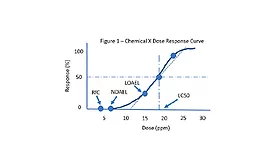
A basic understanding of the toxicological dose-response curve is a necessity for OHS pros. People fear most what they understand the least. New and vast toxicological information can trigger fear and irrational actions.
Combustible dust is present in a variety of industries and is the precursor to a serious hazard. This hazard's often-destructive nature makes it vitally important to understand. When accounting for the hazard, several questions arise, highlighting the true complexities of combustible dust.
J.J. Keller & Associates, Inc. helps companies avoid regulatory risk at nationwide educational events
January 30, 2019
In its continued effort to help companies comply with government regulations, J. J. Keller & Associates, Inc. is hosting nearly 30 complimentary seminars in the first quarter of 2019 alone.
“What’s great about these seminars is not only that our subject-matter experts provide attendees with in-person guidance to better understand and comply with complex regulatory requirements, but also that attendees get to hear about real life best practices from their peers,” said Tom Reader, senior director of marketing at J. J. Keller.
Choosing the right final project for a graduate level course can be a daunting responsibility for any instructor. Harvard Research Scientist and Instructor Dr. Diana Ceballos heard NIOSH researcher Dr. Thais Morata share details at a NORA conference about NIOSH’s collaboration with academia and Wikipedia to teach students science translation and knew it was a perfect match.
Course will be offered March 16-17 in Las Vegas, Nevada
January 25, 2019
The American Industrial Hygiene Association is pleased to support the Society for Chemical Hazard Communication's professional development training, HazCom Registry Preparation, in Las Vegas, Nevada. The course, designed for hazard communication professionals preparing to sit for the Safety Data Sheets & Label Authoring Registry competency assessment, will be presented on March 16-17 by Robert Skoglund, Ph.D., DABT, CIH; Denese A. Deeds, CIH, FAIHA, SDSRP; Douglas Eisner, M.S.; Chandra D. Gioiello, M.S., CIH; and Robert Roy, Ph.D., DABT.
The National Safety Council has posted an online version of the Injury Facts reference book for safety statistics. The free resource features a section on workplace safety that includes work-related injury and fatality trends, and how to benchmark an organization's injury and illness incidence rates with national averages.
Most all of us have been around a boss or supervisor who isn’t very likeable or open to feedback. He or she is often avoided, and people may even fear approaching that boss with a safety-related concern or idea for improvement. Workers who perceive their bosses as open believe their leader really listens to their ideas and acts upon them when appropriate — or at the very least, gives their ideas a fair shake.