A motion picture company has been issued a serious citation by OSHA for an accident in August 2018 that left a stunt man hospitalized for weeks with serious injuries.
The agency says Eye Productions, Inc. failed to protect stunt coordinator Justin Sundquist from hazards while filming the CBS television show MacGuyver in Chattahoochee Hills, Georgia. Sunquist fell from the back of a vehicle that was traveling at approximately 18 mph, according to OSHA.
OSHA is now enforcing the requirement that employers must evaluate the competency of their operators before allowing them to operate cranes independently.
The agency updated its standard for cranes and derricks in construction by clarifying each employer's duty to ensure the competency of crane operators through training, certification or licensing, and evaluation.
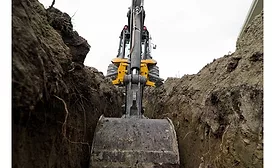
One worker noticed a large crack in the soft dirt of an unprotected wall of a utility trench. He and the other worker in the trench at that time were told to use caution…but continue working.
The subsequent collapse of that unprotected wall killed a man and earned his employer nearly a quarter of a million dollars in fines from Cal/OSHA.
Investigators for the state agency said Livermore-based contractor Platinum Pipeline, Inc. committed willful-serious safety violations by instructing employees to continue grading the bottom of the trench without providing any protection, even after identifying the soil as unstable.
Companies tried to avoid responsibility by creating "a legal web of confusion"
February 26, 2019
It almost sounds like the plot of a movie. Alert neighbors living near a home being renovated notice that some workers are improperly removing exterior asbestos tiles from the structure. They confront the man who claims to be the homeowner. He promises to remove the asbestos correctly, but the neighbors take videos showing that his workers continue to commit asbestos-related violations. Angry that the neighborhood’s residents – and those workers – are being exposed to the dangerous substance, they contact the...
No, OSHA has not banned safety incentive programs. In fact, on October 11, 2018, agency regional administrators received a memo from Kim Stille, acting director of enforcement programs, which walks back the Obama administration OSHA’s more hard line stance on safety incentive programs. Even under former agency head Dr. David Michaels, OSHA never out-and-out “banned” incentive / reward programs. Michaels and his leadership team took a tougher line on incentive / reward programs that retaliated against or punished workers for reporting work-related injuries or illness.
Two nonprofit organizations have filed a federal complaint against the EPA for its failure to regulate methylene chloride, a chemical found in paint strippers that has been blamed for 50 deaths. The complaint alleges that the EPA has violated its statutory obligations by not enacting a ban on the substance in paint and coating removal products, despite determining that methylene chloride presents “an unreasonable risk of injury to health” more than two years ago.
A new and improved Protecting America’s Workers Act (PAWA) has been introduced into the House of Representatives by Congressman Joe Courtney (D-CT). Similar versions of this bill has been introduced every year for over a decade. The bill number is H.R.1074.
Prevention is a key factor for any organization seeking continual improvement in its occupational health and safety performance. In the hierarchy of controls, elimination of the hazard comes first, and the last line of defence is proper use of personal protective equipment (PPE).
While the extent of responsibility under the law of staffing agencies and host employers is dependent on the specific facts of each case, staffing agencies and host employers are jointly responsible for maintaining a safe work environment for temporary workers - including, for example, ensuring that OSHA's training, hazard communication, and recordkeeping requirements are fulfilled.
Cal/OSHA is taking a look at how a change in OSHA’s recordkeeping regulation affects its own injury tracking requirements. The state agency that helps protect California’s
workers from health and safety hazards on the job has scheduled an advisory committee meeting on the electronic.