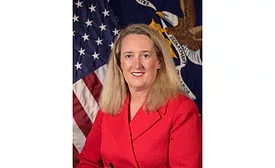
Principal Deputy Assistant Secretary of Labor for Occupational Safety and Health Loren Sweatt spoke at the Pennsylvania Governor's Safety and Health Conference on October 28, 2019.
Funds will go toward helping women pursue safety careers and advancing those already in the field
November 4, 2019
The National Safety Council (NSC) has received a $125,000 sponsorship from Amazon to support women in safety. The sponsorship will go toward bolstering three NSC initiatives: the Council’s Marion Martin Award, Women in Safety Scholarship program and Women’s Division.
Although women make up nearly half of the U.S. workforce, they comprise only 19% of employees within the safety industry.
Heart attacks killed 33 of the 82 firefighters who died while on duty in the U.S. last year, according to a report from the U.S. Fire Administration (USFA). “Firefighter Fatalities in the United States” is compiled annually by the USFA to identify and analyze all on-duty firefighter fatalities to increase understanding of their causes and how they can be prevented.
A report by the Massachusetts Department of Public Health (DPH) shows a strong correlation between hazardous jobs and opiate addiction and overdoses in that state.
The 21-page study titled Opioid-related Overdose Deaths in Massachusetts by Industry and Occupation, 2011-2015 found that there were a total of 5,580 opioid-related overdose deaths in Massachusetts from 2011 through 2015. Of the 4,284 worker death certificates deemed comprehensive enough to study, 1,096 were found to be employed in construction/extraction.
Google “safety culture” and you get about 1,600,000,000 results in 0.95 seconds. Safety and health managers have long known the importance of culture – the organization’s values, beliefs and leadership - on safety, morale, productivity, engagement, presenteeism and absenteeism. Culture has been at the top of safety and health issues for the past ten years at least.
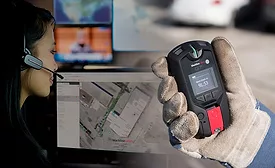
Traditionally, safety departments get opinions and guesses thrown at them, says Stinson. There may be a hazard. Equipment doesn’t seem to be working. “Now you have objective data all mapped out. It’s very important that this is objective data, so you know for a fact that a part of plant is leaking. It’s a fact, not a suspicion,” he says.
Our company has been roofing/remodeling injury-free since inception in 2004. The behavior of people is the predominant cause of accidents and the variable that is most easily changed. Although this article is based on our roofing experiences, the principles are easily applied to any industry, especially those that involve hard labor, high turnover, or dangerous conditions.
Safety professionals work diligently to engage both leaders and employees. But there is often a challenge: leaders wish their employees would just "be careful" without doing diligence to hazard identification, assessment and control. The result: workers claim leaders are only concerned with productivity and budgets.
Whether you use ISO 45001, ANSI Z10, OSHA’s Voluntary Protection Program or another management system, there are common elements. The most important are management commitment and leadership, and employee acceptance and participation in the system.
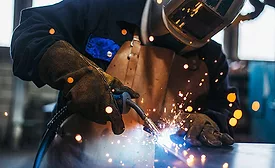
It only takes a cursory examination of a welding torch to understand there are some real safety concerns with this craft. Welding is a 100-plus-year-old practice that's still a fundamental component of machine work and industry today. Proficient welders are becoming harder and harder to find, which is another excellent reason to learn the craft. It's also a handy thing to know how to do.
 RSS
RSS