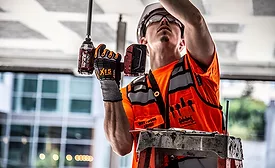
One sweeping glance across the Seattle skyline is enough to see that something is happening in the area. If a region’s tower crane count is any indication of economic growth, then companies should pay attention to the Pacific Northwest.
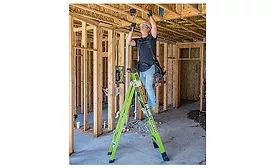
Accidents happen for millions of reasons, but the truth is, they are all preventable. Three major causes are common in almost all accidents; not using the right tool for the job; using a damaged tool that hasn’t been inspected; and not following the basic safety guideline for that tool.
We had just witnessed a large toolbox talk at a mining construction site in Africa. It wasn’t a bad session; the safety officers were loud and lively in their statements, there was some humor and even the safety manager from the general contractor stepped in to say a couple words.
Workplace toxins that are inadvertently tracked by employees into their homes serve “as an intriguing example of how occupational conditions can have broader public health consequences,” according to scientists who’ve studied the problem.
In Eliminating Take-Home Exposures: Recognizing the Role of Occupational Health and Safety in Broader Community Health, researchers reframe the problem as one arising from unsanitary worker behavior – the current thinking – to a larger issue that needs to be viewed through an ecosocial lens in order to institute effective prevention.
“Aluminum Shapes continues to disregard their legal responsibility to comply with safety and health standards"
January 31, 2020
OSHA has cited Aluminum Shapes LLC for workplace safety and health hazards after a crane operator was injured in August 2019 at the aluminum manufacturer’s Delair, New Jersey, foundry. The company faces $169,524 in penalties for these violations.
In a recent article in Public Health Reports, the U.S. Surgeon General, Vice Admiral (VADM) Jerome Adams, MD, MPH, recognizes the important relationship between employment and health. The article, “The Value of Worker Well-being,” also highlights the efforts of the National Institute for Occupational Safety and Health (NIOSH), the NIOSH Office of Total Worker Health®, the NIOSH-funded Total Worker Health (TWH) Centers of Excellence, and NIOSH TWH affiliates.
Australia’s largest union representing workers in construction, forestry, maritime and mining and energy is demanding urgent national action on silicosis after revelations that 1-in-5 Queensland stone workers tested positive to the potentially fatal disease.
The Construction, Forestry, Maritime, Mining and Energy Union (CFMEU ) says the severity of the risks associated with engineered stone products calls for a nationally coordinated approach rather than piecemeal regulations and health monitoring programs.
ACGIH® announced today that its Board of Directors ratified the 2020 Threshold Limit Values (TLVs®) for Chemical Substances and Physical Agents and Biological Exposure Indices (BEIs®). The Board also approved recommendations for additions to the Notice of Intended Changes (NIC).
Flight attendants are applauding the U.S. Department of Transportation’s (DOT) bid to restrict the types of animals allowed in cabins, saying emotional support animals have threatened the safety and health of crew members as well as passengers.
Amid a surge in passengers claiming that their emotional support animals – of many species – must fly with them in the passenger areas of planes, the DOT has released a notice of proposed rulemaking that seeks to amend the definition of a service animal in air transportation.
OSHA stayed busy in fiscal year 2019. The agency trained a record 1,392,611 workers on safety and health requirements through its various educational programs. OSHA also helped small employers identify 137,885 workplace hazards through its On-Site Consultation Program, which OSHA estimates protected 3.2 million workers from potential harm.