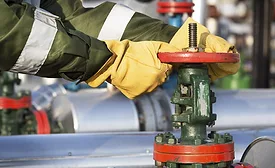
Fall prevention devices to make your facility safer and gloves that grip well while providing protection from impact were this week’s top products of the week, featured on ISHN.com.
Bus driver hours of service, slip resistant shoes and workers comp and regulations governing onshore oil drilling all made it into the news this week on ISHN.com.
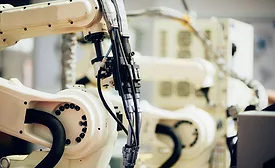
Automated equipment has transformed industrial production over the last 30 years and has been instrumental in accelerating production and efficiency in the sectors of manufacturing, construction and machining. This dynamic shift from human workers has resulted in the relegation of repetitive and labor-intensive tasks to machines while simultaneously freeing up humans to conduct higher level tasks. As industries begin to rely more heavily on automation, the general viewpoint is that increased automation is beneficial from both a productivity and safety perspective.
OSHA has cited both a contractor and the operator of a natural gas processing plant in Houston, Pennsylvania, following a fire that killed one worker and left three others badly burned.
The agency cited Energy Transportation LLC, the company contracted to clean lines and vessels at the plant, for violations of the process safety management (PSM) standard, and for exposing employees to flammable vapor and liquid while they off-loaded waste material from a vessel into a mobile tank.
The term artificial intelligence, usually referred to as AI, first came into use in the 1956, when computer scientists began to predict that machines had the potential to be programmed to “think” and learn from experience, just like human beings. It was in the 2010s that AI became more of a reality, thanks to the availability of practically unlimited storage capacity on computers, along with faster, cheaper processing power, and a flood of big data.
The sinking of a towboat in the Lower Mississippi River near New Orleans last March that killed two mariners is being blamed on the towboat company, in a new report from the National Transportation Safety Board (NTSB). A Marine Accident Brief issued by the agency said the company’s decision to ignore its own pre-employment hiring procedures led to an inadequately vetted pilot on board the Natalie Jean, a towing vessel on which he did not have previous experience.
Food services operations where workers received free highly slip-resistant shoes showed a large reduction in workers’ compensation claims for slip injuries compared to food service operations where workers did not receive the shoes, according to research published in the Scandinavian Journal of Work, Environment & Health.
Industrial glove manufacturer Southern Glove, Inc., has released the Rig Rider glove, featuring impact protection, enhanced gripping power, and durability.
“The features offered in the Rig Rider styles are perfect for multiple markets, but designed specifically for oilfield workers needing impact protection and superior grip,” explained Brent Fidler, president and CEO of Southern Glove.
The Board of Certified Safety Professionals (BCSP) is proud to announce the 2019 recipients of the organization's most prestigious awards. The recipients, Stewart Burkhammer, CSP, OHST; Carl Heinlein, CSP, OHST, STSC; Tye Legleu, CSP, OHST; Eric Simmons, CSP, SMS, CHST, STSC received their awards today, June 12, 2019, during a luncheon ceremony at the American Society of Safety Professionals' (ASSP) Safety 2019 conference in New Orleans, Louisiana.
The US Chemical Safety Board’s (CSB) investigation into an Oklahoma blowout that killed five workers blames the incident on a lack of regulations governing onshore drilling safety as well as shortcomings in safety management systems and industry standards utilized by the industry.
The CSB’s final investigation report into the Pryor Trust gas well explosion in Pittsburgh County calls on regulators, industry groups, the state of Oklahoma and companies to address such gaps.
 RSS
RSS