An exploration of automation in the workplace: Safety considerations for future implementation
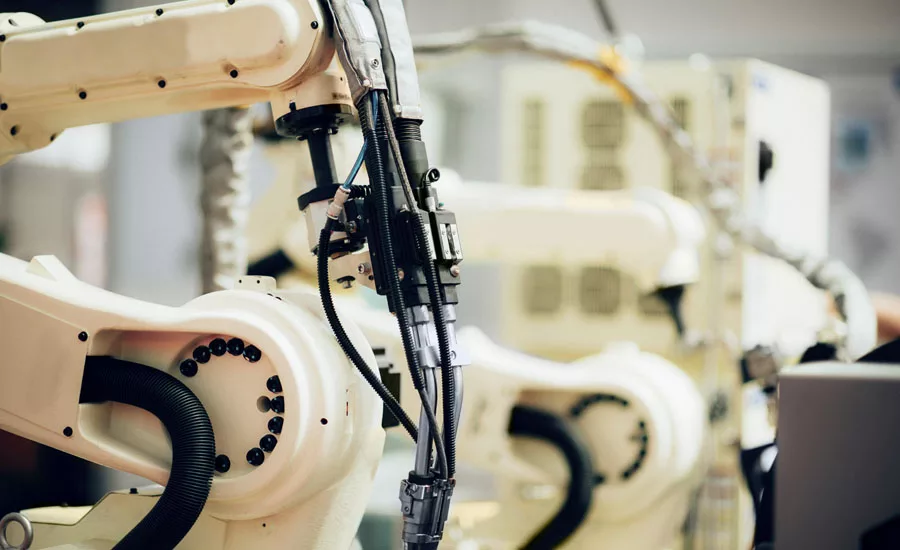
Automated equipment has transformed industrial production over the last 30 years and has been instrumental in accelerating production and efficiency in the sectors of manufacturing, construction and machining. This dynamic shift from human workers has resulted in the relegation of repetitive and labor-intensive tasks to machines while simultaneously freeing up humans to conduct higher level tasks. As industries begin to rely more heavily on automation, the general viewpoint is that increased automation is beneficial from both a productivity and safety perspective. However, studies have shown that a heavy reliance on automated processes may also result in complicity in human behavior. This article seeks to explore the many facets of safety at a personal as well as a process level as companies are propelled forward in to a predominantly technology-based environment.
It is universally acknowledged that computer automation and the use of robotic technology has resulted in a corresponding reduction in man hours for repetitive and at times labor-intensive tasks. However, regulatory bodies have been aware since the proliferation of computer automation in the late 1980s that the use of computer automation can create new hazards. OSHA developed its guideline for Robotic Safety, entitled Directive No. STD 01-12-002, in which it noted that human workers must be properly trained and adequate guarding provided for automated machinery in order to reduce potential injury rates.
With automated processes, companies can rely on system that provides consistent outputs in a predictable manner. Over 80% of the construction of the construction of fabricated housing in Japan is created in factory controlled conditions. Companies such as Misawa Homes and National House heavily invested in automation of their factory production in order to create pre-fabricated houses. These companies are able to uphold a high level of quality control in their factories, and the largest of these housing companies produces half the total annual output of pre-fabricated houses of the United Kingdom.
Conversely, humans may often provide inconsistent or unpredictable products, and additionally they may not be capable of carrying out the capacity of work that a machine is capable of doing. On the other hand, machines, while predictable, lack the ability to make informed decisions and judgements. Humans are capable of adapting based on experience and herein lies the conundrum: how do industries balance human worker input with increased automation to produce quality, consistent work while also ensuring employee safety?
Automation is largely viewed as a benefit to employee safety. Employees can benefit from the use of automation where it is possible to employ the technology to perform repetitive, unsafe and potentially hazardous job activities. Workers can be shielded from temperature extremes or radioactive/toxic environments. The use of robotics may also extend factory production beyond the limits of human capability through the handling of heavy loads or manipulation of tiny parts or devices.
One of the primary benefits of automation is the ability to incorporate quality control into a process in order to check and subsequently flag out-of-compliance products that do not meet manufacturer specifications. With computer automation, chemical plants and other similar industries are capable of processing large amounts of data through continuous monitoring in order to achieve preventative maintenance by determining when machinery is likely to fail based on machine run times and exceedance of optimum operating parameters.
However, as highlighted by OSHA almost thirty years ago in its Directive on Robotics Safety, automation is not without risk. Two safety factors that should be considered are the complacency of workers monitoring automated systems and secondly, increasing technological advances that are unregulated due to lagging safety standards. Human worker behavior is often altered by automated processes in unanticipated ways, therefore it is important that industries closely examine human-machine interactions. On the other hand, regulatory bodies must work increasingly more diligently in order to keep up with technological advances in computer automation in the workplace.
Complacency in relation to automated processes arises from an unjustified belief that a system is functioning satisfactorily and therefore it is not necessary to closely monitor the process in its steady state. It has been noted, particularly in the aviation industry, that complacency can lead to accidents. In 2009, a Continental Connection Flight resulted in a plane crash that killed all persons on board as well as one person on the ground. One of the major causes of the crash was attributed by the National Transportation Safety Board to faulty or inadequate monitoring while the aircraft was in autopilot. Indeed, over thirty one of thirty seven aviation incidents from 1978 to 1990 were attributed to improper monitoring controls by the flight crew.
Complacency is not the only cause of safety incidents. Although infrequent, worker deaths have occurred due to automated factory processes. For example, in 2015, a technician at a Volkswagen plant in Germany was killed when he was struck in the chest by a metal plate. The incident raised issues on the importance of guarding for machines during automated process operations. The worker was standing inside the safety cage when the incident occurred. One of the predominant concerns raised in recent OSHA standards is related to appropriate machine guarding for automated machines in the workplace.
In process plants, ergonomics may also have a factor to play where human workers and automation interfaces result in a process safety incident. Where automated systems are not inherently designed to be intuitive to the workers that use them, failures may occur that cannot be solely attributed to human error. In this situation, failures often occur not during the steady-state operation of a process, but instead when automatic equipment requires human intervention and the human-machine interface is not user friendly. Machines are not always equipped to make intelligent decisions in abnormal operating conditions, and issues may then be further compounded by poorly designed user interfaces.
As recently as May of 2019 OSHA, the Health and Safety regulatory arm of the US department of Labor, has recognized the need for updated rules on machines in the workplace. The agency has determined that devices required to isolate energy as well as an exploration on evolving robotics technology is required in order to address safety issues associated with automation. OSHA has published an online technical manual on its website in order to inform employers of the risks and hazards of robotics and automated machinery. It is now tasked with updating its existing guidelines in order to meet the needs of evolving technology. It is therefore possible to conjecture that safety standards relating to automation in the workplace requires more in-depth study and a pro-active approach in order to adequately regulate technology to ensure human safety.
There is a standard promulgated by the Robotic Industries Association that addresses robots and robotic systems, which can provide employers with the necessary guidelines for safe use of automated systems. Additionally, there are also international robotic safety standards set forth by the International Organization for Standardization, which helped to inform the existing RIA standards. Further regulation may be essential to preventing automation-related safety incidents, but it remains to be seen how agencies will keep up with the vast array of technological systems employed in all industry sectors.
Looking for a reprint of this article?
From high-res PDFs to custom plaques, order your copy today!