Standard 1910.1020 “Access to employee exposure and medical records” is the most important and far-reaching of OSHA’s regulations. When the standard became effective more than two decades ago, it could not have envisioned the explosive growth of global chemical exposure information.
Each day approximately 150 people — more than 54,000 a year — die unnecessarily from work-related injuries and illnesses. Many more suffer nonfatal injuries and illnesses. As part of the American Industrial Hygiene Association's continuing efforts to address these problems, today it has released its first-ever Public Policy Agenda.
Respiratory Protection (1910.134)- OSHA’s respiratory protection standard was the fourth most-frequently cited agency standard in FY 2018.
January 7, 2019
OSHA's Respiratory Protection Standard applies to general industry, construction, shipyards, marine terminals, and longshoring. The OSHA respirator standard applies to all occupational airborne exposures to contaminated air where the employee is.
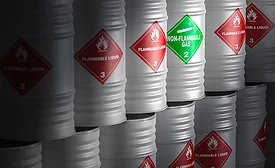
Hazard Communication (1910.1200) OSHA’s hazard communication standard was the second most-frequently cited agency standard in FY 2018.
January 7, 2019
This occupational safety and health standard is intended to address comprehensively the issue of classifying the potential hazards of chemicals, and communicating information concerning hazards and appropriate protective measures to employees, and to preempt any legislative or regulatory enactments of a state, or political subdivision of a state, pertaining to this subject.
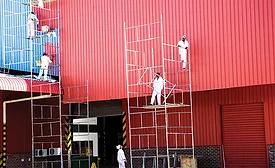
Scaffolding (1926.451) OSHA’s scaffolding standard for construction was the third most-frequently cited agency standard in FY 2018.
January 7, 2019
The Bureau of Labor Statistics’ Census of Fatal Occupational Injuries reported 54 fatalities in 2009 from scaffold staging. In a BLS study, 72 percent of workers injured in scaffold accidents said either the planking or support gave way, slipping, or being struck by a falling object. All can be controlled by compliance with OSHA standards.
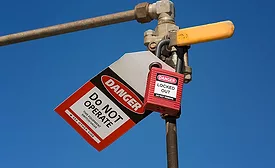
Control of Hazardous Energy (Lockout-Tagout) General Industry (1910.147)
January 4, 2019
Workers servicing or maintaining machines or equipment may be seriously injured or killed if hazardous energy is not properly controlled. Injuries resulting from the failure to control hazardous energy during maintenance activities can be serious or fatal. Injuries may include electrocution, burns, crushing, cutting, lacerating, amputating, or fracturing body parts.
OSHA statistics indicate that there are roughly 85 forklift fatalities and 34,900 serious injuries each year, with 42 percent of the forklift fatalities from the operators being crushed by a tipping vehicle.
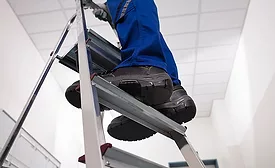
Factors contributing to falls from ladders include haste, sudden movement, lack of attention, the condition of the ladder (worn or damaged), the user's age or physical condition, or both, and the user's footwear.
Training Requirements for Construction Industry (1926.503)
January 4, 2019
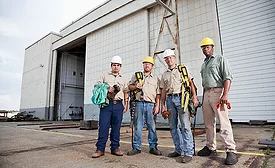
Falls are the leading cause of death in construction. In 2016, there were 370 fatal falls to a lower level out of 991 construction fatalities (BLS data). These deaths are preventable.
OSHA’s Eye and Face Protection standard was the tenth most-frequently cited agency standard in FY 2018.
January 4, 2019
OSHA requires employers to ensure the safety of all employees in the work environment. Eye and face protection must be provided whenever necessary to protect against chemical, environmental, radiological or mechanical irritants and hazards.
 RSS
RSS