As we enter a new decade, occupational safety and health professionals have a lot to consider. From demographic changes and new regulations to innovative technology and medical advancements, there is a lot to explore.
Examinetics worked with 20 of our client partners and other industry thought leaders to present their thoughts on the trends, challenges and opportunities shaping occupational health. We wanted to know what these industry leaders think are the issues and innovative solutions that will make an impact on our profession in 2020 and beyond.
Back in 2015 I had a widow-maker heart attack. That near-death event focused attention on my heart health, particularly when I push to physical extremes during mountain backpacking.
If your facility has confined spaces on site, it is critically important that you evaluate those spaces to determine if you need to have a permit-required confined space program.
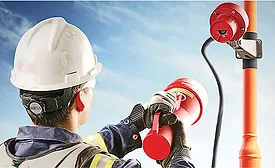
Optical flame detectors are proven performers to help protect people and equipment in high value, high-hazard areas and processes. We often hear the question “Where do I start in deciding the type of flame detection system we need for 24/7 protection?”.
The American Industrial Hygiene Foundation (AIHF) has established the President's Leadership Award. This award, to be given annually by AIHF, will be the foundation's highest scholarship and professional development honor. The award consists of a considerable scholarship as well as a professional development opportunity to attend a British Occupational Hygiene Society, Australian Institute of Occupational Hygienists, or comparable international conference on occupational health and safety.
In a study which has implications for occupational health, European researchers have found that certain non-toxic substances can have a negative impact on neuronal development when mixed with other substances.
The in vitro research project conducted by the European Commission’s Joint Research Centre (JRC) examined this “cocktail effect” by using chemical products belonging to different classes.
For workers in a variety of industries, exposure to chemicals is commonplace. American workers handle, transport, or encounter thousands of chemicals every day, from cleaning products to industrial solvents. Although many of these chemicals have important uses, they can also be harmful to workers who are exposed to them.
The American Society of Safety Professionals (ASSP) Foundation is accepting online applications for scholarships and professional development grants through Dec. 1 for the 2019-20 academic year. More than $400,000 is available to occupational safety and health students and professionals, thanks to the generosity of corporate donors and the ASSP community.
The Spanish government’s recent proposal to double the occupational exposure limit value (OELV) for silica is being met with opposition by worker safety advocates. The current limit is 0.05 mg/m³. Under a draft decree presented to the national occupational health and safety commission earlier this month, OELV would be raised to (0.1mg/m³).
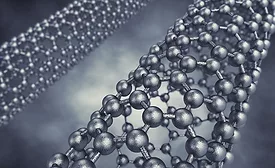
Engineered nanomaterials (ENMs) are materials that are intentionally produced to have at least one primary dimension less than 100 nanometers. These materials have new or unique properties different from those of larger forms of the same material, making them desirable for specific product applications.
 RSS
RSS