ISHN logo
search
cart
facebook twitter linkedin youtube
  • Sign In
  • Create Account
  • Sign Out
  • My Account
ISHN logo
  • NEWS
    • Today's News
    • Global Safety News
    • Government Regulations
  • PRODUCTS
    • Product Innovations
    • Featured Products
  • TOPICS
    • Environmental Health and Safety
    • Facility Safety
    • Workplace Health
    • Occupational Safety
    • PPE
    • More Topics
  • CONSTRUCTION
  • TECHNOLOGY
  • COLUMNS
    • Best Practices
    • Dave Johnson: What’s going on
    • Editorial Comments
    • Leading Safety
  • MULTIMEDIA
    • ISHN Podcast
    • Videos
    • Cold Stress Education Quiz
    • Webinars
    • White Papers
  • MORE
    • Buyer's Guide
    • Newsletters
    • Convention Companion
    • Polls
    • Events
    • ISHN Store
    • Sponsor Insights
  • EMAGAZINE
    • eMagazine
    • Archived Issues
    • Contact
    • Advertise
  • JOIN TODAY!
Occupational SafetyEnvironmental Health and SafetyFacility SafetyIndustrial HygieneSafety TechnologyRisk Management

Flame detectors must match your ignition scenarios

Prioritize your fire risks
By Angela Sauceda
Flame detectors must match your ignition scenarios
November 1, 2019

Optical flame detectors are proven performers to help protect people and equipment in high value, high-hazard areas and processes. We often hear the question “Where do I start in deciding the type of flame detection system we need for 24/7 protection?” First off, we recommend clearly identifying why the system is needed, and the most likely fire ignition scenarios that need to be detected and mitigated.

Where to start?

After a facility or process owner identifies the most likely sequence of events leading to a fire, a hazard operation analysis including identifying all possible flammable materials within the protected zone is typically performed. 

From this analysis, a prioritization of flammable risks can be created, and identification of the optimal flame detection sensing technologies to match the radiant energy emission signature expected from the flammables to be detected. 

Different fuels emit unique flame spectra, so not all detectors can detect flames equally. Plus, the presence of optical contaminants and non-fire radiant energy sources within monitored zones impact the performance of certain sensing technologies and installation locations, and must be evaluated. 

Onsite coverage considerations

After the hazardous operation analysis is completed and the optimal flame detection technology has been selected, a preliminary performance specification should be identified and documented by the end user. Look for third-party certified performance test reports to validate your proposed performance specification, which will serve as the fundamental coverage template enabling proper assessment of different onsite installation points and alignment angles. 

From this performance specification, a preliminary assessment of onsite coverage options can be performed. Common approaches include geographic or scenario coverage assessments.

The geographic approach assesses coverage within a defined geographic fire ignition zone covered by one or more detectors. 

The scenario approach specifies the most likely fire scenarios within a zone that can be detected with consideration given to frequency and catastrophic magnitude using defined coverage arrangements. 

In all cases, known physical obstructions must be identified and layouts must ensure proper installation locations and coverage to overcome these obstructions.

Mapping detection coverage to reality

When detector installation locations are being considered, the owner or designated installer should audit the flame detection coverage map against the reality of the jobsite whenever possible. 

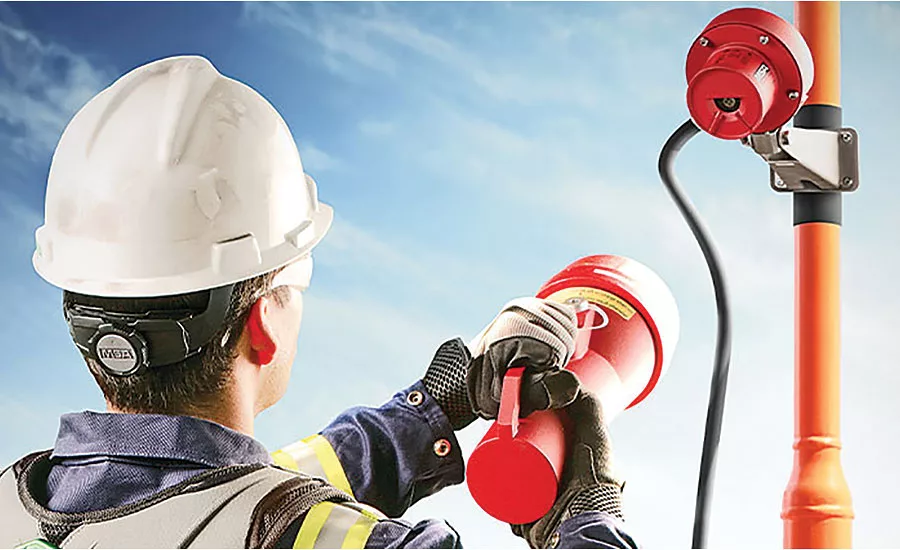
This task generally requires a site walkdown with coverage map in hand and a laser aiming accessory to validate field of view coverage provided by the proposed install locations. Experience has proven it is not uncommon for one or more proposed detector locations or alignment angles to be unsuitable due to undocumented issues such as physical obstruction/blockage, inadequate mounting structure or accessibility, high structural vibration levels, high heat levels, or interposing clouds of process smoke, steam, or other problematic environmental conditions. 

Significant technical advancements have occurred in the past decade to improve the baseline performance of optical flame detectors. It still remains incumbent upon the end-user or their assigned contractors to execute due diligence. Perform proper analysis and evaluation of the onsite fire hazards and ensure proper detection technology selection and coverage -- along with proper installation, operations, and maintenance practices -- to attain a continuously reliable, high-performing optical flame detection system.

KEYWORDS: detection equipment fire protection fire safety flame detectors risk assessments sensors

Share This Story

Looking for a reprint of this article?
From high-res PDFs to custom plaques, order your copy today!

Angela Sauceda is global marketing communications manager at MSA.

Recommended Content

JOIN TODAY
to unlock your recommendations.

Already have an account? Sign In

  • forklift safety

    Exploring the latest technologies in forklift safety

    With more staff and more stock in warehousing now more...
    Workplace Training Strategies
    By: Josh Cramer
  • welding

    All about welder’s flash or arc eye

    A flash burn is a painful inflammation of the cornea,...
    Environmental Health and Safety
  • dangerous jobs

    The 10 most dangerous jobs in the U.S.

    On-the-job deaths have been rising — hitting the highest...
    Government Safety Regulations
    By: Benita Mehta
Manage My Account
  • eMagazine Subscriptions
  • ISHN Newsletter & Other Newsletter Alerts
  • Online Registration
  • Manage My Preferences
  • Subscription Customer Service

More Videos

Sponsored Content

Sponsored Content is a special paid section where industry companies provide high quality, objective, non-commercial content around topics of interest to the ISHN audience. All Sponsored Content is supplied by the advertising company and any opinions expressed in this article are those of the author and not necessarily reflect the views of ISHN or its parent company, BNP Media. Interested in participating in our Sponsored Content section? Contact your local rep!

close
  • man wearing the the Sundström SR200 Full Face Mask Respirator
    Sponsored byOHD

    5 Fit Testing Mistakes That Could Cost You

  • This image shows Magid AcuSpex polarized blue mirrored safety glasses.
    Sponsored byMagid Glove and Safety

    Construction PPE Guide: What Crews Need for Each Task

  • lone worker in confined space
    Sponsored byAlphasense Ltd.

    GET THE LEAD OUT of your Safety Oxygen Sensors!

Popular Stories

SpaceX 7 launch

OSHA Investigating Fatal Fall at SpaceX Starbase

dust explosion

Tennessee OSHA Issues Record $3.1M Fine After Deadly Explosion at Munitions Plant

Worker Impairment

How to Tell When a Co-Worker is Impaired? A Safety Pro’s Challenge

top 10 most dangerous jobs

Poll

Seasonal Readiness

With the federal heat stress prevention rule on the horizon, which area of your safety program needs the most attention?
View Results Poll Archive

Products

Surviving an OSHA Audit A Management Guide, 2nd Edition

Surviving an OSHA Audit A Management Guide, 2nd Edition

See More Products

ISHN Podcasts

Related Articles

  • Tyco-flame.jpg

    FLAMEVision FV-40 flame detectors from Tyco Gas & Flame Detector

    See More
  • FV-40 flame detectors offer comprehensive solutions

    See More
  • Simtronics flame detectors provide fast and accurate detection

    See More

Events

View AllSubmit An Event
  • Gas Detectors: The most common mistakes people make when using atmospheric monitors

    Learn the most common mistakes people make when using atmospheric monitors. Join Bob Henderson from GFG Instrumentation for this educational webinar.
View AllSubmit An Event

Related Directories

  • Draeger/Dräger Inc.

    Founded in 1889 in Lübeck, Germany, Dräger is a global leader in safety and medical technology. The safety division specializes in respiratory protection, portable gas detection, and complete fixed flame & gas detection systems. Our guiding philosophy is "Technology for Life".
×

Become a Leader in Safety Culture

Build your knowledge with ISHN, covering key safety, health and industrial hygiene news, products, and trends.

JOIN TODAY
  • RESOURCES
    • Advertise
    • Contact Us
    • Directories
    • Manufacturing Division
    • Store
    • Want More
  • SIGN UP TODAY
    • Create Account
    • eMagazine
    • Newsletters
    • Customer Service
    • Manage Preferences
  • SERVICES
    • Marketing Services
    • Reprints
    • Market Research
    • List Rental
    • Survey/Respondent Access
  • STAY CONNECTED
    • LinkedIn
    • Facebook
    • YouTube
    • X (Twitter)
  • PRIVACY
    • PRIVACY POLICY
    • TERMS & CONDITIONS
    • DO NOT SELL MY PERSONAL INFORMATION
    • PRIVACY REQUEST
    • ACCESSIBILITY

Copyright ©2026. All Rights Reserved BNP Media, Inc. and BNP Media II, LLC.

Design, CMS, Hosting & Web Development :: ePublishing