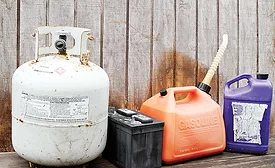
Throwing household waste such as small batteries, cleaning products, and light bulbs in the trash may not be environmentally friendly behavior, but in most cases, it’s not against the law. However, businesses face many more limitations and regulations on what can and can’t be thrown away.
The U.S. Chamber of Commerce acknowledges that human activities are contributing to climate change, but feels that the Obama-era Clean Power plan was not an effective way to address that. The American Public Health Association contends that the EPA’s just announced proposed replacement for the Clean Power Plan – the Affordable Clean Energy Rule – is “an attack on public health.”
Single use plastics are the hot topic of the moment – and with good reason. They’re non-biodegradable meaning once created they will never disappear from the environment. When consumers open the bin to drop their plastic waste in that may be the last they see of it but it’s far from the end of the story.
The U.S. Department of Justice (DOJ) and the U.S. Environmental Protection Agency (EPA) Region 7 have entered into a consent decree with Ag Processing, Inc. (AGP) to ensure compliance with oil pollution prevention requirements of the Clean Water Act (CWA). As part of the settlement, the company has agreed to implement specific preventative measures to ensure future compliance and improve accidental spill response.
In a move that quickly generated controversy, the EPA yesterday unveiled a replacement for the Clean Power Plan that it proposed repealing in October 2017 because it “exceeded EPA’s authority.”
In its place, the agency rolled out what it’s calling the Affordable Clean Energy (ACE) rule which would establish emission guidelines for states to develop plans to address greenhouse gas emissions from existing coal-fired power plants.
The Minnesota Pollution Control Agency issued a statewide air quality alert in early August due to smoke spreading across northern Minnesota and southern Minnesota.
Smoke from wildfires in western Canada will continue to affect Minnesota. Air Quality Indices in the orange category spread eastward across northern Minnesota Friday, making air quality unhealthy for sensitive groups.
Air pollution is a big killer. Researchers estimate that smog—particularly the tiniest particles in the mix—contributes to the early deaths of up to seven million people worldwide each year. Harm to fog-filled lungs is an obvious concern, yet air pollution is notably linked to cardiovascular events, including heart attacks and stroke.
Fuel economy standards intended to combat climate change by reducing gas emissions are in for a rollback, if a proposal announced today by the EPA and the National Highway Traffic Safety Administration goes into effect.
Passed during the Obama administration, the standards were scheduled to become progressively tougher over time for new vehicles. The Trump administration proposal would freeze the standards at their 2020 levels for six years.
A work environment may not seem like a confined space at first glance, but the surprising truth is that confined spaces exist in many forms. They are found in nearly every industry. Without a doubt, confined spaces expose workers to very real dangers.
Every day 2,000 people are injured in a ladder-related accident. One hundred of those people suffer a long-term or permanent disability. And every day, one person dies; the numbers are continuing to rise.
 RSS
RSS