ISHN logo
search
cart
facebook twitter linkedin youtube
  • Sign In
  • Create Account
  • Sign Out
  • My Account
ISHN logo
  • NEWS
    • Today's News
    • Global Safety News
    • Government Regulations
  • PRODUCTS
    • Product Innovations
    • Featured Products
  • TOPICS
    • Environmental Health and Safety
    • Facility Safety
    • Workplace Health
    • Occupational Safety
    • PPE
    • More Topics
  • CONSTRUCTION
  • TECHNOLOGY
  • COLUMNS
    • Best Practices
    • Dave Johnson: What’s going on
    • Editorial Comments
    • Leading Safety
  • MULTIMEDIA
    • ISHN Podcast
    • Videos
    • Cold Stress Education Quiz
    • Webinars
    • White Papers
  • MORE
    • Buyer's Guide
    • Newsletters
    • Convention Companion
    • Polls
    • Events
    • ISHN Store
    • Sponsor Insights
  • EMAGAZINE
    • eMagazine
    • Archived Issues
    • Contact
    • Advertise
  • JOIN TODAY!
ColumnsEditorial Comments: Safety & Health | ISHN

Lessons in ladder safety 101

By Dave Johnson
September 3, 2015

Rain came down in buckets one evening this summer, a torrential storm. The next morning branches from one of our apple trees had sheared off and weighed down a neighbor’s backyard telephone and electrical wires.

The safest thing would have been to call in a landscaper or tree cutting service. Of course safety costs money, and I had the common DIY reaction: I can do this.

Or so I thought. I don’t have to tell you, ladder climbing is dangerous. Each year more than 90,000 people receive emergency treatment for ladder-related injuries, according to the Consumer Product Safety Commission (CPSC).  And the risk is getting worse: in the past ten years ladder-related injuries have increased 50 percent. One contributing factor: aging baby boomers like your editor thinking they can scoot up and down ladders like they did 30 years ago.

Woulda, coulda, shoulda

Of course I should have Googled “ladder safety” before I attempted to climb up and saw off the branches weighing down my neighbor’s wires. But I was in a rush. The job would be a pain. It was damn hot. So there was no pre-job safety briefing.

The CPSC says the number one cause of ladder injuries is choosing the wrong ladder. Which is precisely what I did. A six-foot aluminum step ladder proved to be too short and would have had me standing on the very top rung to reach the branches. This is completely at odds with the three-points-of-contact rule: whenever you’re on a ladder you should have either both feet and one hand on the rungs, or both hands and one foot to secure you.

So I borrowed my neighbor’s heavy-duty aluminum extension ladder, which folded out to be a good 20 feet long. It was relatively new and not worn or damaged. Using worn or damaged ladders is the second leading cause of ladder injuries.

Incorrect use of ladders is the third leading cause of accidents. CPSC warns, “Never use a ladder in any other way than what the manufacturer intended it to be used for.” I didn’t bother to read the fine print on the ladder. Looking back, I wonder if the manufacturer explicitly warned against using this 20-foot extension ladder to cut down tree branches. Oh well…

The need for an attendant

Incorrect ladder placement is the fourth leading cause of injuries, according to the CPSC. Using a ladder to get into a tree is not as simple as leaning it against a wall or the edge of a roof. Judgment and risk assessment definitely come into play. I recommend consulting a second opinion. Almost every use of a ladder around the house or at work should be a two-person job. One is the ladder climber, the other the ladder attendant — similar to a confined space attendant standing outside the space, ready to act quickly if something goes awry.

My personal ladder attendant, my wife, and I surveyed the apple tree, trying to figure the most stable placement. That includes being secure at the base, on the ground — no mud or water or uneven surface — as well as being secure at the top, wedged between two thick branches to support the ladder and prevent any movement.

After some deliberation, we secured the ladder and up I went, with a hand saw. The American Ladder Institute would be proud that I followed many of its basic ladder safety rules — although I only learned of them afterward in researching this editorial. I did not feel tired climbing the ladder. I wasn’t using a ladder outdoors in high wind or stormy conditions. I made sure I didn’t have mud or anything slippery on the bottom of my shoes. I definitely moved slow, paid serious attention, and was cognizant of “the user’s age and physical condition.” Plus, I had confidence in my ladder attendant on the ground, directing my movements, making sure the ladder held steady.

Staying focused

All’s well that ends well — most of the time — when you’re mindful, cautious and have vivid memories of a previous bad accident — in my case a tumble in a ravine in the Badlands National Park a few years ago. I sawed off the branches and yanked the cut branches off the wires, dropped my saw to the ground, and slowly climbed down. Climbing a ladders is similar in one way to climbing a mountain — you assume the hardest part is getting to the top, but rushing to come back down is dangerous, too. It felt good to have both feet back on the soil. And I admit feeling a surge of adrenalin that comes when you safely pull off a job you know is a bit dangerous. Still, I wouldn’t do it again. I’d find a neighbor with a good, sharp saw blade mounted on an extension pole designed to clip branches from the ground.

KEYWORDS: Fall Protection ladder safety work at height

Share This Story

Looking for a reprint of this article?
From high-res PDFs to custom plaques, order your copy today!

Djohnson new pic 7.10.22

Dave Johnson was chief editor of ISHN from 1980 until early 2020. He uses his decades of expertise to write on hot topics and current events in the world of safety. He also writes and edits at Dave Johnson’s Writing Shop LLC and is editor-at-large for ISHN. Find him at https://www.facebook.com/Dave-Johnsons-Writing-Shop-101316571547263/, and on LinkedIn at https://www.linkedin.com/in/daveljohnsoneditor/.

Recommended Content

JOIN TODAY
to unlock your recommendations.

Already have an account? Sign In

  • forklift safety

    Exploring the latest technologies in forklift safety

    With more staff and more stock in warehousing now more...
    Facility Safety
    By: Josh Cramer
  • welding

    All about welder’s flash or arc eye

    A flash burn is a painful inflammation of the cornea,...
    Environmental Health and Safety
  • dangerous jobs

    The 10 most dangerous jobs in the U.S.

    On-the-job deaths have been rising — hitting the highest...
    Transportation Safety
    By: Benita Mehta
Manage My Account
  • eMagazine Subscriptions
  • ISHN Newsletter & Other Newsletter Alerts
  • Online Registration
  • Manage My Preferences
  • Subscription Customer Service

More Videos

Sponsored Content

Sponsored Content is a special paid section where industry companies provide high quality, objective, non-commercial content around topics of interest to the ISHN audience. All Sponsored Content is supplied by the advertising company and any opinions expressed in this article are those of the author and not necessarily reflect the views of ISHN or its parent company, BNP Media. Interested in participating in our Sponsored Content section? Contact your local rep!

close
  • man wearing the the Sundström SR200 Full Face Mask Respirator
    Sponsored byOHD

    5 Fit Testing Mistakes That Could Cost You

  • This image shows Magid AcuSpex polarized blue mirrored safety glasses.
    Sponsored byMagid Glove and Safety

    Construction PPE Guide: What Crews Need for Each Task

  • lone worker in confined space
    Sponsored byAlphasense Ltd.

    GET THE LEAD OUT of your Safety Oxygen Sensors!

Popular Stories

SpaceX 7 launch

OSHA Investigating Fatal Fall at SpaceX Starbase

Worker Impairment

How to Tell When a Co-Worker is Impaired? A Safety Pro’s Challenge

Automated loading dock equipment

After March 2026 Rivian Death, Safety Managers Reassess Loading Dock Systems Under OSHA's Warehouse Emphasis Program

top 10 most dangerous jobs

Poll

Seasonal Readiness

With the federal heat stress prevention rule on the horizon, which area of your safety program needs the most attention?
View Results Poll Archive

Products

Surviving an OSHA Audit A Management Guide, 2nd Edition

Surviving an OSHA Audit A Management Guide, 2nd Edition

See More Products

ISHN Podcasts

Related Articles

  • Lessons in ladder safety 101

    See More
  • Lessons in leadership and teamwork

    See More
  • Electrical safety 101 - protection and prevention start with NFPA compliance

    See More

Related Products

See More Products
  • download (1).jpg

    Safety Rebels Real-World Transformations in Health and Safety

  • safety law.jpg

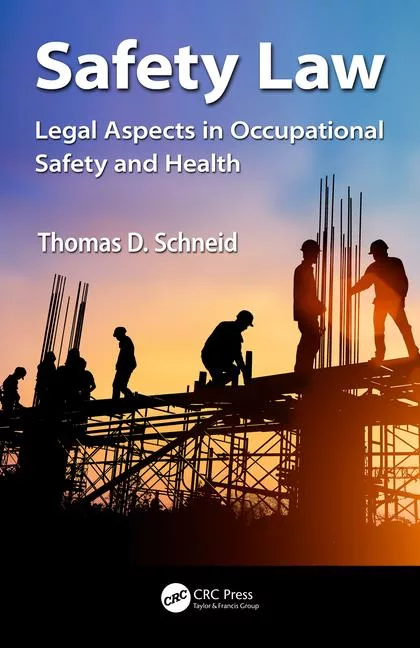
    Safety Law: Legal Aspects in Occupational Safety and Health

  • fearless world.jpg

    The Fearless World of Professional Safety in the 21st Century

See More Products
×

Become a Leader in Safety Culture

Build your knowledge with ISHN, covering key safety, health and industrial hygiene news, products, and trends.

JOIN TODAY
  • RESOURCES
    • Advertise
    • Contact Us
    • Directories
    • Manufacturing Division
    • Store
    • Want More
  • SIGN UP TODAY
    • Create Account
    • eMagazine
    • Newsletters
    • Customer Service
    • Manage Preferences
  • SERVICES
    • Marketing Services
    • Reprints
    • Market Research
    • List Rental
    • Survey/Respondent Access
  • STAY CONNECTED
    • LinkedIn
    • Facebook
    • YouTube
    • X (Twitter)
  • PRIVACY
    • PRIVACY POLICY
    • TERMS & CONDITIONS
    • DO NOT SELL MY PERSONAL INFORMATION
    • PRIVACY REQUEST
    • ACCESSIBILITY

Copyright ©2026. All Rights Reserved BNP Media, Inc. and BNP Media II, LLC.

Design, CMS, Hosting & Web Development :: ePublishing