ISHN logo
search
cart
facebook twitter linkedin youtube
  • Sign In
  • Create Account
  • Sign Out
  • My Account
ISHN logo
  • NEWS
    • Today's News
    • Global Safety News
    • Government Regulations
  • PRODUCTS
    • Product Innovations
    • Featured Products
  • TOPICS
    • Environmental Health and Safety
    • Facility Safety
    • Workplace Health
    • Occupational Safety
    • PPE
    • More Topics
  • CONSTRUCTION
  • TECHNOLOGY
  • COLUMNS
    • Best Practices
    • Dave Johnson: What’s going on
    • Editorial Comments
    • Leading Safety
  • MULTIMEDIA
    • ISHN Podcast
    • Videos
    • Cold Stress Education Quiz
    • Webinars
    • White Papers
  • MORE
    • Buyer's Guide
    • Newsletters
    • Convention Companion
    • Polls
    • Events
    • ISHN Store
    • Sponsor Insights
  • EMAGAZINE
    • eMagazine
    • Archived Issues
    • Contact
    • Advertise
  • JOIN TODAY!
ColumnsEditorial Comments: Safety & Health | ISHN

Safety goes ‘round in cycles - Why the fastest road racing cars will go faster

Why the fastest road racing cars will go faster
By Dave Johnson
road racing cars
February 3, 2016

Formula One. Does it mean anything to you?

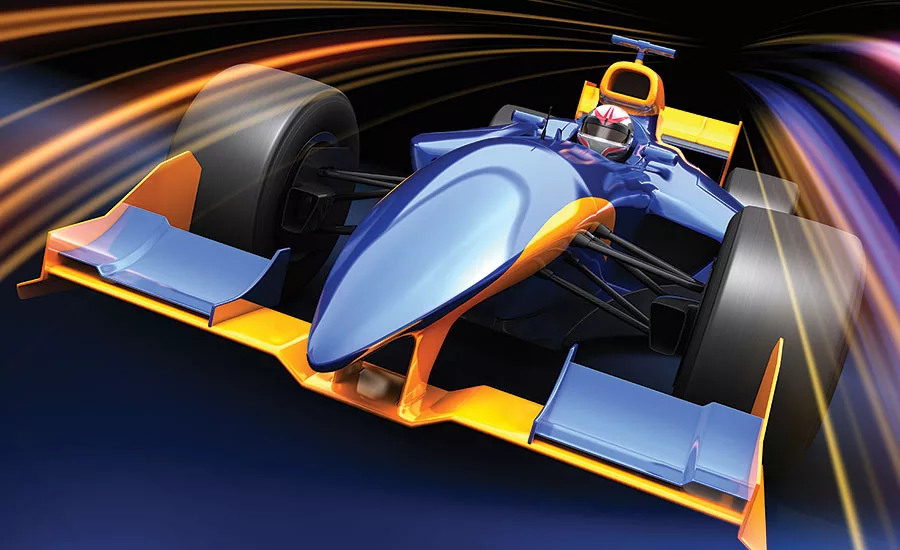
Otherwise known as F1, it’s arguably the most demanding and dangerous motor racing. Or as F1 Racing magazine says, “the pinnacle.” F1 cars, sleek with narrow bodies and tall rear wings, highly engineered, incredibly expensive, are the fastest road course racing cars in the world, reaching speeds of up to 220 miles per hour. The machines look, sound and fly around twisting grand prix courses all over the globe like land-locked (barely) missiles. Grand prix racing dates back 110 years, to 1906. Today, the cost of designing and constructing one of these “road missiles” reaches upwards of $120 million. F1 had a total television audience of 425 million people during the 19-race 2014 season.

Lost essence

But all is not well in the F1 kingdom. There are concerns, grumblings, that F1 has lost something of its essence as the original extreme sport, according to F1 Racing. There’s not enough daredevil passing, also called overtaking. Leads in races seldom change hands, the same few drivers of the wealthiest teams (including Mercedes, Ferrari and engine-provider Renault) win again and again. Races can look like two-hour parade processions, with cars stretched out in single-file. F1 Racing calls it an “alleged lack of drama.”

That’s not healthy for the bottom line. Drama draws fans, team sponsors, TV ratings and dollars. The sport is not popular in the United States, where NASCAR is king. F1’s masterminds decided in 2014 that changes were needed to help “recapture some of the lost magic,” according to F1 Racing. “We wanted to make the cars look better, make them five to six seconds a lap faster,” and make them more difficult to drive, one of F1’s strategists told the magazine.

Time to “hurry up”

Time to make the sport more extreme, dangerous, more aggressive, faster and louder. “Fans of hard racing rejoice… after two decades of speed cuts, the (sport’s) governing body has decreed that the cars are in need of a ‘hurry up’,” writes F1 Racing. The final 2017 regulations to “hurry up” the cars are to be published this month.

It’s no coincidence that speeds have been declining since 1994, the year Ayrton Senna – a champion whose popularity world-wide mirrored Dale Earnhardt’s in the U.S. — was killed after crashing into a wall on the exit of a notorious curve at a track in Italy. A second driver lost his life in a crash that same weekend qualifying for the same race.

F1’s reaction was the same as NASCAR’s after Earnhardt was killed in the last lap of the Daytona 500 in 2001. Safety became paramount. Design and construction rule changes were pushed through that made the cars safer to drive – but reduced overtaking, speeds in track corners, and made it more difficult for cars to come within inches of following each other. No driver died of injuries sustained on the track at the wheel of an F1 car for 20 years, until 2014, when a driver collided with a recovery vehicle after aquaplaning off the surface at a race in Japan.

Creeping complacency

Decades of safe racing in F1 had an effect comparable to a factory or plant going decades without a fatality — years of enjoying virtually an unblemished safety record. What happens? Human nature being what it is, other concerns set in. Maybe the sport, or the workplace, has slowed too much. Maybe in the workplace the line needs to speed up. Workers need to “hurry up.” Profits need to be pumped up. Maybe, human nature being what it is, complacency sets in.

In F1, “other concerns” have resulted in the decree to make the cars go faster and harder to handle. Make races less boring by adding new elements of danger and risk. Naturally the sport’s governing body will say these changes are all being executed with a “safety first” mentality. What else can be said? Wrap yourself in the safety flag. It’s good cover. It’s like the plant manager or company owner saying, “Yes, we’re lean and mean, pushing our guys harder, working longer hours, increasing productivity, but we’ve learned our lessons, safeguards are in place, it’s still safety first.”

Déjà vu all over again

And the guys on the floor roll their eyes. Safety first. The vets have heard it all before. They know the game: safety comes and it goes in cycles. Some tragedy or catastrophe occurs, something spills or explodes, people die, safety becomes a priority.

But business priorities don’t have the sticking power of embedded cultural values. They change with the times and business conditions. Capitalists call it creative destruction. Buddhists call it impermanence. Things change. F1 Racing is big, big business. The sport’s brand and commercial considerations need to be recharged. “So strap yourself in. The future of grand prix racing is looking faster,” concludes F1 Racing. That’s good advice for the workplace, too. If execs look at those lagging indicators, and see years of no serious injuries or fatalities, some will be tempted by other priorities. Strap yourself in.

Share This Story

Looking for a reprint of this article?
From high-res PDFs to custom plaques, order your copy today!

Djohnson new pic 7.10.22

Dave Johnson was chief editor of ISHN from 1980 until early 2020. He uses his decades of expertise to write on hot topics and current events in the world of safety. He also writes and edits at Dave Johnson’s Writing Shop LLC and is editor-at-large for ISHN. Find him at https://www.facebook.com/Dave-Johnsons-Writing-Shop-101316571547263/, and on LinkedIn at https://www.linkedin.com/in/daveljohnsoneditor/.

Recommended Content

JOIN TODAY
to unlock your recommendations.

Already have an account? Sign In

  • forklift safety

    Exploring the latest technologies in forklift safety

    With more staff and more stock in warehousing now more...
    Facility Safety
    By: Josh Cramer
  • welding

    All about welder’s flash or arc eye

    A flash burn is a painful inflammation of the cornea,...
    Environmental Health and Safety
  • dangerous jobs

    The 10 most dangerous jobs in the U.S.

    On-the-job deaths have been rising — hitting the highest...
    Transportation Safety
    By: Benita Mehta
Manage My Account
  • eMagazine Subscriptions
  • ISHN Newsletter & Other Newsletter Alerts
  • Online Registration
  • Manage My Preferences
  • Subscription Customer Service

More Videos

Sponsored Content

Sponsored Content is a special paid section where industry companies provide high quality, objective, non-commercial content around topics of interest to the ISHN audience. All Sponsored Content is supplied by the advertising company and any opinions expressed in this article are those of the author and not necessarily reflect the views of ISHN or its parent company, BNP Media. Interested in participating in our Sponsored Content section? Contact your local rep!

close
  • man wearing the the Sundström SR200 Full Face Mask Respirator
    Sponsored byOHD

    5 Fit Testing Mistakes That Could Cost You

  • This image shows Magid AcuSpex polarized blue mirrored safety glasses.
    Sponsored byMagid Glove and Safety

    Construction PPE Guide: What Crews Need for Each Task

  • lone worker in confined space
    Sponsored byAlphasense Ltd.

    GET THE LEAD OUT of your Safety Oxygen Sensors!

Popular Stories

SpaceX 7 launch

OSHA Investigating Fatal Fall at SpaceX Starbase

Automated loading dock equipment

After March 2026 Rivian Death, Safety Managers Reassess Loading Dock Systems Under OSHA's Warehouse Emphasis Program

psychology in the workplace

Most Workplaces Measure Psychological Safety, Ignoring Psychosocial Risks

top 10 most dangerous jobs

Poll

Seasonal Readiness

With the federal heat stress prevention rule on the horizon, which area of your safety program needs the most attention?
View Results Poll Archive

Products

Surviving an OSHA Audit A Management Guide, 2nd Edition

Surviving an OSHA Audit A Management Guide, 2nd Edition

See More Products

ISHN Podcasts

Related Articles

  • ASSP Safety Conference 2024

    ASSP Safety 2024: Why the record attendance?

    See More
  • OSHA’s Dr. Michaels: Will he stay or will he go?

    See More
  • Confined Space Entry Errors: Why do the errors keep reoccurring?

    See More

Related Products

See More Products
  • 1119906652.webp

    Alive and Well at the End of the Day: The Supervisor's Guide to Managing Safety in Operations, 2E

  • fearless world.jpg

    The Fearless World of Professional Safety in the 21st Century

See More Products

Related Directories

  • MSA - The Safety Co.

    WE KNOW WHAT'S AT STAKE. Unpredictable work environments are often part of the job. That's why it's critically important to have the right safety equipment at the moment it matters most. MSA's complete lines of safety solutions help protect those workers at the heart of your operation.
×

Become a Leader in Safety Culture

Build your knowledge with ISHN, covering key safety, health and industrial hygiene news, products, and trends.

JOIN TODAY
  • RESOURCES
    • Advertise
    • Contact Us
    • Directories
    • Manufacturing Division
    • Store
    • Want More
  • SIGN UP TODAY
    • Create Account
    • eMagazine
    • Newsletters
    • Customer Service
    • Manage Preferences
  • SERVICES
    • Marketing Services
    • Reprints
    • Market Research
    • List Rental
    • Survey/Respondent Access
  • STAY CONNECTED
    • LinkedIn
    • Facebook
    • YouTube
    • X (Twitter)
  • PRIVACY
    • PRIVACY POLICY
    • TERMS & CONDITIONS
    • DO NOT SELL MY PERSONAL INFORMATION
    • PRIVACY REQUEST
    • ACCESSIBILITY

Copyright ©2026. All Rights Reserved BNP Media, Inc. and BNP Media II, LLC.

Design, CMS, Hosting & Web Development :: ePublishing