ISHN logo
search
cart
facebook twitter linkedin youtube
  • Sign In
  • Create Account
  • Sign Out
  • My Account
ISHN logo
  • NEWS
    • Today's News
    • Global Safety News
    • Government Regulations
  • PRODUCTS
    • Product Innovations
    • Featured Products
  • TOPICS
    • Environmental Health and Safety
    • Facility Safety
    • Workplace Health
    • Occupational Safety
    • PPE
    • More Topics
  • CONSTRUCTION
  • TECHNOLOGY
  • COLUMNS
    • Best Practices
    • Dave Johnson: What’s going on
    • Editorial Comments
    • Leading Safety
  • MULTIMEDIA
    • ISHN Podcast
    • Videos
    • Cold Stress Education Quiz
    • Webinars
    • White Papers
  • MORE
    • Buyer's Guide
    • Newsletters
    • Convention Companion
    • Polls
    • Events
    • ISHN Store
    • Sponsor Insights
  • EMAGAZINE
    • eMagazine
    • Archived Issues
    • Contact
    • Advertise
  • JOIN TODAY!
Government Safety RegulationsOccupational SafetyColumnsWorkplace Training Strategies

Confined Space Entry Errors: Why do the errors keep reoccurring?

By Dave Johnson
April 9, 2018

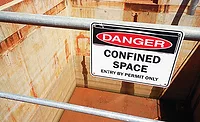
Why are we still talking and writing about confined space training a quarter century after OSHA issued its confined space standard for general industry in 1993?

Obviously there is no lack of information. A Google search for “confined space training requirements” yields more than a million results in less than half a second. Fatalities and OSHA violations receive local, regional, and national press. And OSHA’s training requirements are straightforward:

  • Authorized entrants must know the identified hazards of permit-required confined spaces;
  • Select appropriate PPE;
  • Maintain communication with the outside attendant; and
  • Leave the space immediately when ordered by the attendant; a prohibited condition exists; an automatic alarm sounds; or if the authorized entrant recognizes warning signs or symptoms of exposure.

Confined Space Entry Goes Wireless

Hazards include poisonous atmospheres; oxygen-deficient atmospheres; materials that could engulf the entrant; converging walls that could trap or smother an entrant; unguarded machinery or exposed live wires; energy power sources that have not been locked out; and tight crawl spaces that squeeze entrants shoulder-to-shoulder with the sides of piping or small storage containers or tanks.

As noted, authorized entrants must be trained to recognize these hazards. So why every year do we still read about confined space incidents and deaths?

“Safety Differently”

No Excuses: Confined Spaces Continue to Kill

Relatively new thinking in occupational safety is called “Safety Differently.” “It is based on the premise that humans are error prone and not 100-percent mistake-free. Conventional thinking says trained workers will retain knowledge and apply it whenever necessary. But human nature is a “barrier” to the belief that training solves all.

Here are some reasons why:

  • A confined space may be evaluated incorrectly. People make mistakes, and when a confined space is mis-identified as hazard-free, training will never be given to employees.
  • Many hazardous confined spaces are rarely entered. Training can be forgotten if a space is entered only once a year, or every two months.
  • Conversely, familiarly breeds complacency, and confined spaces that are entered daily or several times a week – without incident – can give entrants a false sense of security.
  • Conditions in confined spaces can change in a heartbeat, outpacing how entrants have been trained to respond. If someone goes into a grain bin with the auger running, they could be pulled in to their knees in 15 seconds and completely buried within 30 seconds.
  • Pressure to get a tank cleaned quickly, a pipe unplugged, etc., can lead to shortcuts and not following training.
  • Entrants can be distracted. An entrant in a grain bin is using a vacuum when a text is received. If the person reacts, he or she will typically put the hose in the grain at their feet. The vacuum sucks the grain out and pulls the person down as he or she reads and responds to the text.

“Safety Differently” emphasizes:

  1. Humans are fallible and expect mistakes to happen
  2. Don’t blame the victim
  3. Don’t “fix” the person who erred simply by re-training or punishment
  4. Learn from successes – in this case ask entrants and attendants what can be learned about all the confined space entries that go off without a hitch? What controls were effective? What procedures were effective? What are the components of a confined space entry system that align to produce safe entry, occupancy, and removal? Yes, training is certainly one of those components, but don’t over-rely on it.
KEYWORDS: confined space

Share This Story

Looking for a reprint of this article?
From high-res PDFs to custom plaques, order your copy today!

Djohnson new pic 7.10.22

Dave Johnson was chief editor of ISHN from 1980 until early 2020. He uses his decades of expertise to write on hot topics and current events in the world of safety. He also writes and edits at Dave Johnson’s Writing Shop LLC and is editor-at-large for ISHN. Find him at https://www.facebook.com/Dave-Johnsons-Writing-Shop-101316571547263/, and on LinkedIn at https://www.linkedin.com/in/daveljohnsoneditor/.

Recommended Content

JOIN TODAY
to unlock your recommendations.

Already have an account? Sign In

  • forklift safety

    Exploring the latest technologies in forklift safety

    With more staff and more stock in warehousing now more...
    Workplace Training Strategies
    By: Josh Cramer
  • welding

    All about welder’s flash or arc eye

    A flash burn is a painful inflammation of the cornea,...
    Environmental Health and Safety
  • dangerous jobs

    The 10 most dangerous jobs in the U.S.

    On-the-job deaths have been rising — hitting the highest...
    Government Safety Regulations
    By: Benita Mehta
Manage My Account
  • eMagazine Subscriptions
  • ISHN Newsletter & Other Newsletter Alerts
  • Online Registration
  • Manage My Preferences
  • Subscription Customer Service

More Videos

Sponsored Content

Sponsored Content is a special paid section where industry companies provide high quality, objective, non-commercial content around topics of interest to the ISHN audience. All Sponsored Content is supplied by the advertising company and any opinions expressed in this article are those of the author and not necessarily reflect the views of ISHN or its parent company, BNP Media. Interested in participating in our Sponsored Content section? Contact your local rep!

close
  • man wearing the the Sundström SR200 Full Face Mask Respirator
    Sponsored byOHD

    5 Fit Testing Mistakes That Could Cost You

  • This image shows Magid AcuSpex polarized blue mirrored safety glasses.
    Sponsored byMagid Glove and Safety

    Construction PPE Guide: What Crews Need for Each Task

  • lone worker in confined space
    Sponsored byAlphasense Ltd.

    GET THE LEAD OUT of your Safety Oxygen Sensors!

Popular Stories

SpaceX 7 launch

OSHA Investigating Fatal Fall at SpaceX Starbase

Worker Impairment

How to Tell When a Co-Worker is Impaired? A Safety Pro’s Challenge

Automated loading dock equipment

After March 2026 Rivian Death, Safety Managers Reassess Loading Dock Systems Under OSHA's Warehouse Emphasis Program

top 10 most dangerous jobs

Poll

Seasonal Readiness

With the federal heat stress prevention rule on the horizon, which area of your safety program needs the most attention?
View Results Poll Archive

Products

Surviving an OSHA Audit A Management Guide, 2nd Edition

Surviving an OSHA Audit A Management Guide, 2nd Edition

See More Products

ISHN Podcasts

Related Articles

  • Confined Space Safety and Entry Plan

    Keep workers safe before, during & after confined space entry

    See More
  • The golden rules of confined space entry

    See More
  • SKYLOTEC JACKPOD

    Confined space entry equipment by SKYLOTEC

    See More

Related Directories

  • A F C International Inc.

    Single and Multi gas detectors, fixed position gas monitors, respiratory protection, SCBAS, fit testing, calibration gases, confined space entry detectors.
×

Become a Leader in Safety Culture

Build your knowledge with ISHN, covering key safety, health and industrial hygiene news, products, and trends.

JOIN TODAY
  • RESOURCES
    • Advertise
    • Contact Us
    • Directories
    • Manufacturing Division
    • Store
    • Want More
  • SIGN UP TODAY
    • Create Account
    • eMagazine
    • Newsletters
    • Customer Service
    • Manage Preferences
  • SERVICES
    • Marketing Services
    • Reprints
    • Market Research
    • List Rental
    • Survey/Respondent Access
  • STAY CONNECTED
    • LinkedIn
    • Facebook
    • YouTube
    • X (Twitter)
  • PRIVACY
    • PRIVACY POLICY
    • TERMS & CONDITIONS
    • DO NOT SELL MY PERSONAL INFORMATION
    • PRIVACY REQUEST
    • ACCESSIBILITY

Copyright ©2026. All Rights Reserved BNP Media, Inc. and BNP Media II, LLC.

Design, CMS, Hosting & Web Development :: ePublishing